Groin stretches can help improve hip flexibility and reduce inner thigh tightness. They target muscles that support walking, running, bending, and everyday movements. Tight groin muscles can sometimes make these activities feel uncomfortable. Regular stretching may help you move more comfortably and freely. You do not need special equipment for most groin stretches. You can perform many of them at home with little space. In this guide, we will explore 12 effective groin stretches. You will also learn their benefits and how to perform them safely.
What Are Groin Stretches?
Groin stretches are simple exercises that lengthen muscles inside your thighs. These muscles are called hip adductors. They help bring your legs together and support hip movement. Groin stretches gently lengthen these muscles and improve their flexibility. They can also support better hip mobility and comfortable movement. Regular stretching may make walking, running, and exercising easier. You can perform most groin stretches without special equipment. Move slowly and avoid forcing your legs into uncomfortable positions.
Benefits of Groin Stretches
Groin stretches offer several benefits for your inner thighs and hips. Regular stretching can gradually improve inner thigh flexibility. It may also help your hips move more comfortably. These stretches can reduce feelings of tightness around your groin muscles. Better flexibility may make walking, bending, and squatting easier. They can also support comfortable movement during running and exercise. Stretching regularly helps maintain your muscles’ natural range of motion. However, results depend on your body and stretching routine. Always stretch gently and avoid movements that cause pain.
12 Best Groin Stretches for Better Hip Flexibility
Groin stretches can help improve flexibility in your inner thigh muscles. These exercises target different muscles around your hips and groin. You can perform most stretches at home without special equipment. Start slowly and focus on maintaining proper form. Hold each stretch comfortably without forcing your muscles. Here are 12 effective groin stretches to try.
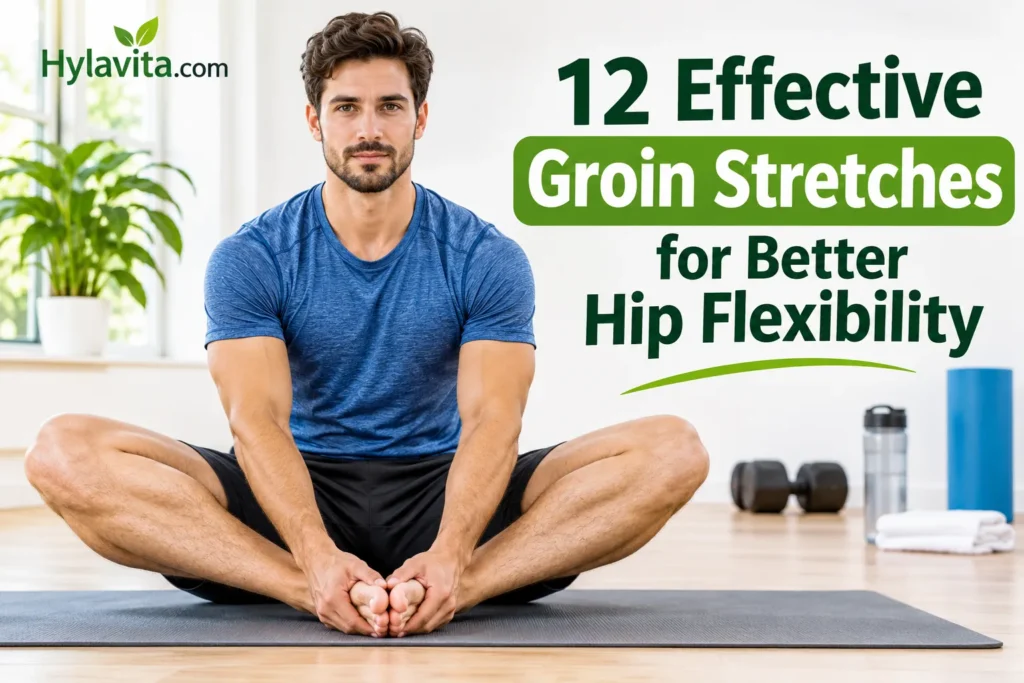
1. Butterfly Stretch
The butterfly stretch targets your inner thigh muscles and groin. It is simple and suitable for most beginners.
How to perform it:
- Sit on the floor with your back straight.
- Bring the soles of your feet together.
- Hold your feet gently with both hands.
- Let your knees move toward the floor naturally.
- Keep your back straight and relax your shoulders.
- Hold this position for 20–30 seconds.
Muscles targeted: This stretch mainly targets your inner thigh adductor muscles.
2. Frog Stretch
The frog stretch helps lengthen your inner thigh muscles. It also works on hip mobility.
How to perform it:
- Start on your hands and knees.
- Slowly move your knees wider than your hips.
- Keep your knees bent and feet pointing outward.
- Lower your hips gently toward the floor.
- Support your upper body with your hands or forearms.
- Hold the position for 15–30 seconds.
Keep your movements gentle and avoid pushing through discomfort.
3. Standing Groin Stretch
The standing groin stretch targets your inner thighs while standing. It is useful when you prefer not sitting on the floor.
How to perform it:
- Stand with your feet wider than shoulder-width apart.
- Keep your toes pointing slightly outward.
- Bend one knee slowly while keeping the other leg straight.
- Shift your hips toward the bent knee.
- Keep your upper body comfortable and balanced.
- Hold for 20–30 seconds, then switch sides.
This stretch gently lengthens your inner thigh muscles.
4. Seated Straddle Stretch
The seated straddle stretch works on both inner thighs. It also helps improve flexibility around your hips.
How to perform it:
- Sit on the floor with your legs extended.
- Spread your legs comfortably into a wide position.
- Keep your knees straight without locking them.
- Place your hands on the floor in front.
- Slowly lean your upper body forward.
- Stop when you feel a gentle inner thigh stretch.
- Hold for 20–30 seconds.
Avoid rounding your back or forcing your body forward.
5. Side Lunge Stretch
The side lunge stretch targets your inner thighs and hip muscles. It also involves your glutes and leg muscles.
How to perform it:
- Stand with your feet wider than shoulder-width apart.
- Point your toes slightly outward.
- Bend your right knee slowly.
- Shift your hips toward your right side.
- Keep your left leg straight and foot grounded.
- Hold briefly, then return to the starting position.
- Repeat on your opposite side.
Perform 5–8 controlled repetitions on each side. Avoid letting your bent knee collapse inward.
6. Half-Kneeling Groin Stretch
This stretch targets your inner thigh muscles from a kneeling position. It allows you to control the stretching movement easily.
How to perform it:
- Start by kneeling on a comfortable exercise mat.
- Extend your right leg sideways with your foot grounded.
- Keep your left knee directly below your hip.
- Place both hands on the floor for support.
- Slowly move your hips backward.
- Stop when you feel a gentle stretch inside your right thigh.
- Hold for 20–30 seconds and switch sides.
Breathe normally throughout the movement. Avoid rounding your lower back excessively.
7. Supine Butterfly Stretch
The supine butterfly stretch is performed while lying on your back. It gently stretches your inner thighs without requiring much effort.
How to perform it:
- Lie comfortably on your back on an exercise mat.
- Bend both knees and bring your feet together.
- Let your knees fall outward naturally.
- Keep your arms relaxed beside your body.
- Allow gravity to create a gentle stretch.
- Hold this position for 30–60 seconds.
Do not press your knees toward the floor. Let your legs relax naturally.
8. Wide-Leg Forward Fold
The wide-leg forward fold stretches your inner thighs and hamstrings. It also encourages comfortable movement around your hips.
How to perform it:
- Stand with your feet wider than shoulder-width apart.
- Keep your feet flat and toes slightly outward.
- Place your hands on your hips.
- Slowly bend forward from your hips.
- Place your hands on the floor or supporting surface.
- Keep your knees slightly soft.
- Hold for 20–30 seconds.
Avoid forcing your upper body toward the floor. Maintain a comfortable position throughout.
9. Lateral Squat Stretch
The lateral squat stretch works your inner thighs and hip muscles. It also challenges your leg strength and balance.
How to perform it:
- Stand with your feet wider than shoulder-width apart.
- Keep your toes pointing slightly outward.
- Bend your right knee and lower your hips.
- Keep your left leg extended comfortably.
- Keep your chest lifted and back straight.
- Slowly return to the starting position.
- Repeat on your left side.
Perform 5–8 repetitions on each side. Move slowly and maintain control.
10. Cossack Squat Stretch
The Cossack squat combines stretching with a controlled squatting movement. It targets your inner thighs, hips, and leg muscles.
How to perform it:
- Stand with your feet spread widely apart.
- Turn your toes slightly outward.
- Shift your body toward your right foot.
- Bend your right knee and lower your hips.
- Keep your left leg extended comfortably.
- Keep your chest lifted and maintain your balance.
- Push through your right foot to return upright.
- Repeat on the opposite side.
Start with a shallow movement if flexibility feels limited. Avoid forcing a deep squat.
11. Rocking Frog Stretch
The rocking frog stretch uses gentle movement to stretch your inner thighs. It also helps you explore comfortable hip movement.
How to perform it:
- Start on your hands and knees.
- Slowly move your knees wider than your hips.
- Keep your lower legs resting on the floor.
- Maintain a comfortable position with your back.
- Gently move your hips backward.
- Return your hips toward the starting position.
- Repeat 8–10 controlled movements.
Keep each movement slow and comfortable. Stop if you feel sharp pain.
12. Reclining Groin Stretch
The reclining groin stretch lets you relax while lengthening your inner thigh muscles. It requires little effort and no special equipment.
How to perform it:
- Lie on your back on a comfortable exercise mat.
- Extend both legs toward the ceiling.
- Slowly open your legs outward.
- Keep your knees straight but not locked.
- Lower your legs only as far as comfortable.
- Support your legs with a wall if needed.
- Hold for 20–30 seconds.
Keep your lower back comfortable throughout the stretch. Never force your legs wider than your natural range.
Important tip: Choose stretches that feel comfortable for your body. A gentle pulling sensation is normal, but sharp pain is not. If you have a recent groin injury, consult a healthcare professional before stretching.
How Often Should You Do Groin Stretches?
You can perform groin stretches three to five days each week. Beginners can start with two or three stretching sessions weekly. Hold each static stretch for 15–30 seconds comfortably. Repeat each stretch two to four times when appropriate. Avoid pushing your muscles beyond their comfortable range. Regular practice can gradually improve flexibility and hip mobility. Give your muscles enough time to recover between sessions. Consistency matters more than stretching for long periods.
Tips for Safe and Effective Groin Stretching
Proper technique helps you get more from your groin stretches. Follow these simple tips to stretch safely and comfortably.
- Warm up first: Walk or move gently for five minutes before stretching.
- Move slowly: Enter and leave each stretching position with control.
- Avoid bouncing: Hold a steady position instead of making quick movements.
- Never force it: Stretch only until you feel mild muscle tension.
- Breathe normally: Take slow breaths and avoid holding your breath.
- Stay comfortable: Choose stretching positions that suit your current flexibility.
- Stop when needed: Stop immediately if you experience sharp or increasing pain.
Common Mistakes to Avoid When Doing Groin Stretches
Some stretching mistakes can cause unnecessary muscle discomfort or irritation. Avoid these common mistakes during your stretching routine.
- Stretching cold muscles: Begin with gentle movement to warm up your body.
- Forcing your legs apart: Use a comfortable range instead of chasing deeper stretches.
- Holding your breath: Breathe normally while maintaining each stretching position.
- Ignoring pain: Stop stretching if you experience sharp or worsening discomfort.
- Using poor posture: Keep your body controlled and maintain comfortable alignment.
- Rushing movements: Move slowly instead of quickly changing between stretching positions.
Frequently Asked Questions
1. What Is the Best Stretch for Tight Groin Muscles?
The butterfly stretch is a simple option for tight groin muscles. It gently targets the inner thigh muscles. The frog stretch is another useful option. Choose a stretch that feels comfortable for your body.
2. How Long Should You Hold a Groin Stretch?
Hold most static groin stretches for 15–30 seconds. Beginners can start with shorter holds. Repeat each stretch when comfortable. Avoid forcing your muscles into deeper positions.
3. Can Groin Stretches Improve Hip Flexibility?
Yes, regular groin stretches can help improve hip flexibility. They gently lengthen the inner thigh muscles. Better flexibility may support comfortable hip movement. However, results depend on your routine and starting flexibility.
4. Should You Stretch Your Groin Every Day?
You can stretch your groin daily if it feels comfortable. However, daily stretching is not necessary for everyone. Start with a few sessions each week. Avoid stretching injured or painful muscles without professional guidance.
Conclusion
Groin stretches can help improve inner thigh flexibility and hip mobility. They may also reduce feelings of muscle tightness. Regular practice can support comfortable everyday movements and exercise. Choose stretches that match your current flexibility level. Always warm up and use proper stretching techniques. Avoid forcing your legs into uncomfortable positions. Start slowly and increase your stretching routine gradually. With consistent practice, you can work toward better flexibility and comfortable hip movement.
Hylavita’s suggestion to read
- Wheel Yoga Pose: Benefits, Steps, and Safety Tips
- Psoas Release: Benefits, Techniques, and Safety Tips
- Is Plow Pose Good for You? Benefits, Risks, and Proper Form
Disclaimer: This article is for informational and educational purposes only. Groin stretches may not be suitable for everyone. Consult a healthcare professional if you have a groin injury or ongoing pain. Stop any stretch that causes sharp pain or discomfort.