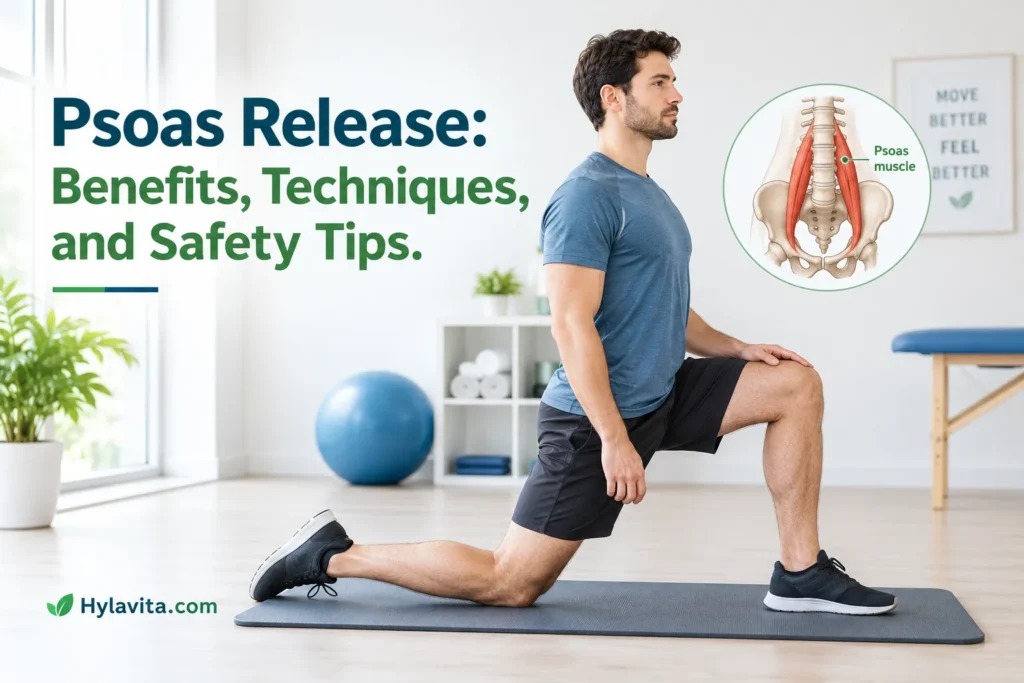
The psoas muscle connects your lower back to your upper thigh. It helps you lift your legs, move your hips, and maintain stability. Long periods of sitting or intense exercise may contribute to hip stiffness. Psoas release involves gentle stretches and movements that target this deep muscle. These techniques may help improve flexibility and make daily movements more comfortable. However, hip or back pain can have many different causes. Understanding safe release techniques can help you care for your body. This guide explains the potential benefits, simple exercises, and important safety tips.
What Is Psoas Release?
The psoas is a deep muscle that connects your lower spine to your thigh. It works with other muscles to help you bend your hips and lift your legs. Psoas release usually refers to gentle stretches or movements that target this area. People often try these techniques to improve hip movement and reduce muscle tension.
What Does the Psoas Muscle Do?
The psoas helps you walk, climb stairs, and bring your knees toward your chest. It also helps control movement between your spine and hips. The psoas works with the iliacus muscle to form the iliopsoas. Together, these muscles play an important role in hip movement.
What Does Psoas Release Mean?
Psoas release describes techniques intended to relax or stretch the psoas muscle. These techniques may include gentle hip stretches, controlled movements, and exercises. Some therapists also use hands-on methods to address muscle tension. However, the psoas lies deep inside the body. Avoid pressing deeply into your abdomen to reach it. Gentle movement is generally a safer starting point.
What Are the Signs of Psoas Tightness?
Possible signs of psoas tightness or irritation include the following:
- Stiffness around the front of your hips.
- Discomfort when straightening your hip.
- Tightness after sitting for long periods.
- Discomfort around your groin or lower back.
- Difficulty moving your hip comfortably.
These symptoms do not always mean your psoas muscle is tight. Other hip, back, or medical conditions can cause similar problems. If pain persists or affects daily activities, consult a healthcare professional.
Potential Benefits of Psoas Release
Gentle psoas stretches may help improve hip movement and reduce feelings of stiffness. The results depend on your body and the cause of your discomfort. Here are some possible benefits of regular, comfortable stretching.
May Improve Hip Mobility
Gentle hip flexor stretches may help you move your hips more freely. This can make walking, climbing stairs, and standing more comfortable. Move slowly and avoid forcing your hips beyond their comfortable range.
May Ease Muscle Tension
Gentle stretching may reduce feelings of tightness around the front of your hips. It can feel especially helpful after sitting for long periods. However, not all hip tension comes from the psoas muscle.
May Support Comfortable Movement
Better hip mobility can make everyday movements feel easier. You may find it more comfortable to walk, bend, or change positions. If movement causes sharp or worsening pain, stop and seek medical advice.
May Help With Flexibility
Regular stretching can gradually improve your range of motion. Gentle hip flexor stretches may help when tight muscles limit comfortable movement. Consistency matters more than stretching deeply or forcing a position. Combine stretching with suitable strengthening exercises for balanced hip movement.
How to Release the Psoas Muscle
Gentle stretches and controlled movements may help improve hip flexibility and comfort. The psoas sits deep inside your body, so you cannot easily massage it directly. Focus on comfortable movement instead of pressing hard into your abdomen.
1. Half-Kneeling Hip Flexor Stretch
This stretch targets the front of your hip, including the hip flexor muscles.
- Kneel on a soft mat with your right knee down.
- Place your left foot flat in front of you.
- Keep your chest upright and your back in a comfortable position.
- Gently tighten your buttocks and tuck your pelvis slightly.
- Shift forward until you feel a mild stretch in your right hip.
- Hold briefly, then return to your starting position.
- Switch legs and repeat on the other side.
Keep your movements slow and controlled. Avoid arching your lower back or pushing too far forward.
2. Gentle Pelvic Tilts
Pelvic tilts help you practise controlling your pelvis and lower back. They do not directly release the psoas, but they encourage gentle movement.
- Lie on your back with your knees bent.
- Keep your feet flat on the floor and your arms relaxed.
- Gently tighten your abdominal muscles.
- Tilt your pelvis so your lower back moves toward the floor.
- Hold for a few seconds while breathing normally.
- Relax and return to your starting position.
- Repeat slowly several times, staying within a comfortable range.
Avoid forcing your back against the floor. Stop if the movement causes pain or discomfort.
3. Supported Psoas Relaxation
A supported position may help you relax without forcing a deep stretch. Try this gentle option if it feels comfortable.
- Lie on your back on a firm, comfortable bed.
- Keep both legs supported and bend your knees slightly.
- Relax your shoulders and breathe slowly.
- Let your hips rest in a natural, comfortable position.
- Stay here for 30–60 seconds, if comfortable.
- Slowly change positions before getting up.
Never let a leg hang unsupported from a high bed. Choose a stable surface and stop if you feel pain. This position encourages relaxation but does not guarantee direct psoas release.
4. Gentle Hip Flexor Mobility Exercises
Gentle movement helps keep your hips active throughout the day. Standing marches offer a simple way to move your hip flexors.
- Stand upright beside a sturdy chair or wall.
- Hold the support lightly for balance.
- Slowly lift one knee toward your waist.
- Keep your back straight without leaning backward.
- Lower your foot gently to the floor.
- Repeat with the opposite leg.
- Continue for 8–10 repetitions per side, if comfortable.
Lift your knees only as high as feels natural. Avoid quick movements or forcing your range of motion. Stop if you experience sharp pain, pinching, or worsening discomfort.
Safety tip: Start gently and increase your activity gradually. Avoid deep abdominal pressure or forceful self-massage. If you have an injury, persistent pain, or recent surgery, consult a healthcare professional before trying these exercises.
How to Release the Psoas Safely
Psoas release should always feel gentle and controlled. Safe stretching can help improve movement without putting unnecessary strain on your body. Follow these simple tips when practising psoas release exercises.
- Move slowly and breathe normally: Use smooth movements and avoid holding your breath. Relax your body throughout each exercise.
- Avoid forcing deep stretches: Stretch only until you feel mild tension. Never push your hips beyond a comfortable range.
- Stop if pain increases: Stop any movement that causes sharp pain, pinching, or worsening discomfort. Do not try to push through pain.
- Seek professional guidance when needed: Consult a physical therapist or healthcare professional if pain persists. Get advice before exercising if you have an injury or recent surgery.
Remember, you do not need to press deeply into your abdomen to release the psoas. This muscle lies deep inside your body, near important internal structures. Gentle movement is a safer starting point than forceful self-massage.
Common Psoas Release Mistakes
Psoas release exercises should feel gentle and controlled. Some common mistakes can cause discomfort or make movement harder. Avoid these habits to keep your stretching routine safer.
1. Stretching Too Aggressively
Stretching harder does not mean better results. Deep stretches can strain your muscles or increase discomfort. Move slowly and stop when you feel mild tension. Never force your hips into an uncomfortable position.
2. Ignoring Pain Signals
Pain is a sign that something may be wrong. Stop if an exercise causes sharp pain or increases existing discomfort. Do not push through pain to finish your routine. Seek medical advice if the pain continues.
3. Expecting Instant Results
Psoas release may not improve stiffness or mobility immediately. Results depend on your movement habits and the cause of your symptoms. Practise gentle exercises consistently and give your body time to adjust. Avoid increasing the intensity too quickly.
4. Using Direct Pressure on the Abdomen
The psoas lies deep inside your abdomen, near important internal structures. Pressing deeply into this area can cause pain or injury. Avoid forceful self-massage with your fingers, elbows, or massage tools. Use gentle stretches and controlled movements instead. Consult a trained healthcare professional if you need hands-on treatment.
Who Should Avoid Psoas Release?
Psoas release exercises may not suit everyone. Some people need medical advice before trying these movements. Consider the following precautions to help protect your health.
1. People With Recent Hip or Abdominal Surgery
Recent surgery requires time for healing. Certain stretches may put unwanted stress on healing tissues. Follow your surgeon’s instructions before trying psoas release exercises. Ask when you can safely return to stretching.
2. People With Unexplained Abdominal or Groin Pain
Abdominal or groin pain can have many different causes. Do not assume tight psoas muscles are responsible. Avoid deep abdominal pressure and seek medical advice first. Get urgent care for sudden or severe abdominal pain.
3. People With Existing Hip or Back Injuries
Some stretches may worsen symptoms from existing injuries. The safest movements depend on your injury and recovery. Ask a healthcare professional which exercises suit your condition. Stop immediately if a movement increases pain or causes new symptoms.
Remember: Psoas release is not necessary for everyone. A healthcare professional can help you choose safe exercises based on your symptoms and medical history.
When to Seek Professional Help
See a healthcare professional if hip, groin, or lower back pain continues. Get advice if stiffness makes walking or daily activities difficult. A physical therapist can assess your movement and suggest suitable exercises.
Seek medical advice before stretching if you have an existing injury. Stop exercising if pain increases or new symptoms appear. Seek urgent medical care for sudden, severe abdominal pain or serious difficulty moving.
Do not assume every symptom comes from a tight psoas muscle. A healthcare professional can help identify the cause and recommend appropriate treatment.
Frequently Asked Questions
How often should you do psoas release?
You can try gentle psoas stretches a few times weekly. Start slowly and adjust based on your comfort. Stop if stretching increases pain or causes new symptoms. A physical therapist can suggest a suitable routine for your needs.
How long does psoas release take to work?
Results vary depending on your symptoms and the cause of stiffness. Some people notice temporary relief after gentle stretching. Lasting improvements in mobility may take regular practice over several weeks. No specific timeline guarantees results for everyone.
Can psoas release help lower back discomfort?
Gentle hip flexor stretching may help some people with lower back discomfort. However, back pain has many possible causes. Psoas release will not address every cause of pain. Consult a healthcare professional if discomfort persists or worsens.
Is psoas release safe to do at home?
Gentle stretches and controlled movements are generally suitable for many people. Move slowly and avoid forcing your body into deep stretches. Never apply strong pressure to your abdomen. Seek professional advice if you have an injury or ongoing pain.
Can you release the psoas muscle yourself?
You can try gentle stretches that target your hip flexor muscles. However, the psoas lies deep inside your body. You cannot reliably isolate or directly release it yourself. Avoid deep abdominal massage and focus on comfortable movements instead.
Conclusion
Psoas release may help improve hip mobility and reduce feelings of stiffness. Gentle stretches and controlled movements offer a simple starting point. Move slowly and avoid forcing deep stretches or pressing your abdomen. Stop if pain increases. Consult a healthcare professional if discomfort persists or affects daily activities.
Hylavita’s suggestion to read
- Is Plow Pose Good for You? Benefits, Risks, and Proper Form
- 5 Daily Posture Exercises to Fix Forward Head and Slouching
- What Is Cobra Yoga Pose? Benefits and How to Do It
Disclaimer: This article is for informational purposes only and does not replace medical advice. Psoas release exercises may not be suitable for everyone. Consult a qualified healthcare professional before trying new exercises, especially if you have an injury or ongoing pain. Stop any exercise that causes discomfort or worsens your symptoms.