
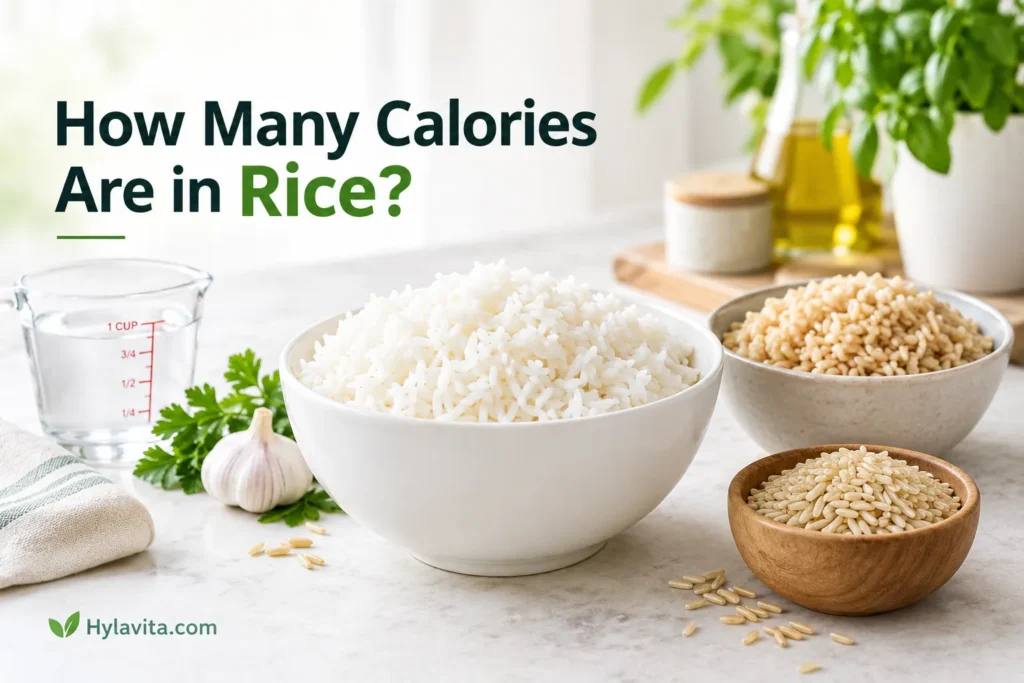
Rice is a common food enjoyed with many meals around the world. If you track your diet, understanding rice calories can help you manage portions. The calorie count depends on the rice type and serving size. Cooking methods and added ingredients can also change the total calories. White rice, brown rice, and basmati rice have slightly different nutrition profiles. This guide explains rice calories, basic nutrition facts, and serving sizes. You will also learn how rice fits into a balanced diet.
How Many Calories Are in Rice?
Rice calories depend on the type and whether it is cooked or uncooked. Plain white rice contains about 205 calories per cup when cooked. This amount refers to one cup of medium-grain white rice.
A 100-gram serving of cooked white rice provides around 130 calories. Brown rice has a similar calorie count, with slight differences between varieties. These values can change depending on the rice type and cooking method.
One cup of uncooked white rice contains roughly 675 calories. However, cooking makes rice absorb water and increases its weight. The total calories remain nearly the same without added ingredients. Cooked rice simply contains fewer calories per gram because of its extra water.
For accurate tracking, measure rice consistently and check the package nutrition label. Use cooked measurements when recording calories for rice served with meals.
Rice Calories by Type
Rice calories vary slightly depending on the variety and serving size. Most cooked rice varieties provide around 120–210 calories per cup. The exact amount depends on grain type and water absorption.
White Rice Calories
One cup of cooked white rice contains about 205 calories. It provides carbohydrates for energy and small amounts of protein. White rice has less fiber than brown rice because processing removes the bran.
Brown Rice Calories
One cup of cooked brown rice contains around 215 calories. It provides more fiber than white rice because it retains its bran. Brown rice also supplies small amounts of magnesium and other minerals.
Basmati Rice Calories
One cup of cooked basmati rice usually contains around 190–210 calories. Its calorie content depends on the variety and cooking method. Both white and brown basmati rice are available.
Jasmine Rice Calories
One cup of cooked jasmine rice typically provides around 200–215 calories. This fragrant rice is commonly used in Asian dishes. Its nutrition can vary with serving size and preparation.
These figures are estimates for plain cooked rice without added oil or butter. Always check serving sizes when comparing rice calories across different varieties.
Rice Nutrition Facts per 1 Cup of Cooked White Rice
| Nutrient | Approximate Amount |
|---|---|
| Calories | 205 kcal |
| Carbohydrates | 45 g |
| Protein | 4.3 g |
| Fat | 0.4 g |
| Fiber | 0.6 g |
Note: Values are approximate for one cup of cooked medium-grain white rice. Amounts may vary by rice type and preparation method.
Cooked Rice vs. Uncooked Rice Calories
| Rice Measurement | Approximate Calories | Water Content |
|---|---|---|
| 1 cup uncooked white rice | 675 kcal | Low |
| 1 cup cooked white rice | 205 kcal | High |
| 100 g uncooked white rice | 365 kcal | Low |
| 100 g cooked white rice | 130 kcal | High |
Note: Values are approximate and vary by rice variety. Cooking adds water and increases weight, but does not significantly change the total calories in the original rice.
How Cooking Methods Affect Rice Calories
The way you cook rice can change its total calorie content. Plain boiled rice contains fewer calories than rice cooked with added fats.
Plain boiled rice: One cup of cooked white rice contains about 205 calories. This assumes you do not add oil, butter, or other ingredients.
Fried rice: Fried rice often contains more calories because it uses oil. Eggs, meat, sauces, and vegetables can also change its calorie content.
Rice cooked with oil or butter: Added fats increase the total calories. One tablespoon of oil adds about 120 calories to your recipe. Butter also adds calories, so measure portions carefully.
For accurate tracking, include all ingredients when calculating your meal’s calories.
Is Rice Good for Weight Loss?
Yes, rice can fit into a weight-loss diet when you manage portions. Rice provides carbohydrates that give your body energy for daily activities. However, eating more calories than your body uses can lead to weight gain.
Choose a serving size that fits your daily calorie needs. Pair rice with vegetables, lean protein, and other nutritious foods. This combination can help make your meals more balanced and satisfying.
Brown rice contains more fiber than white rice. Fiber can support digestion and help you feel full longer. White rice can also fit into a balanced eating plan.
Focus on your overall diet instead of avoiding rice completely. Cooking rice without excess oil or butter can help limit added calories.
How Much Rice Should You Eat Per Serving?
A suitable rice serving depends on your age, activity level, and daily calorie needs. For many adults, ½ to 1 cup of cooked rice can fit into a balanced meal. Half a cup contains about 100 calories, while one cup contains around 205 calories.
You can adjust your portion based on hunger and nutritional needs. Pair rice with vegetables, beans, fish, chicken, or other protein sources. This helps create a balanced meal with different nutrients.
Use a measuring cup to keep your portions consistent. If you track calories, measure cooked rice and record the correct amount. Your overall eating pattern matters more than one food alone.
Frequently Asked Questions About Rice Calories
Is 200 Calories of Rice Too Much?
No, 200 calories of rice is not too much for most adults. One cup of cooked white rice contains approximately 205 calories. Your ideal portion depends on your daily calorie needs and activity level.
What Is the 123 Rule for Rice?
The 1-2-3 rice rule is a cooking method, not a calorie rule. It commonly means one part rice to two parts water, cooked for about three parts of the process or a recipe-specific timing. Methods vary, so follow your rice package instructions.
How Many Kcal Are in 100g of Rice?
One hundred grams of cooked white rice contains approximately 130 kcal. Uncooked white rice contains around 365 kcal per 100 grams.
What Do 300 Calories of Rice Look Like?
Three hundred calories equals roughly 1.5 cups of cooked white rice. The exact amount varies by rice type and preparation method. Added oil or butter increases the total calories.
Conclusion
Understanding rice calories helps you make informed food choices. Calorie counts vary by rice type, serving size, and cooking method. Measure portions carefully and limit added oils or butter. Pair rice with vegetables and protein for balanced meals. Rice can fit into a healthy diet when eaten in suitable portions.
Hylavita’s suggestion to read
- What Is Organic Rice? Benefits, Nutrition, Types, and Side Effects
- How Many Calories Are in an In-N-Out Burger? A Complete Guide
- How Many Calories Are in a Teaspoon of Sugar?
Other readings
How Many Calories Are in 100g of Rice? A Complete Guide by Type
Disclaimer: This article is for informational purposes only and does not replace professional medical or dietary advice. Rice calorie counts may vary by type, serving size, and cooking method. Consult a qualified healthcare professional or dietitian for personalized nutrition guidance. Always check product labels for accurate nutrition information.