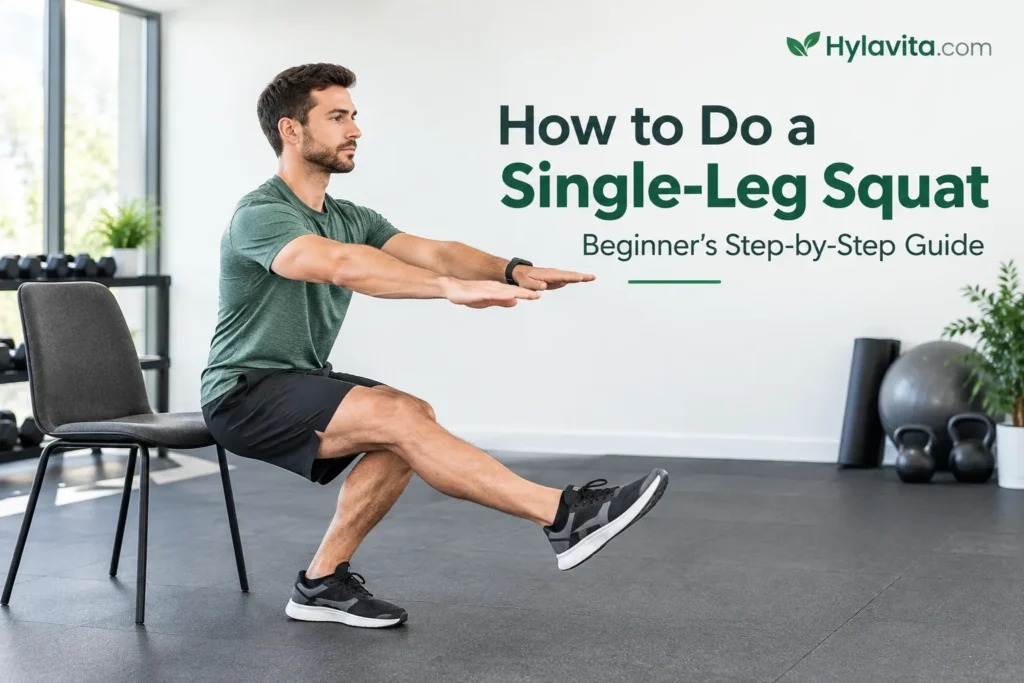
A single leg squat is a lower-body exercise performed on one leg. It involves bending your standing knee while lowering your body toward the ground. Your other leg stays off the floor during the movement. This exercise challenges your balance, strength, and body control. It mainly works your quadriceps, glutes, and other supporting muscles. Unlike regular squats, single leg squats require each leg to work independently. Beginners may find this exercise difficult at first. You can start with support or a chair to make it easier. With practice, you can gradually improve your balance and technique.
Benefits of Single-Leg Squats
Single leg squats offer several benefits for strength, balance, and lower-body control. They work multiple muscles while challenging each leg separately.
Builds Lower-Body Strength: Single leg squats strengthen your quadriceps, glutes, and supporting muscles. These muscles help you walk, climb stairs, and stand up.
Improves Balance and Stability: This exercise challenges your body to stay balanced on one leg. Regular practice can improve balance and control during everyday movements.
Helps Identify Strength Differences Between Legs: Training each leg separately can reveal differences in strength and control. You may notice one side feels weaker or less stable. This awareness helps you adjust your training and practice each side carefully.
Start with an easier variation if you struggle with balance or proper form.
What Muscles Does a Single-Leg Squat Work?
A single leg squat works several muscles in your lower body. Your quadriceps, located at the front of your thighs, help straighten your knee. It glutes help extend your hip as you stand back up. Your hamstrings support hip movement and help control the exercise. It calves help stabilize your ankle while you balance on one leg. Your core muscles also work to keep your body steady. These muscles work together throughout the movement. The exercise places more demand on one leg at a time. This makes it useful for building strength, balance, and control on each side.
How to Do a Single-Leg Squat Step by Step
Follow these simple steps to practice a single leg squat with better control. Beginners can use a chair or sturdy support for balance.
Step 1: Start With the Right Position
Stand upright with your feet about hip-width apart. Keep your chest lifted and your eyes facing forward. Shift your weight onto one foot.
Step 2: Extend One Leg Forward
Lift your other foot slightly off the floor. Extend that leg forward as comfortably as possible. Keep your standing foot flat and maintain your balance.
Step 3: Lower Your Body Slowly
Bend your standing knee and push your hips backward. Lower your body slowly while keeping your chest lifted. Keep your knee aligned with your toes. Only lower as far as you can control comfortably.
Step 4: Push Through Your Standing Foot
Press through your standing foot to rise back up. Straighten your knee and hips without locking your knee forcefully. Keep your movements smooth and controlled.
Step 5: Repeat on the Other Leg
Complete your planned repetitions on one side. Switch legs and repeat the same movement. Start with fewer repetitions if you struggle with balance. Focus on proper form rather than depth or speed.
Single-Leg Squat Variations for Beginners
Beginners can try easier single-leg squat variations before attempting a full pistol squat. These options help build strength, balance, and confidence.
Assisted Single-Leg Squat
Hold a sturdy chair, railing, or fixed support for balance. Stand on one leg and lower your body slowly. Use your arms for support when needed. Rise back up while keeping your movements controlled.
Box Single-Leg Squat
Place a sturdy chair or box behind you. Stand on one leg and extend the other forward. Slowly lower your hips until you lightly touch the seat. Push through your standing foot to stand again. Choose a higher seat to make the exercise easier.
Supported Pistol Squat
Hold a sturdy support with one or both hands. Stand on one leg and extend your other leg forward. Bend your standing knee and lower yourself as comfortably as possible. Use the support to help maintain balance. Start with a shallow squat and increase your depth gradually. Stop if you feel pain.
Common Single-Leg Squat Mistakes to Avoid
Proper form helps you perform single-leg squats with better control. Avoid these common mistakes to improve your technique and reduce unnecessary strain.
- Letting the Knee Collapse Inward: Keep your knee aligned with your toes. Avoid letting it move inward during the squat.
- Losing Balance: Move slowly and keep your standing foot firmly on the floor. Use a sturdy support if needed.
- Rounding the Back: Keep your chest lifted and your back in a comfortable, neutral position. Avoid excessive forward bending.
- Squatting Too Deeply Too Soon: Start with a shallow squat that feels comfortable. Increase your depth gradually as your strength and balance improve.
Focus on controlled movements instead of trying to squat as low as possible. Stop if you feel sharp pain or discomfort.
How Many Single-Leg Squats Should Beginners Do?
Beginners can start with 5–8 single-leg squats per leg. Aim for 1–2 sets while learning the movement. Use a chair or sturdy support if you need extra balance. Focus on proper form rather than completing more repetitions. Rest between sets to help your muscles recover. You can practice this exercise two or three times weekly, depending on your fitness level and recovery. Increase your repetitions gradually as your strength and balance improve. If you struggle to maintain control, reduce your repetitions or try an easier variation. Stop if you feel sharp pain or unusual discomfort.
Safety Tips for Single-Leg Squats
Warm up with light movement before starting your single-leg squats. Choose a clear space with a stable, non-slip surface. Use a sturdy support if you struggle with balance. Keep your knee aligned with your toes during each repetition. Start with shallow squats and increase depth gradually. Avoid forcing movements that cause pain. Stop exercising if you feel sharp pain or dizziness. If you have an injury or ongoing health concerns, ask a qualified healthcare professional before starting.
Frequently Asked Questions
How to Do a Single-Leg Squat for Beginners?
Stand on one foot and extend your other leg forward. Bend your standing knee and lower your hips slowly. Keep your chest lifted and your knee aligned with your toes. Use a sturdy chair for support if needed.
How Do You Perform a Single-Leg Squat on a Step?
Stand on a low, sturdy step with one foot planted firmly. Keep your other foot off the edge. Bend your standing knee and lower your free foot toward the floor. Push through your standing foot to return upright. Use a handrail for balance and control.
How to Do a Squat Step by Step?
Stand with your feet about shoulder-width apart. Keep your chest lifted and your back in a comfortable position. Push your hips backward and bend your knees slowly. Lower yourself as far as comfortable without losing control. Press through your feet to stand again. Keep your knees aligned with your toes throughout the movement.
Conclusion
A single leg squat helps build leg strength, balance, and body control. Beginners should start slowly and focus on proper form. Use support or easier variations when needed. Increase repetitions and squat depth gradually as your skills improve. Stay consistent, listen to your body, and stop if you feel pain.
Hylavita’s suggestion to read
- Which Muscles Do Incline Push-Ups Work? A Simple Guide
- Best Upper Body Workout Routine for Beginners at Home
- Is Gymnastics Good for MMA Fighters? Benefits and Exercises
Disclaimer: This article is for informational and educational purposes only. Single-leg squats may not suit everyone, especially those with injuries or balance problems. Consult a qualified healthcare professional before starting a new exercise routine if you have health concerns. Stop exercising if you experience pain or discomfort.