
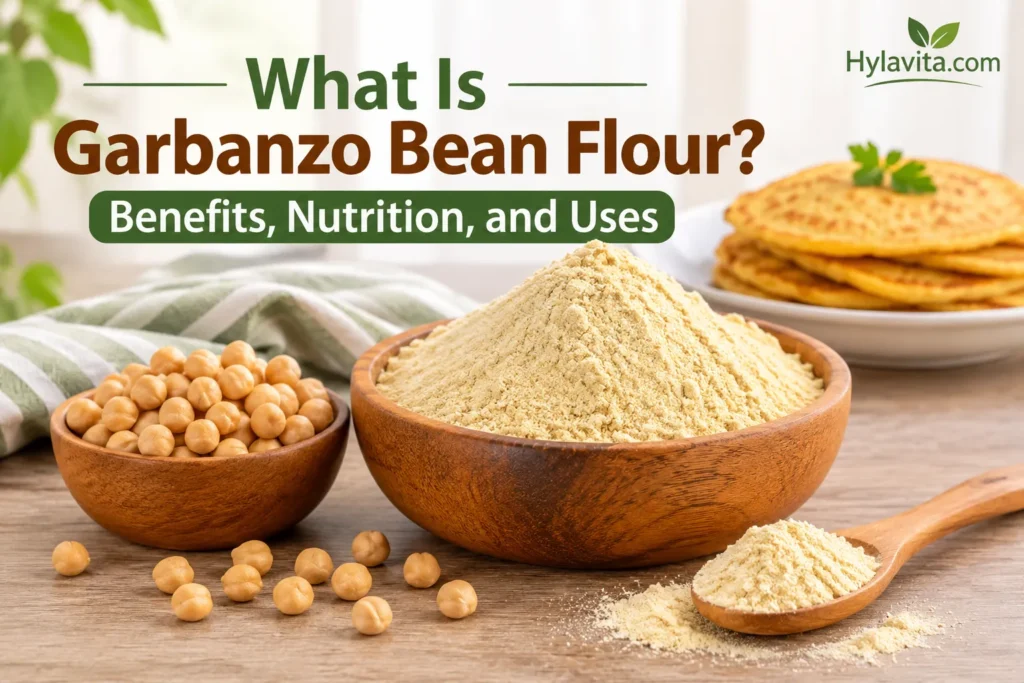
Garbanzo bean flour is a popular alternative to regular wheat flour. It comes from dried chickpeas that manufacturers grind into fine powder. You may also know it as chickpea flour or gram flour. It has a slightly nutty, earthy taste and smooth texture. Many people use it in pancakes, flatbreads, snacks, and baked goods. It also provides plant-based protein, fiber, and several important minerals. Since it contains no natural gluten, it suits gluten-free diets. In this guide, you’ll learn about garbanzo bean flour’s nutrition, benefits, uses, and possible side effects.
What Is Garbanzo Bean Flour?
Garbanzo bean flour is a type of flour made from dried chickpeas. Manufacturers grind these chickpeas into a fine, powder-like texture. You may also know it as chickpea flour or garbanzo flour. In some regions, people call it gram flour or besan. This flour has a slightly nutty and earthy flavor. Its texture feels smooth, although some brands may feel coarser. People commonly use it in pancakes, flatbreads, fritters, and snacks. It also works in soups, sauces, and different baked foods. Unlike wheat flour, it contains no naturally occurring gluten.
Garbanzo Bean Flour Nutrition Facts
Garbanzo bean flour provides several nutrients in a small serving. Its exact nutritional values depend on the brand and processing method. A typical quarter-cup serving weighs approximately 30 grams.
Here is an approximate nutritional breakdown:
| Nutrient | Amount per ¼ cup (30g) |
|---|---|
| Calories | 110 |
| Protein | 6g |
| Carbohydrates | 18g |
| Dietary fiber | 5g |
| Fat | 2g |
These values can vary between different products and manufacturers.
Garbanzo bean flour also contains several important minerals. These include iron, magnesium, potassium, and phosphorus. It also provides folate, which supports normal cell growth. Its protein and fiber content make it a nutritious flour option. Compared with regular wheat flour, it generally provides more protein and fiber. However, both flours contain carbohydrates and provide energy. Their nutritional values depend on the specific flour and serving size.
7 Health Benefits of Garbanzo Bean Flour
Garbanzo bean flour offers several nutrients that support overall health. Its protein, fiber, and minerals make it a useful ingredient. Here are seven potential benefits worth understanding.
1. Provides Plant-Based Protein
Protein helps your body build and maintain healthy muscles. It also supports tissue repair and several important body functions. Garbanzo bean flour provides a good amount of plant-based protein.
A quarter-cup serving contains approximately six grams of protein. This makes it useful for people following plant-based diets. You can add it to pancakes, flatbreads, and homemade snacks. However, it should not replace all other protein sources. Eating different protein-rich foods helps provide a wider range of nutrients.
2. Supports Digestive Health
Garbanzo bean flour contains dietary fiber that supports digestive health. Fiber helps add bulk to stool and supports regular bowel movements. It also helps maintain normal digestive function.
Eating enough fiber may help prevent occasional constipation. However, increasing fiber too quickly can cause bloating and gas. Drink enough water and increase your fiber intake gradually. This helps your digestive system adjust more comfortably.
3. May Help Support Blood Sugar Control
Garbanzo bean flour contains both protein and dietary fiber. These nutrients can help slow digestion and nutrient absorption. This may support a steadier blood sugar response after meals.
Chickpea-based foods may also have a lower glycemic response. However, preparation methods and other ingredients affect the results. Portion sizes also matter when managing blood sugar levels. Garbanzo bean flour does not replace diabetes medication or treatment. People with diabetes should consider their overall meal composition.
4. Supports Heart Health
Garbanzo bean flour contains fiber and several essential minerals. Dietary fiber can help support healthy blood cholesterol levels. This makes fiber-rich foods useful in heart-friendly eating patterns.
It also provides magnesium and potassium for normal body functions. These minerals help support healthy muscle and nerve function. Potassium also plays a role in maintaining normal blood pressure. However, one ingredient cannot guarantee better heart health. Your overall diet and lifestyle matter much more.
5. Helps You Feel Fuller for Longer
Protein and fiber can help you feel satisfied after eating. Garbanzo bean flour contains both of these important nutrients. They can slow digestion and support feelings of fullness.
Adding this flour to meals may help manage hunger. For example, you can use it in pancakes or homemade flatbreads. These foods can provide more protein and fiber than some alternatives. However, portion sizes and added ingredients still affect calories. No single flour automatically causes weight loss.
6. Provides Important Minerals
Garbanzo bean flour supplies several minerals your body needs daily. These include iron, magnesium, potassium, and phosphorus. Each mineral supports different functions throughout your body.
Iron helps your body produce healthy red blood cells. Magnesium supports normal muscle, nerve, and energy functions. Potassium helps regulate fluid balance and supports normal blood pressure. The flour also provides folate, a B vitamin. Folate supports DNA production and normal cell growth.
Adding garbanzo bean flour can increase your mineral intake. However, your overall diet determines your total nutrient intake.
7. Naturally Gluten-Free
Garbanzo bean flour comes from chickpeas, not wheat or barley. This means it naturally contains no gluten. It can provide another flour option for gluten-free cooking and baking.
People with celiac disease may use suitable chickpea flour products. However, some products can become contaminated during processing. Always check packaging for gluten-free certification when necessary. This helps reduce the risk of accidental gluten exposure.
Common Uses of Garbanzo Bean Flour
Garbanzo bean flour works in many everyday cooking recipes. Its slightly nutty flavor suits both savory and sweet dishes. You can use it in several simple ways.
- Flatbreads: Mix it with water and seasonings for simple flatbreads.
- Pancakes: Use it to prepare savory or sweet pancakes.
- Fritters: Combine it with vegetables to make crispy fritters.
- Savory snacks: Add it to homemade crackers and other snacks.
- Soups and sauces: Mix it into recipes to help thicken liquids.
- Baking: Use it in selected bread, muffin, and cookie recipes.
- Food coating: Coat vegetables before frying or baking them.
Garbanzo bean flour does not behave exactly like wheat flour. Its lack of gluten changes the texture of baked foods. Some recipes need extra moisture or additional binding ingredients. You may need to adjust quantities when trying new recipes.
For best results, follow recipes designed for chickpea flour. This helps you achieve better texture and flavor.
Garbanzo Bean Flour vs. Regular Wheat Flour
Garbanzo bean flour and wheat flour come from different plants. They also differ in their nutritional content and cooking properties. Garbanzo bean flour generally provides more protein and fiber. Regular refined wheat flour usually contains less fiber. However, whole wheat flour offers more fiber than refined flour. Both flours contain carbohydrates and provide energy. Their protein quality and mineral content also differ. Another major difference involves gluten. Wheat flour naturally contains gluten, while chickpea flour does not.
Their flavors and textures are also different. Garbanzo bean flour has a nutty and earthy taste. Wheat flour usually has a milder flavor. Wheat flour also creates stretchy dough through gluten development. Garbanzo bean flour cannot provide the same structure. You can substitute them in some recipes, but not all. The best choice depends on your cooking needs.
Is Garbanzo Bean Flour Gluten-Free?
Yes, garbanzo bean flour is naturally gluten-free. Manufacturers make it from chickpeas rather than gluten-containing grains. This makes it suitable for many gluten-free recipes. People with celiac disease should check product labels carefully. Some flour products may face cross-contamination during manufacturing. Choose products labeled or certified gluten-free when necessary. Also, check other ingredients in packaged flour mixtures.
Garbanzo bean flour works well in pancakes, flatbreads, and fritters. However, its texture differs from traditional wheat flour. You may need special recipes for successful baking.
Possible Side Effects of Garbanzo Bean Flour
Garbanzo bean flour is generally safe for most people. However, some people may experience digestive discomfort after eating it. Its fiber content may cause gas and bloating. This happens more often when someone increases fiber intake quickly. Start with smaller portions if you are not used to fiber. Gradually increase your intake as your body adjusts.
People with chickpea allergies should avoid this flour. Chickpeas belong to the legume family and can cause allergic reactions. Symptoms may include itching, swelling, or digestive problems. Severe reactions require immediate medical attention. Eating very large portions may also cause discomfort. Choose moderate servings and maintain a balanced diet. If symptoms continue, discuss them with a healthcare professional.
How to Store Garbanzo Bean Flour
Store garbanzo bean flour in a clean, airtight container. Keep it somewhere cool, dry, and away from direct sunlight. Moisture and heat can reduce its quality over time. You can also store it in the refrigerator. Refrigeration may help maintain freshness, especially in warm climates. For longer storage, use a tightly sealed freezer-safe container. Always check the package instructions and expiration date. Discard flour if you notice mold, insects, or unusual smells.
Frequently Asked Questions About Garbanzo Bean Flour
Is garbanzo bean flour the same as chickpea flour?
Yes, garbanzo bean flour and chickpea flour often mean the same thing. Both generally come from ground dried chickpeas. However, some regional products use different chickpea varieties.
Does garbanzo bean flour taste like chickpeas?
Garbanzo bean flour has a mild, nutty, earthy flavor. Its taste becomes less noticeable in seasoned recipes. Cooking also changes its flavor and aroma.
Can you use garbanzo bean flour instead of all-purpose flour?
Yes, but it does not work equally well in every recipe. Garbanzo bean flour contains no gluten, unlike wheat flour. This changes dough structure and baking texture. Start with recipes specifically developed for chickpea flour. You may need additional binding ingredients for certain baked foods.
Is garbanzo bean flour good for weight loss?
It can fit into a balanced weight-loss eating plan. Its protein and fiber may help support fullness. However, weight loss depends on your overall calorie intake. No single flour guarantees weight loss.
Final Thoughts
Garbanzo bean flour is a nutritious alternative to regular wheat flour. It provides plant-based protein, dietary fiber, and important minerals. Its naturally gluten-free properties also make it useful for gluten-free cooking. You can use it in pancakes, flatbreads, fritters, and baked foods. It also works well in soups and sauces. However, its taste and texture differ from traditional wheat flour. Choose suitable recipes and enjoy it in moderate portions. A balanced diet remains important for supporting your overall health.
Hylavita’s suggestion to read
- Dunkin’ Donuts Nutrition: Calories, Sugar, and Nutritional Facts
- Is Peanut Butter Gluten Free? Nutrition, Ingredients, and Facts
- Is Chipotle Healthy? Calories, Ingredients and Nutrition Facts
Disclaimer: This article is for informational and educational purposes only. Nutritional values may vary between brands and products. Garbanzo bean flour may not suit people with chickpea allergies or certain dietary needs. Consult a qualified healthcare professional for personalized dietary advice.