Look down at your thighs in the mirror and see dimples that weren’t there ten years ago? You’re not alone, and you’re not doing anything wrong.
Cellulite affects most women at some point in their lives, no matter their weight or fitness level. So it’s natural to wonder: does strength training cellulite reduction actually happen, or is it just another fitness myth?
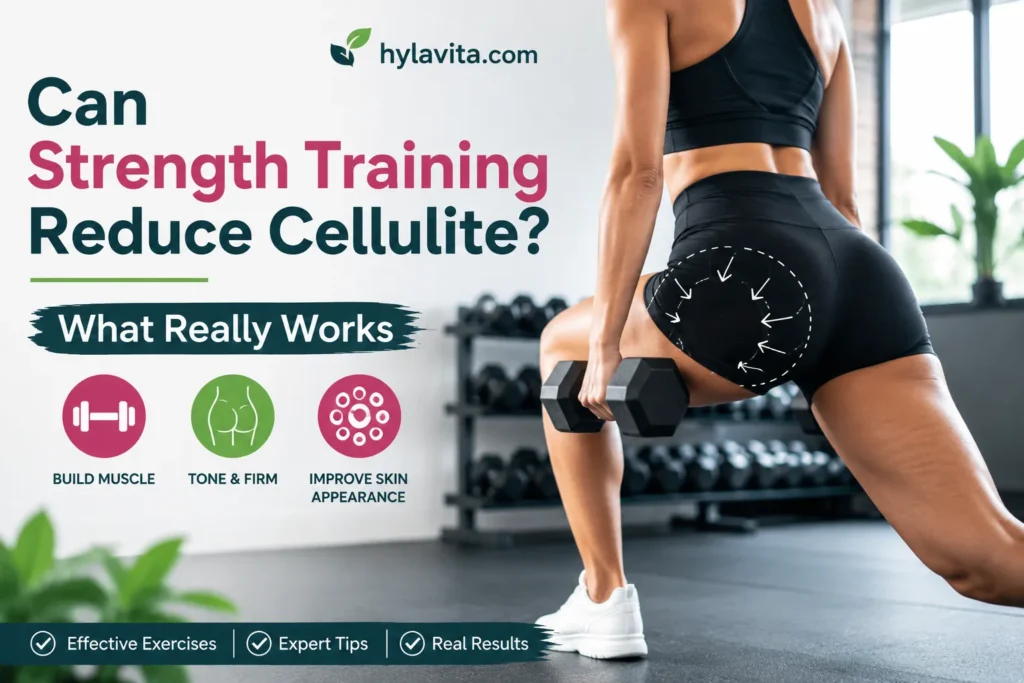
The short answer is that strength training can help improve the look of cellulite, but it won’t erase it completely. In this article, we’ll break down the science, the exercises that actually help, the advantages and disadvantages of relying on strength training for this goal, and what you should realistically expect.
What Is Cellulite, Really?
Before we talk about fixes, let’s understand the problem.
According to the Mayo Clinic, cellulite is fat that pushes up against connective tissue under your skin, creating the dimpled, “cottage cheese” texture you see on thighs, hips, and buttocks. The Cleveland Clinic notes that it’s a cosmetic condition, not a health problem, and that women develop it at a much higher rate than men because of differences in how fat, muscle, and connective tissue are structured beneath the skin.
It’s not caused by toxins or bad eating habits alone. Genetics, hormones, skin thickness, and age all play a role. Up to 90% of women experience cellulite at some point, and dermatologists agree it’s considered physiological rather than a disease.
Why Cellulite Isn’t Just About Fat
Here’s the part most people miss. Even very fit, lean people can have cellulite.
That’s because it’s about the structure underneath your skin, not just how much fat you have. Think of it like a mattress with weak springs. Even a light person can leave a dent if the springs (your connective tissue) are loose.
Can Strength Training Cellulite Really Improve?
Yes, strength training can help, but not by “burning off” cellulite directly. Instead, it works in a few indirect ways.
First, building muscle underneath the fat layer can smooth out the skin’s surface. Second, strength training improves circulation, which may reduce the appearance of dimpling over time. Third, it helps tone the skin, making it look tighter and firmer.
However, strength training won’t make cellulite disappear completely. Genetics still play a big role, and there’s no exercise that targets fat loss in just one area (this is called “spot reduction,” and it’s a myth).
What the Research Actually Says
This is where a lot of articles get vague, so let’s be specific. A focused research review on exercise-based approaches to cellulite found that regular resistance training can help improve cellulite severity, particularly through controlling body weight and increasing muscle strength, though the number of studies that isolate resistance training specifically is still small. Most of the stronger evidence looks at resistance training combined with other interventions, such as shockwave therapy, rather than resistance training completely on its own.
The takeaway: strength training is a legitimate, evidence-supported piece of the puzzle, not a proven standalone cure. Results vary from person to person, and there is no guaranteed timeline.
Advantages and Disadvantages of Strength Training for Cellulite
Before you build a routine around this goal, it helps to see the full picture rather than just the upside.
Advantages
- No spot-reduction gimmicks required. Strength training delivers real, measurable benefits (muscle tone, metabolic rate, bone density) whether or not cellulite improves, so you’re not wasting effort on an unproven fad.
- Improves the look of skin over time. Added muscle beneath the fat layer can smooth out surface dimpling, especially in the glutes, thighs, and core.
- Supports fat loss alongside diet. More muscle mass raises resting metabolic rate, which supports the overall fat loss that can make cellulite less noticeable.
- Low cost, low risk. Bodyweight and basic resistance exercises can be done at home with minimal or no equipment, and the injury risk is low when form is correct.
- Compounding benefits. Unlike creams or massage tools, the strength and circulation gains build over months and don’t reverse the moment you stop buying a product.
Disadvantages
- It won’t eliminate cellulite. Genetics and connective tissue structure set a ceiling on how much improvement is possible, and dermatologists are clear that no treatment removes cellulite for everyone.
- Results are slow. Muscle tone changes take 6 to 8 weeks at minimum; visible skin texture changes often take 3 months or longer.
- No targeted (spot) reduction. You can’t choose to lose fat or build muscle in only the areas with cellulite; the body decides where fat comes off.
- Requires consistency most people underestimate. One or two workouts won’t move the needle. Without a sustained weekly routine, the modest improvements strength training can offer won’t materialize.
- Diet-dependent. Strength training alone, without attention to nutrition, has a much smaller effect on the fat-loss side of the equation.
Strength Training for Cellulite: How It Helps the Body
Let’s get more specific about strength training for cellulite and why it’s one of the better options compared to cardio alone.
It builds muscle beneath the skin. When you build muscle in your legs, glutes, and core, it fills out the area beneath the skin. This can smooth the surface and reduce the dimpled look, especially in the thighs and buttocks.
It improves skin circulation over time. Strength training increases blood flow, and better circulation often means firmer-looking skin.
It supports fat loss (along with diet). While you can’t spot-reduce fat, strength training raises your metabolism. This helps with overall fat loss when paired with good nutrition, which can reduce how noticeable cellulite appears.
Best Exercises to Reduce Cellulite
If you’re looking for exercises to reduce cellulite, focus on movements that target the legs, glutes, and core. These are the most common areas where cellulite shows up.
Lower Body Strength Moves
- Squats – Work the quads, hamstrings, and glutes all at once.
- Lunges – Great for toning the thighs and improving balance.
- Glute bridges – Target the glutes directly without stressing the knees.
- Step-ups – Simple, effective, and easy to do at home with a sturdy bench or step.
Core and Full-Body Moves
- Planks – Strengthen the core, which supports overall posture and muscle tone.
- Deadlifts – Work the hamstrings, glutes, and lower back together.
- Wall sits – A simple isometric move that builds endurance in the thighs.
For beginners, start with two to three sets of 10 to 15 reps for each exercise. As you get stronger, add resistance with dumbbells, resistance bands, or a barbell. If you want a more structured lower-body routine to build on these moves, see our strength training guides on Hylavita.
Strength Exercises for Cellulite: Building a Weekly Routine
Consistency matters more than intensity when it comes to strength exercises for cellulite. Here’s a simple weekly plan for beginners.
| Day | Focus |
|---|---|
| Monday | Lower body (squats, lunges, glute bridges) |
| Wednesday | Core and full body (planks, deadlifts) |
| Friday | Lower body again with added resistance |
| Weekend | Light walking or rest |
Rest days matter too. Muscles grow and repair during rest, not just during the workout itself.
How Long Before You See Results?
Most people notice changes in muscle tone after 6 to 8 weeks of consistent training. Skin texture changes, if they happen, usually take longer — often 3 months or more.
Everyone’s timeline is different. Genetics, hormones, and diet all affect how fast (or if) you see visible changes.
Cellulite and Strength Training: What Else Actually Helps
Strength training works best as part of a bigger picture. Here’s what else supports the process when it comes to cellulite and strength training together.
Nutrition and hydration. Drinking enough water supports skin elasticity. Eating a diet with enough protein also supports muscle growth, which helps with that smoothing effect we talked about earlier.
Cardio in moderation. Cardio helps with overall fat loss, which can make cellulite less noticeable. However, cardio alone, without strength training, won’t build the muscle tone needed to smooth the skin’s surface.
Skin care isn’t a fix, but it can help confidence. Dry brushing, massage, and moisturizing won’t get rid of cellulite. However, some people find they temporarily improve skin appearance and circulation, which can be a nice confidence boost alongside your fitness routine.
Common Mistakes to Avoid
Many people give up too early or expect too much. Here are a few mistakes to watch for.
- Expecting complete elimination. Cellulite has a strong genetic component, so full removal isn’t realistic for most people.
- Only doing cardio. Cardio alone doesn’t build the muscle tone that helps smooth skin.
- Skipping consistency. One workout won’t change anything. It takes weeks and months of regular training.
- Ignoring nutrition. Exercise alone can’t outpace a poor diet.
FAQ: Strength Training and Cellulite
Does strength training completely remove cellulite? No. Strength training can improve the appearance of cellulite by building muscle and improving circulation, but it can’t completely remove it since genetics and skin structure play a major role.
How long does it take to see results from strength training on cellulite? Muscle tone often improves within 6 to 8 weeks. Changes in skin texture usually take longer, sometimes three months or more, and results vary by person.
Can cardio alone reduce cellulite better than strength training? Cardio helps with overall fat loss, but it doesn’t build muscle tone the way strength training does. A combination of both, along with good nutrition, tends to work best.
What are the best exercises to reduce cellulite? Squats, lunges, glute bridges, deadlifts, and planks are some of the most effective exercises to reduce cellulite because they target the legs, glutes, and core directly.
Is cellulite a sign of being unhealthy? Not necessarily. Cellulite affects people of all body types and fitness levels, including those who are very healthy. According to the Cleveland Clinic, it’s mostly influenced by genetics, hormones, and skin structure, not just fitness level.
Conclusion
So, can strength training reduce cellulite? To some degree, yes. It won’t erase it completely, but it can improve muscle tone, boost circulation, and smooth the skin’s appearance over time — and it comes with none of the downsides of unproven creams or gadgets.
The real key is consistency. Combine strength training with a balanced diet, regular movement, and patience, and you’ll likely notice gradual improvement. Most importantly, remember that cellulite is normal and doesn’t reflect your health or worth.
If you’re ready to start, try adding two to three strength sessions to your week and stick with it for at least two months before judging results. Your body (and your confidence) will thank you.
Disclaimer: This article is for general informational and educational purposes only and is not a substitute for professional medical advice, diagnosis, or treatment.