
Have you noticed your teeth looking a little longer than they used to? That’s often the first sign of receding gums, and it’s more common than you might think — research cited by the Cleveland Clinic shows that roughly 88% of people over age 65 have some degree of gum recession.Gum recession happens slowly, so most people don’t catch it until their teeth feel sensitive or look uneven. The good news is that learning how to prevent gum recession isn’t complicated. With a few daily habits, you can protect your gums and keep your smile healthy for years to come.
In this article, we’ll walk through what causes gum recession, weigh the advantages and disadvantages of the main treatment paths, and share 10 simple, practical tips you can start using today. For a related read, see our guide on everyday oral health topics on Hylavita — we cover gum and mouth health across the site.
What Is Gum Recession?
Gum recession happens when the gum tissue around your teeth wears away or pulls back. This exposes more of the tooth, and sometimes even the tooth root.
Unlike a cavity, gum recession doesn’t happen overnight. It builds up slowly, often over months or years. That’s why many people don’t notice it until a dentist points it out during a checkup. According to the National Institute of Dental and Craniofacial Research (NIDCR), gum disease — one of the leading drivers of recession — often starts quietly with swollen or bleeding gums before it progresses.
Common Signs to Watch For
Here are a few warning signs that your gums might be receding:
- Teeth that look longer than before
- Sensitivity to hot, cold, or sweet foods
- A visible line or notch where the tooth meets the gum
- Teeth that feel a bit loose or wobbly
If you notice any of these, it’s worth mentioning to your dentist at your next visit.
What Causes Gum Recession?
Before we get into prevention tips, it helps to understand why gum recession happens in the first place. Once you know the cause, the solution makes a lot more sense.
Brushing Too Hard This is one of the most common causes. Many people think scrubbing harder cleans better, but it actually wears down gum tissue over time, like sandpaper on wood.
Gum Disease Bacteria buildup along the gumline can lead to gum disease, which slowly damages the tissue and bone that hold your teeth in place. This is one of the leading causes of gum recession worldwide.
Genetics Some people are simply born with thinner or more delicate gum tissue. If your parents had gum problems, you may be more likely to as well.
Teeth Grinding and Misalignment Grinding your teeth at night puts extra pressure on your gums. Similarly, crooked teeth can create spots where gums are more likely to pull back.
Tobacco Use Smoking and other tobacco products reduce blood flow to the gums, which slows healing and makes gum tissue more likely to break down over time.
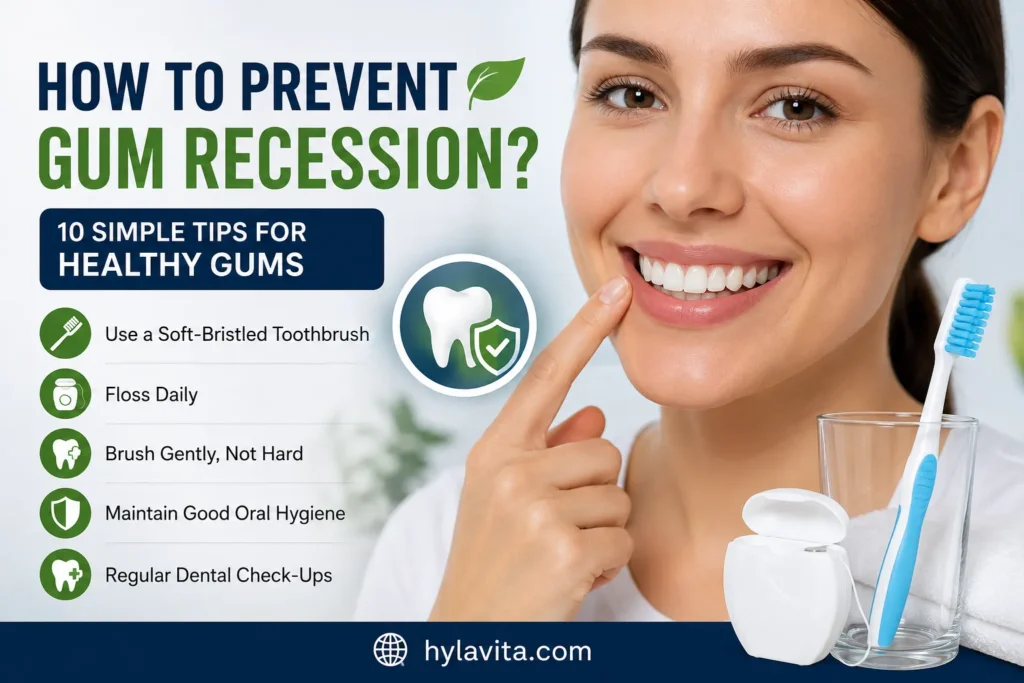
How to Prevent Gum Recession: 10 Simple Tips
Now let’s get into the part you came here for. These tips are simple, practical, and easy to add to your daily routine.
1. Brush Gently with a Soft-Bristled Toothbrush Switch to a soft-bristled brush and use light, circular motions. Think of it like washing a delicate piece of fabric — you don’t need to scrub hard to get it clean. Hold the brush like a pen, not a fist. This small change alone can make a big difference over time.
2. Use the Right Brushing Technique Angle your toothbrush at 45 degrees toward the gumline. Brush in small, gentle circles instead of back-and-forth scrubbing motions. This technique cleans just as well, but it’s much easier on your gum tissue.
3. Floss Every Day Flossing removes food particles and plaque from between teeth, areas your toothbrush can’t reach. Skipping this step allows bacteria to build up, which can lead to gum disease over time. If regular floss feels tricky, try a floss pick or a water flosser instead.
4. Get Regular Dental Checkups Visiting your dentist regularly, generally every six months, unless they recommend otherwise, allows small issues to be caught early. Your dentist can spot early signs of gum recession before you even notice symptoms. Professional cleanings also remove hardened plaque, called tartar, that a toothbrush can’t remove on its own.
5. Treat Gum Disease Early If your dentist mentions early gum disease, sometimes called gingivitis, don’t ignore it. At this stage, it’s often reversible with better hygiene and professional cleanings. Waiting too long can allow it to progress into a more serious condition that’s harder to treat.
6. Wear a Mouthguard If You Grind Your Teeth If you grind your teeth at night, a common habit many people don’t even realize they have, ask your dentist about a custom mouthguard. It protects your gums and teeth from the extra pressure grinding causes. This is one of the easier fixes on this list, and it works while you sleep.
7. Quit Smoking or Using Tobacco Tobacco use is one of the biggest risk factors for gum problems. Quitting can be hard, but it’s one of the most effective things you can do for your gum health. Even cutting back gradually can help reduce the strain on your gum tissue.
8. Eat a Gum-Friendly Diet Your gums need nutrients just like the rest of your body. Foods rich in vitamin C, like oranges and leafy greens, support healthy gum tissue and help fight inflammation. On the other hand, try to limit sugary snacks and drinks, since sugar feeds the bacteria that cause gum disease.
9. Stay Hydrated and Manage Dry Mouth Saliva naturally washes away bacteria in your mouth. If your mouth is often dry, from medication, breathing through your mouth, or dehydration, bacteria can build up faster. Drink plenty of water throughout the day and talk to your dentist if dry mouth is a regular issue for you.
10. Consider Orthodontic Treatment If Needed If your teeth are crowded or misaligned, it can make some areas harder to clean properly. Over time, this uneven pressure and buildup can contribute to gum recession. Ask your dentist whether orthodontic treatment might help protect your gums in the long run.
How to Stop Gum Recession If It’s Already Started
If you’re past the prevention stage and already seeing signs of recession, don’t panic. While gum tissue that has receded won’t grow back on its own, there are ways to manage it and stop it from getting worse. The Cleveland Clinic notes that treatment generally falls into two categories: nonsurgical options like topical antibiotics, dental bonding, or orthodontics for mild cases, and gum graft surgery for more advanced recession.
Advantages and Disadvantages of Gum Recession Treatments
Not every option is right for every person. Here’s a balanced look at the trade-offs so you have a clearer picture before talking to your dentist.
Nonsurgical Treatments (topical antibiotics, dental bonding, desensitizing agents, orthodontics)
Advantages:
- Less invasive, with little to no recovery time
- Generally lower cost than surgery
- Can be done in a single office visit in many cases
- A good fit for mild recession or early-stage gum disease
Disadvantages:
- Doesn’t regenerate lost gum tissue — it manages symptoms or camouflages the area rather than reversing the recession
- May need to be repeated or touched up over time (e.g., bonding can wear or stain)
- Not effective for moderate-to-severe recession
Gum Graft Surgery
Advantages:
- The most predictable, long-lasting way to cover exposed roots and rebuild lost gum tissue
- Reduces sensitivity and protects the tooth root from further damage
- Can improve the appearance of a receded gumline
Disadvantages:
- More invasive, with a recovery period (often around two weeks)
- Higher cost, and not always fully covered by dental insurance
- Requires a periodontist or oral surgeon, not just a general dentist
At-Home Prevention Habits (the 10 tips above)
Advantages:
- Free or low-cost, and something you control daily
- Lowers your risk of new or worsening recession
- Supports whatever professional treatment you choose
Disadvantages:
- Cannot reverse recession that has already occurred
- Requires consistency — results build up over months, not days
- Won’t fully offset a strong genetic predisposition to thin gum tissue
The most important step is catching gum recession early. The prevention tips above become even more important once recession has already started, since they help stop it from progressing further while you and your dentist decide on the right treatment.
FAQ: Common Questions About Gum Recession
Can receding gums grow back? No, gum tissue that has already receded generally does not grow back on its own. However, treatments like gum grafts can help cover exposed areas, and good habits can prevent further recession.
Is gum recession painful? Mild gum recession usually isn’t painful, but it often causes sensitivity to hot, cold, or sweet foods. As it progresses, some people may experience discomfort near the exposed tooth root.
How long does it take for gums to recede? Gum recession usually happens slowly over months or years, not overnight. This is why regular dental checkups are so important for catching it early.
What toothpaste is best for receding gums? Toothpaste made for sensitive teeth can help reduce discomfort from exposed roots. It’s also a good idea to ask your dentist for a personal recommendation based on your specific situation.
Can stress cause gum recession? Stress itself doesn’t directly cause gum recession, but it can lead to habits like teeth grinding, which puts extra pressure on your gums. Managing stress may indirectly help protect your gum health.
Conclusion
Healthy gums don’t happen by accident, but they don’t require a complicated routine either. Learning how to prevent gum recession really comes down to a few consistent habits: gentle brushing, daily flossing, regular dental visits, and paying attention to warning signs early.
Small changes today can save you from bigger dental problems down the road. If you’re already noticing signs of gum recession, don’t wait — book a visit with your dentist to talk about the best next steps for your smile.
Medical Disclaimer: This article is provided for general educational and informational purposes only and is not intended as, and should not be substituted for, professional dental or medical advice, diagnosis, or treatment.