
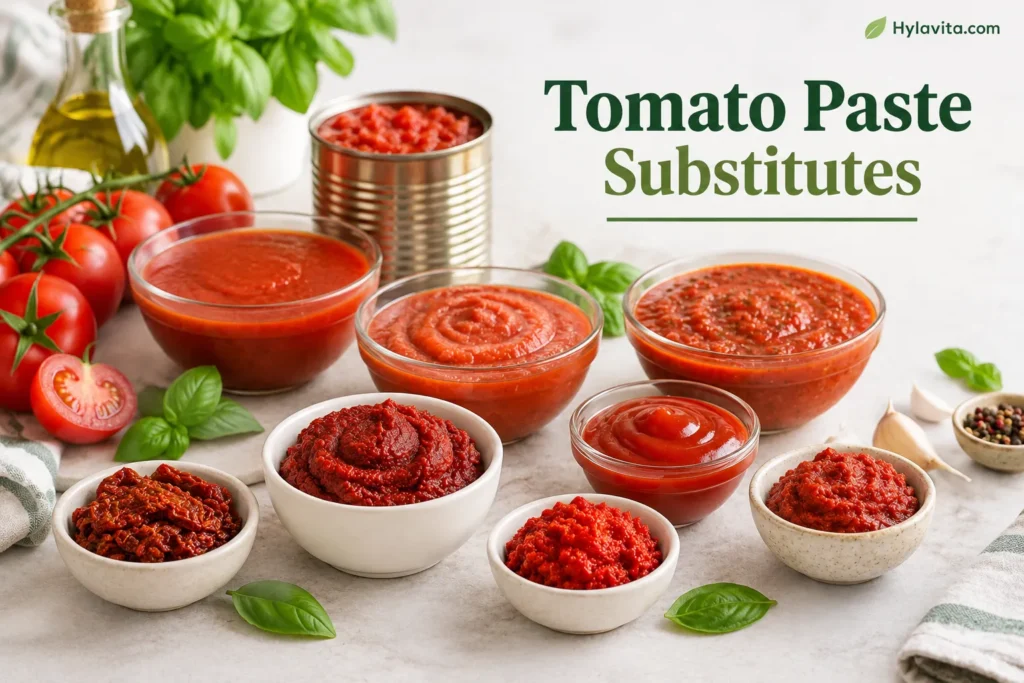
Tomato paste adds a rich tomato flavor, deep color, and thickness to many recipes. You can find it in soups, sauces, stews, and pasta dishes. However, you might run out of tomato paste while cooking. Sometimes, you may want to use an ingredient already available in your kitchen. The good news is that several ingredients can work as a tomato paste substitute. Some options provide a similar flavor, while others need extra cooking time. The best choice depends on your recipe and the ingredients you have. This guide covers ten easy alternatives and explains how to use them.
What Is Tomato Paste?
Tomato paste is a thick ingredient made from cooked tomatoes. Manufacturers remove much of the water to create a concentrated tomato flavor. It has a deep red color and a smooth, dense texture. A small amount can add rich flavor to many dishes. Cooks often use tomato paste in soups, sauces, stews, and pasta recipes. It also helps thicken liquids and gives dishes a stronger tomato taste. Unlike tomato sauce, tomato paste contains less water and feels much thicker. You can also use it in marinades, casseroles, and homemade pizza sauce.
10 Best Tomato Paste Substitutes
If you run out of tomato paste, several kitchen ingredients can replace it. Each option offers a different flavor, texture, and level of thickness. Choose one that works well with your recipe and cooking time.
1. Tomato Sauce
Tomato sauce is an easy substitute for tomato paste. It has a milder flavor and contains more water. Use about three tablespoons of tomato sauce for one tablespoon of tomato paste. Simmer it longer to remove excess liquid and deepen its flavor. This option works well in soups, stews, and pasta sauces. Check the label because some tomato sauces contain added sugar, salt, or seasonings.
2. Tomato Puree
Tomato puree offers a smooth texture and fresh tomato flavor. It usually contains more moisture than tomato paste. Start with two to three tablespoons of puree for each tablespoon of tomato paste. Cook it longer to thicken the mixture and concentrate its flavor. Tomato puree works well in curries, soups, sauces, and casseroles. Check its consistency before adding more, as products can vary in thickness.
3. Canned Crushed Tomatoes
Canned crushed tomatoes provide a fresh, slightly chunky tomato flavor. They contain more liquid than tomato paste, so your dish may become thinner. Use about three tablespoons of crushed tomatoes for one tablespoon of tomato paste. Simmer them until the mixture thickens and some liquid evaporates. This substitute works well in stews, soups, chili, and pasta sauces. Blend the tomatoes first if you prefer a smoother texture.
4. Fresh Tomatoes
Fresh tomatoes can replace tomato paste when you have extra cooking time. They provide a bright flavor but contain much more water. Chop the tomatoes and cook them until soft. Then, simmer them until most excess liquid evaporates. Use several tablespoons of cooked tomato mixture to replace one tablespoon of paste. The exact amount depends on the tomatoes and their final thickness. This option suits soups, curries, and homemade sauces.
5. Ketchup
Ketchup can replace tomato paste when you need a quick alternative. It has a sweet, tangy flavor and a smooth texture. Start with one tablespoon of ketchup for one tablespoon of tomato paste. Reduce other sweet ingredients because ketchup often contains added sugar. It may also add vinegar and extra salt to your dish. Ketchup works best in meatloaf, marinades, and recipes that suit its sweeter taste.
6. Marinara Sauce
Marinara sauce offers a tomato-based alternative with extra flavor. Many varieties contain garlic, herbs, salt, and other seasonings. Use about three tablespoons of marinara for one tablespoon of tomato paste. Simmer it longer if your recipe needs a thicker consistency. Reduce other seasonings if the sauce already contains them. Marinara works well in pasta dishes, casseroles, and soups. Choose a plain variety when you want better control over flavor.
7. Sun-Dried Tomatoes
Sun-dried tomatoes provide a strong, concentrated tomato flavor. Their texture makes them useful when you need a richer taste. Soak dry tomatoes in hot water until they soften. Then, blend them into a smooth paste. Start with one tablespoon of blended tomatoes for each tablespoon of tomato paste. Adjust the amount based on their saltiness and texture. Oil-packed tomatoes also work, but drain excess oil before blending.
8. Tomato Soup
Tomato soup can work as a substitute when other options are unavailable. However, it usually has a thinner texture and a milder flavor. Start with three tablespoons of tomato soup for one tablespoon of tomato paste. Reduce other liquids to prevent your recipe from becoming watery. Check the label for added cream, sugar, salt, and seasonings. Tomato soup works best in casseroles, stews, and dishes that already contain liquid.
9. Red Pepper Paste
Red pepper paste provides thickness and a rich, savory flavor. However, it does not taste exactly like tomato paste. Use one tablespoon of red pepper paste for one tablespoon of tomato paste. Start with less if the pepper paste tastes spicy or salty. Adjust the seasoning after mixing it into your dish. This substitute works well in stews, soups, and savory sauces. Choose a mild variety when you want less heat.
10. Homemade Tomato Paste
Homemade tomato paste is a useful option when you have fresh tomatoes. It offers a concentrated flavor and thick texture similar to store-bought paste. Chop ripe tomatoes and cook them until they soften. Blend the mixture, then simmer it slowly until thick. Stir regularly to prevent sticking or burning. Use one tablespoon of homemade paste for one tablespoon of store-bought paste. Remove excess water carefully, and let the paste cool before storing it safely.
Tips for Using Tomato Paste Substitutes
Choose a substitute that matches your recipe’s flavor and thickness. Many alternatives contain more water than tomato paste. Simmer them longer to remove excess liquid and develop a richer flavor. Add small amounts first, then adjust as needed. Taste your dish before adding extra salt, sugar, or spices. Some substitutes, like ketchup and marinara sauce, already contain seasonings. If your dish becomes too thin, cook it uncovered to reduce moisture. You can also blend chunky tomatoes for a smoother texture. Always adjust the amount based on your recipe and personal taste.
Frequently Asked Questions
What Can I Use If I Don’t Have Tomato Paste?
You can use tomato sauce, tomato puree, or crushed tomatoes instead. These options provide tomato flavor but contain more water. Simmer them longer to achieve a thicker consistency. Choose the substitute that best suits your recipe.
Is There a Quick Way to Make Tomato Paste?
Yes, you can make a simple version using canned or fresh tomatoes. Cook the tomatoes until soft, then blend them smoothly. Simmer the mixture uncovered until most excess water evaporates. Stir regularly to prevent sticking or burning. This process takes longer than opening a can, but it works well.
Can I Replace Tomato Paste With Ketchup?
Yes, ketchup can replace tomato paste in some recipes. However, ketchup tastes sweeter and tangier because it often contains sugar and vinegar. Start with equal amounts, then adjust according to taste. This substitute works best in recipes that suit its sweeter flavor. For savory dishes, tomato sauce or puree may work better.
Conclusion
Finding a good tomato paste substitute is easier than you might think. Tomato sauce, tomato puree, and crushed tomatoes are simple alternatives. Ketchup and marinara sauce can also work in suitable recipes. However, each option has a different flavor and water content. Some substitutes need extra cooking time to become thicker. Choose an alternative that matches your dish’s flavor and texture. Start with a small amount and adjust as needed. With the right substitute, you can prepare delicious meals without tomato paste.
Hylavita’s suggestion to read
- Low Residue Diet: Foods to Eat, Avoid, and Meal Ideas
- How Many Calories Are in Popcorn? A Complete Guide
- How to Cook Lean Ground Beef Without Drying It Out
Disclaimer: This article is for informational purposes only and provides general cooking advice. Tomato paste substitutes may vary in flavor, texture, and consistency. Results can differ depending on the ingredients and recipe you use. Always adjust quantities and seasonings to suit your taste and cooking needs.