
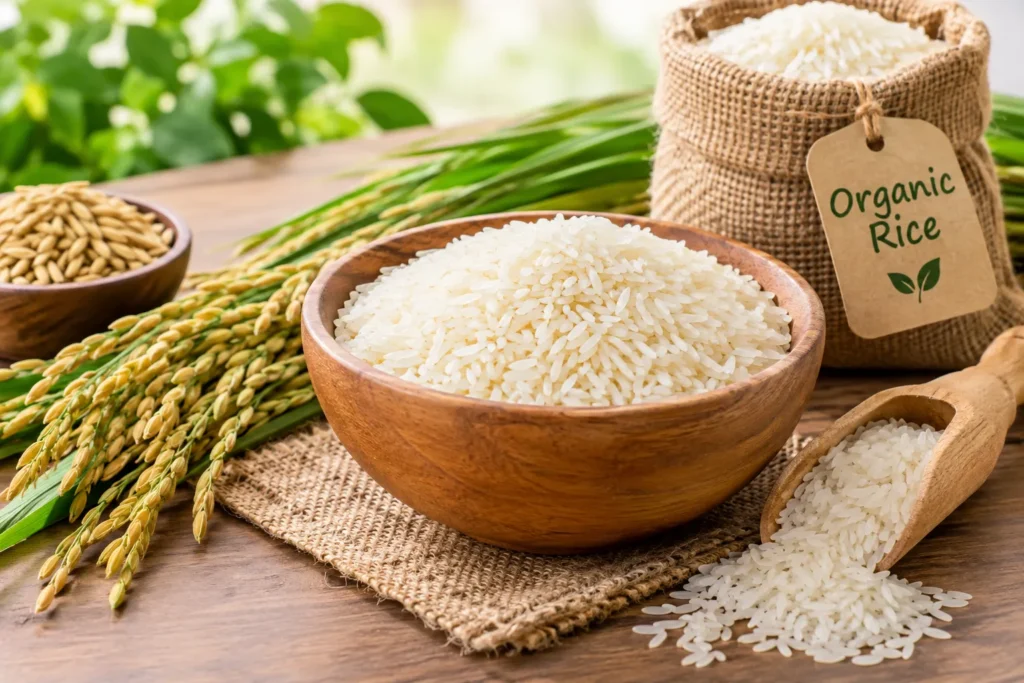
What Is Organic Rice?
Organic rice is grown using certified organic farming methods.
Farmers avoid prohibited pesticides, fertilizers, and genetic engineering that has more benefits.
It can include white, brown, black, red, basmati, and jasmine rice.
How Is Organic Rice Grown?
Organic rice is grown using certified organic farming methods.
Farmers avoid prohibited chemicals and genetically engineered seeds.
They manage pests and weeds using approved natural farming practices.
Healthy soil practices also help support organic rice production.
Organic Rice Nutrition
Organic rice mainly provides carbohydrates for energy.
It also contains smaller amounts of protein and fat.
Brown rice usually provides more fiber than white rice.
Rice also provides minerals such as magnesium, phosphorus, and manganese.
Nutrition varies depending on the rice variety and processing method.
Health Benefits of Organic Rice
Provides Important Nutrients
Rice provides carbohydrates, protein, and several minerals.
Brown rice also provides more fiber than white rice.
Supports Healthy Digestion
Brown organic rice contains dietary fiber.
Fiber helps support normal digestion and regular bowel movements.
Provides Energy
Rice mainly provides carbohydrates that your body uses for energy.
This makes rice a useful part of many balanced meals.
Supports a Balanced Diet
Rice can fit easily into a balanced diet with other foods.
Pair it with vegetables, protein foods, and healthy fats.
Types of Organic Rice
Organic rice comes in many varieties. The organic label describes farming methods, not rice variety.
Organic White Rice
White rice has its outer husk, bran, and germ removed.
It usually has a softer texture and milder taste.
Organic Brown Rice
Brown rice keeps its bran layer and germ after milling.
This gives it more fiber than comparable white rice.
Organic Basmati Rice
Basmati is a long-grain aromatic rice variety.
It has a distinctive aroma and long, slender grains.
Organic Jasmine Rice
Jasmine rice is another aromatic rice variety.
It has a distinctive fragrance and is commonly sold as long-grain rice.
Organic Black Rice
Black rice has naturally dark-colored grains.
Its color comes from natural plant pigments called anthocyanins.
Organic Red Rice
Red rice has a naturally reddish outer grain layer.
Its color comes from natural pigments found in the grain.
Organic Rice vs Regular Rice
Organic rice is grown under certified organic farming standards.
Regular rice uses conventional farming methods.
Both can provide similar nutrients, depending on variety and processing.
The main difference is how farmers grow and handle the rice.
How to Cook Organic Rice
Rinse the rice with clean water before cooking.
Add rice and water to a pot.
Follow the package instructions for water and cooking time.
Cook until the rice becomes soft and tender.
Let it rest briefly, then fluff with a fork.
Ways to Add Organic Rice to Your Diet
You can enjoy organic rice with many healthy foods.
Serve it with vegetables, beans, eggs, chicken, or fish.
Add brown rice to stir-fries with colorful vegetables.
You can also make simple rice bowls with protein and vegetables.
Use cooked rice in soups, salads, or homemade meals.
Choose brown rice when you want more whole grains.
Are There Any Side Effects of Organic Rice?
Organic rice is generally safe when eaten as part of a balanced diet.
However, rice can contain small amounts of inorganic arsenic.
Rice absorbs arsenic from soil and water more readily than many grains.
Organic farming does not automatically remove naturally occurring arsenic from rice.
Eating different grains can help reduce regular exposure from one food.
How to Choose Good Organic Rice
Look for a trusted organic certification on the package.
Certification shows that the rice meets specific organic standards.
Check the package for the rice variety you prefer.
Choose brown rice when you want a whole-grain option.
Check the package for damage, moisture, or signs of poor storage.
Also check the package date and storage instructions before buying.
Choose a sealed package from a reliable seller for better quality.
Frequently Asked Questions About Organic Rice
Is organic rice healthier than regular rice?
Organic rice follows different farming standards than regular rice.
It is not automatically more nutritious than regular rice.
Nutrition depends mainly on the rice variety and processing method.
Is organic rice good for daily eating?
Yes, rice can fit into a balanced daily diet.
Choose different grains and foods to keep your diet varied.
What is the healthiest type of organic rice?
Brown rice provides more fiber than comparable white rice.
However, the best choice depends on your overall dietary needs.
Does organic rice have more nutrients?
Organic rice does not automatically contain more nutrients.
Nutrient levels depend mainly on variety and processing.
Is organic brown rice better than organic white rice?
Brown rice keeps its bran and germ after milling.
This gives it more fiber than comparable white rice.
White rice has a softer texture and cooks more quickly.
Final Thoughts on Organic Rice
Organic rice can be a useful part of a balanced diet.
The organic label describes farming and handling standards, not extra nutrition.
Different rice varieties provide different textures, nutrients, and cooking results.
Brown rice provides more fiber than comparable white rice.
Choose the type that best fits your meals and dietary needs.
Eating different grains can also help keep your diet varied.
Hylavita’s sugestion to reading
- Starch of Maize: Uses, Nutritional Value, Benefits, and Side Effects
- Are Organic Almonds Healthier Than Regular Almonds?
- What Is Provascin Used For? Benefits, Dosage & Side Effects
Other readings
- Rice – The Nutrition Source
- Health Benefits of Rice
- Is White Rice Bad for You? What the Research Says
Disclaimer: This article is for general information only and does not replace professional medical advice or treatment.