
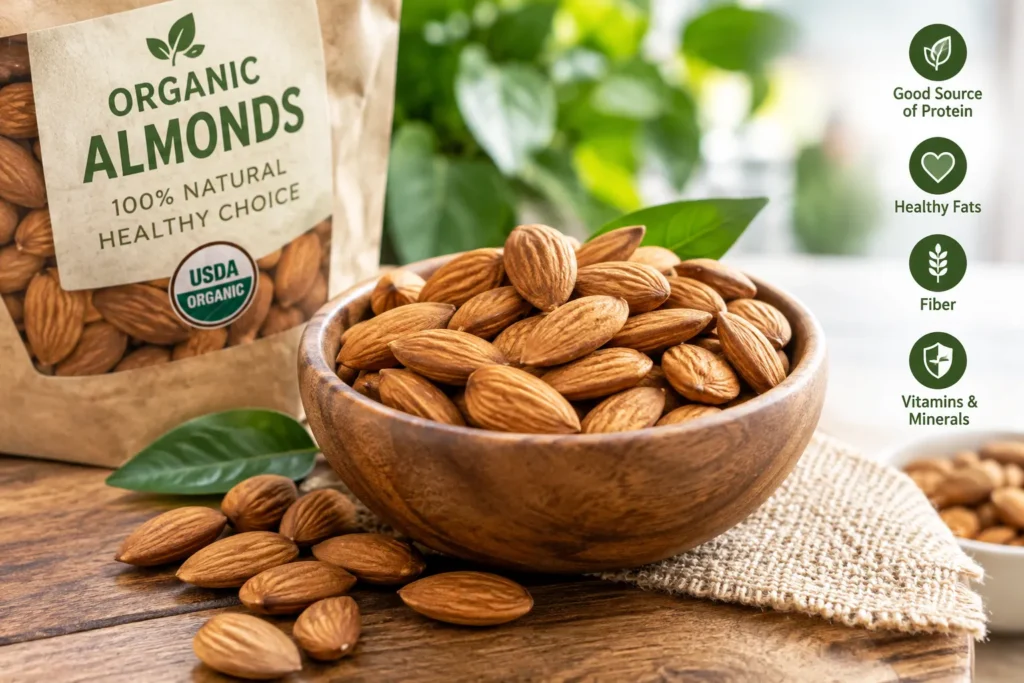
What Are Organic Almonds?
Organic almonds are almonds grown under certified organic farming standards. These standards limit certain synthetic pesticides and fertilizers during farming. Additionally, organic farms avoid genetic engineering and other prohibited farming practices. Even so, organic almonds still provide protein, healthy fats, fiber, vitamins, and minerals. In other words, the organic label describes how farmers produce the almonds, not their nutrition. Overall, organic almonds can be a Healthier part of a balanced diet.
Organic Almonds Nutrition Facts
Organic almonds provide protein, healthy fats, fiber, vitamins, and important minerals. For example, a 1-ounce serving contains about 164 calories and 6 grams of protein. It also provides about 14 grams of fat and 3.5 grams of fiber. Notably, almonds are especially rich in vitamin E and magnesium. Beyond that, they also provide calcium, phosphorus, potassium, and small amounts of iron. Overall, organic and regular almonds generally have similar basic nutritional values.
Health Benefits of Organic Almonds
1. May Support Heart Health
Almonds contain healthy fats that can support heart health. In fact, research also links almond intake with lower LDL cholesterol levels.
2. May Help Support Healthy Blood Sugar
Almonds provide fiber, protein, and healthy fats. As a result, these nutrients can help make meals more filling. However, research does not confirm that almonds directly control blood sugar.
3. Provides Healthy Fats and Protein
Organic almonds provide unsaturated fats and plant-based protein. Along with that, they also contain fiber, vitamin E, magnesium, and other nutrients.
4. Supports a Healthy Diet
Almonds can add useful nutrients to a balanced eating pattern. For instance, you can enjoy them as snacks or add them to meals.
Organic Almonds vs. Regular Almonds
Farming and Growing Methods
Organic almonds follow certified organic farming standards. Specifically, farmers use approved methods to manage soil, pests, and crops. In contrast, regular almonds can use conventional farming methods and approved agricultural chemicals.
Nutritional Differences
Organic and regular almonds provide similar basic nutrients. Indeed, both contain protein, healthy fats, fiber, vitamins, and minerals. Therefore, organic does not automatically mean more nutritious.
Pesticide Use and Organic Standards
Organic farming restricts synthetic pesticides and fertilizers. However, some approved substances can still be used. Meanwhile, conventional farming allows a wider range of approved agricultural products.
Taste and Quality
Taste can vary based on almond variety and freshness. Consequently, organic almonds do not automatically taste better than regular almonds. Ultimately, good storage and freshness can affect flavor and texture.
Are Organic Almonds Really Healthier?
Organic almonds are not automatically healthier than regular almonds. In fact, both types provide similar nutrients, including protein, healthy fats, fiber, and minerals. Rather, organic farming follows specific rules about farming methods and allowed substances. So, choose organic almonds if organic farming matters to you. That said, regular almonds can also be part of a healthy, balanced diet.
How Many Organic Almonds Should You Eat?
A small handful of almonds makes a reasonable serving size. Specifically, that equals about one ounce, or roughly 23 almonds. Generally, you can enjoy almonds as part of a balanced eating pattern. Of course, your ideal amount can vary based on your overall diet and needs. Ideally, choose plain or lightly salted almonds when possible.
How to Choose the Best Organic Almonds
Look for almonds with a clear organic certification label. Specifically, certification helps confirm that the product meets organic farming standards. Next, check the package for freshness and a clear expiration date. Also, choose almonds with simple ingredients, especially when buying flavored products. In addition, avoid almonds with unusual discoloration, moisture, or visible damage. For fewer added ingredients, choose plain almonds instead. Finally, compare prices and choose an option that fits your budget.
Possible Side Effects of Eating Almonds
Almonds are safe for most people when eaten in normal amounts. However, eating many almonds may cause bloating, gas, or stomach discomfort. Additionally, people with almond allergies should avoid almonds completely. In these cases, allergic reactions can cause itching, swelling, vomiting, or breathing problems.
Frequently Asked Questions About Organic Almonds
Are organic almonds healthier than regular almonds?
Organic almonds provide similar nutrients to regular almonds. Instead, the main difference involves farming and production methods.
Are organic almonds pesticide-free?
No, organic almonds are not completely pesticide-free. In fact, organic farming allows certain approved substances under specific rules.
Do organic almonds have more nutrients?
Organic almonds do not automatically contain more nutrients. Rather, both types provide protein, healthy fats, fiber, vitamins, and minerals.
How many organic almonds should I eat?
A small handful makes a common serving of almonds. That said, your overall diet can affect the amount you need.
Can I eat organic almonds every day?
Yes, most people can enjoy almonds regularly as part of balanced meals. Just be sure to choose plain almonds without excessive added salt or sugar.
Can organic almonds cause allergies?
Yes, almonds can cause allergic reactions in some people. Therefore, people with almond allergies should avoid almonds completely.
Final Thoughts on Organic Almonds
Organic almonds provide protein, healthy fats, fiber, vitamins, and minerals. Overall, they offer similar nutrition to regular almonds, and their main difference involves farming methods. Either way, both types can fit into a healthy, balanced diet.
Hylavita’s sugestion to reading
- What Is Provascin Used For? Benefits, Dosage & Side Effects
- Clover Honey: Benefits, Nutrition, Uses & Side Effects
- 25 Yummy Breakfast Ideas for a Delicious Start
Other readings
- The Truth About Organic vs. Non-Organic Almonds
- Nutritional Benefits of Organic Almonds
- Why Organic Almonds Are the Healthiest Choice for Your Daily Diet
Disclaimer: This article provides general information about organic almonds and is not a substitute for professional medical advice.