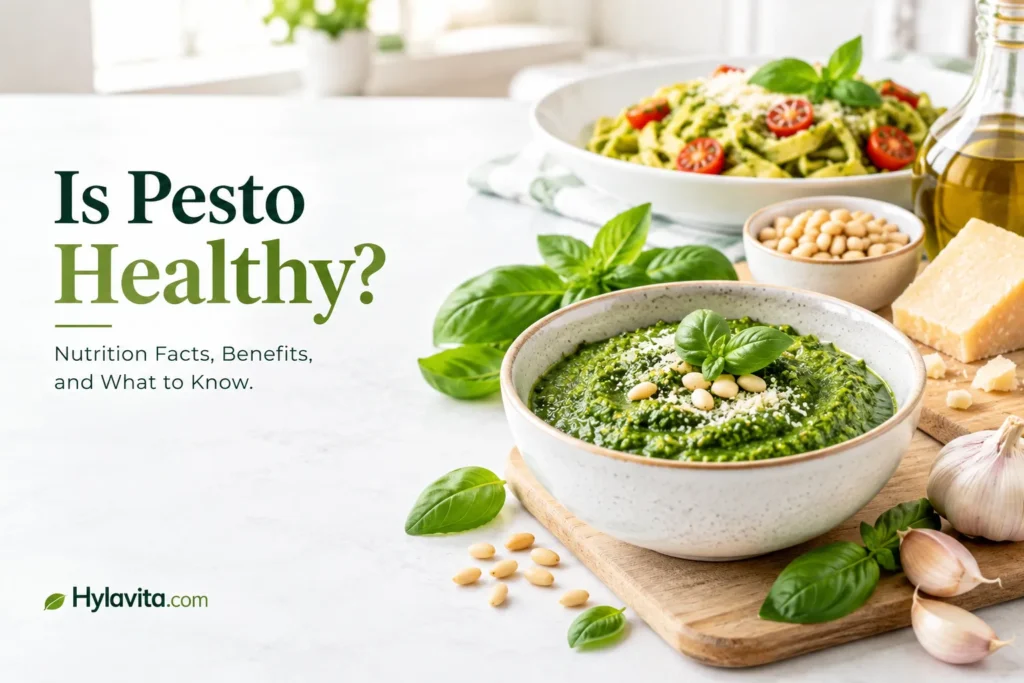
Is Pesto Healthy?
Yes, pesto can be part of a healthy and balanced diet. Traditional pesto contains basil, olive oil, pine nuts, Parmesan cheese, and garlic. These ingredients provide healthy unsaturated fats, some protein, vitamins, minerals, and plant compounds. Olive oil and pine nuts are especially rich in unsaturated fats. These fats can support heart health when they replace less healthy fats.
However, pesto is also calorie-dense because it contains oil, nuts, and cheese. Some varieties can contain considerable sodium as well. A small serving can add plenty of flavor without needing much sauce. Checking the serving size helps you manage calories and sodium. Overall, pesto can fit well into balanced meals when enjoyed in moderate portions.
What Is Pesto?
Pesto is a flavorful Italian sauce made from simple, fresh ingredients. Traditional pesto combines basil, olive oil, pine nuts, Parmesan cheese, and garlic.
Traditional Pesto Ingredients
Fresh basil gives pesto its bright green color and herbal flavor. Olive oil provides richness and creates a smooth texture. Pine nuts add a mild, creamy, nutty taste. Parmesan cheese gives pesto a salty, savory flavor. Garlic adds a strong flavor that balances the other ingredients.
How Pesto Is Commonly Used
Pesto is often mixed with pasta for a flavorful meal. You can spread it on sandwiches or wraps. It also works well with salads and roasted vegetables. Pesto can also accompany chicken, fish, pizza, and other meals.
Pesto Nutrition Facts
Pesto can provide several nutrients, but its nutrition varies by recipe. Store-bought versions can differ in calories, fat, and sodium.
Calories in Pesto
Pesto is calorie-dense because it contains oil, nuts, and cheese. One tablespoon can contain about 90 calories. Larger servings provide more calories.
Fat and Healthy Fats
Most pesto calories come from fat. Olive oil and pine nuts provide mostly unsaturated fats. These fats can fit into a balanced eating pattern.
Protein and Carbohydrates
Pesto usually provides small amounts of protein and carbohydrates. One tablespoon contains about one gram of protein. Carbohydrate amounts vary between different pesto products.
Vitamins and Minerals
Pesto can provide vitamin K, vitamin E, calcium, and iron. These nutrients come from ingredients like basil, nuts, cheese, and olive oil. Exact amounts depend on the recipe and serving size.
Potential Health Benefits of Pesto
Pesto contains several ingredients that can provide useful nutrients. Its benefits depend on the recipe and portion size.
Provides Healthy Unsaturated Fats
Olive oil provides mostly monounsaturated fat. Pine nuts also contain mostly unsaturated fats. These fats can replace saturated fats in a balanced eating pattern. The American Heart Association recommends choosing unsaturated fats instead of saturated fats.
Contains Antioxidant Compounds
Basil, garlic, and olive oil contain various plant compounds. Some of these compounds have antioxidant properties. However, pesto should not be viewed as a treatment for disease.
May Support Heart Health
Pesto can fit into a heart-healthy eating pattern. Its olive oil and nuts provide unsaturated fats. Replacing saturated fats with unsaturated fats may improve blood cholesterol levels. Your overall diet matters more than one individual food.
Adds Flavor Without Much Sugar
Traditional pesto does not require added sugar for its flavor. Basil, garlic, cheese, nuts, and olive oil create its rich taste. This makes pesto useful for adding flavor without relying on sugary sauces. However, packaged varieties can have different ingredients, so labels are worth checking.
Is Pesto Healthy for Weight Management?
Pesto can fit into a balanced diet when you enjoy reasonable portions. However, pesto is calorie-dense because it contains oil, nuts, and cheese. Larger portions can increase your total calorie intake.
A small amount can add plenty of flavor to meals. Try pairing pesto with vegetables for a filling and balanced meal. You can also combine it with whole grains and lean protein. Whole grains and vegetables are commonly included in eating patterns linked with healthier weight outcomes.
Pesto itself is not a weight-loss food. Your overall eating pattern matters more than one ingredient. Pay attention to serving sizes, especially with calorie-dense foods. This approach lets you enjoy pesto without making it the main part of your meal.
Potential Downsides of Eating Pesto
Pesto can fit a balanced diet, but it has some downsides. Its nutrition depends on the recipe and serving size.
Pesto Can Be High in Calories
Pesto contains oil, nuts, and cheese, which provide concentrated calories. One tablespoon can contain around 90 calories in some recipes. Larger servings can add many more calories quickly. Checking the serving size can help you understand your intake.
It May Be High in Sodium
Some pesto varieties contain considerable amounts of sodium. Parmesan cheese can contribute sodium to traditional pesto recipes. Packaged versions may also contain added salt. Sodium levels can vary widely between different products. Checking the nutrition label helps you compare different options.
Allergies and Dietary Concerns
Traditional pesto often contains pine nuts and Parmesan cheese. People with nut or dairy allergies should check ingredients carefully. Some packaged pestos may use different nuts or added dairy ingredients. Always read the label before choosing a packaged pesto.
Is Store-Bought Pesto Healthy?
Yes, store-bought pesto can fit into a balanced diet. However, products can differ in ingredients and nutrition. Some packaged pestos contain more sodium than others. USDA data shows substantial sodium differences between pesto products.
Check the ingredient list before choosing a packaged pesto. Look for familiar ingredients like basil, olive oil, nuts, cheese, and garlic. Some products may use different oils or other added ingredients. Also, check the nutrition label for sodium and serving size. Pesto can be calorie-dense, so portions still matter.
Homemade pesto gives you more control over the ingredients. You can adjust the oil, cheese, and salt yourself. Store-bought pesto offers more convenience and still provides useful nutrients. Choose a product that fits your dietary needs and preferences. Enjoying a reasonable portion can make pesto part of balanced meals.
Homemade Pesto vs. Store-Bought Pesto
Homemade pesto gives you more control over its ingredients. You can choose the oil, nuts, cheese, and salt. This makes it easier to adjust the recipe for your needs. Store-bought pesto offers convenience but can contain different ingredients. Some products use oils besides olive oil or contain added salt.
Homemade pesto can also taste fresher when made with fresh basil. Store-bought pesto usually lasts longer because of its processing and packaging.
Portion control matters with both types of pesto. Pesto contains concentrated calories from oil, nuts, and cheese. Use a reasonable amount with pasta, vegetables, or other foods. Check store labels for serving sizes and sodium content.
How to Eat Pesto in a Healthy Way
Pesto can add rich flavor without needing a large amount. Use a moderate amount when adding pesto to meals. Its calories can add up because pesto contains oil, nuts, and cheese.
Pair pesto with vegetables to create a more balanced meal. Try adding roasted vegetables, tomatoes, spinach, or other favorite vegetables. Vegetables provide fiber, vitamins, minerals, and other useful nutrients.
You can also add lean protein to your meal. Chicken, fish, beans, lentils, and eggs are useful choices. Choose whole-grain pasta or bread when possible. Whole grains provide more fiber than refined grain choices.
Think of pesto as a flavorful topping rather than your main ingredient. This approach lets you enjoy its taste while building balanced meals. Your overall eating pattern matters more than one individual food.
Who Should Be Careful With Pesto?
People with nut allergies should check pesto ingredients carefully. Traditional pesto commonly contains pine nuts or other tree nuts.
People avoiding dairy should also check the ingredient list. Traditional pesto usually contains Parmesan or another hard cheese.
People watching sodium intake should compare nutrition labels. Some pesto products can contain significant amounts of sodium. Serving sizes also matter when managing calorie intake. Pesto contains oil, nuts, and cheese, which provide concentrated calories.
Packaged pesto can vary widely between different brands and recipes. Always check ingredients, allergens, sodium, and serving information before choosing.
Conclusion
So, is pesto healthy? Yes, it can fit into a balanced eating pattern. Traditional pesto provides fats, protein, vitamins, minerals, and plant compounds. Olive oil and pine nuts provide mostly unsaturated fats. Basil, garlic, and olive oil also contain antioxidant compounds. However, pesto can contain many calories in a small serving. Some varieties can also contain considerable amounts of sodium. Portion size matters, especially when using pesto with calorie-rich foods. Pairing pesto with vegetables, whole grains, and protein creates balanced meals. Your overall eating pattern matters more than pesto alone.
Hylavita’s suggestion to read
- Is Orzo Healthy? Nutrition Facts, Benefits, and What to Know
- How Many Calories Are in Provolone Cheese? Full Nutrition Guide
- Is Popcorn Gluten-Free? Types, Ingredients, and Safety Tips
Health Disclaimer: This article provides general nutrition information about pesto and its ingredients. It is not intended to replace advice from a qualified healthcare professional. Individual dietary needs may vary based on health conditions and allergies. Check product labels and consult a healthcare professional when needed.