
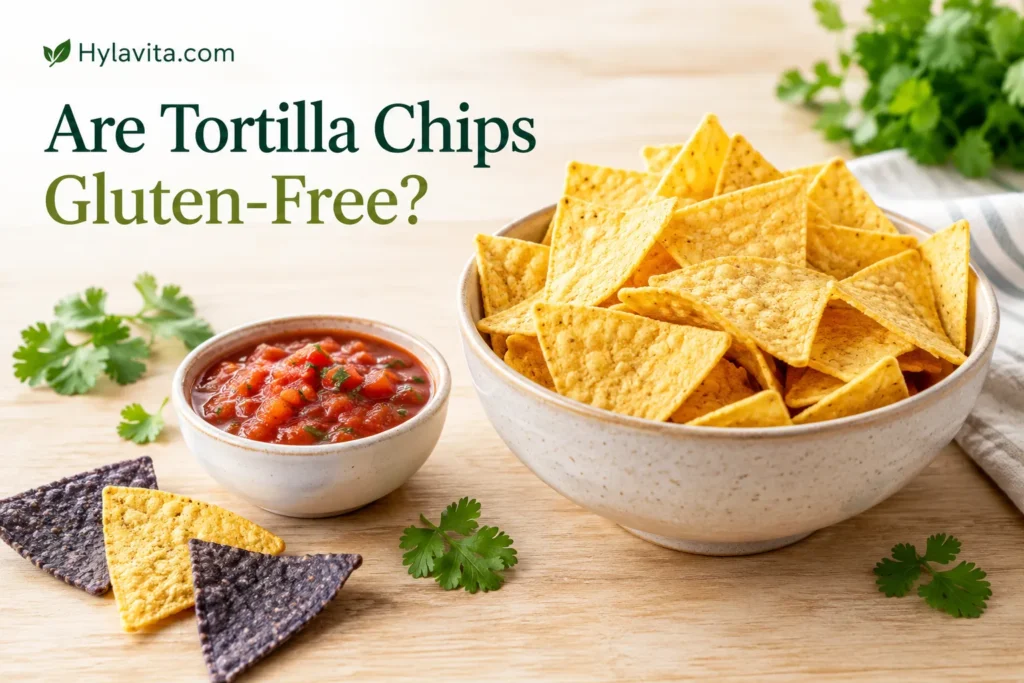
Are Tortilla Chips Gluten-Free?
Most traditional tortilla chips are gluten-free because manufacturers make them from corn. Corn does not naturally contain gluten, unlike wheat, barley, and rye. These chips usually contain corn, oil, and salt. However, not every tortilla chip is safe for a gluten-free diet. Some products contain added ingredients with gluten. Others may become contaminated during manufacturing or preparation. Always check the ingredient list and gluten-free label before buying.
People with celiac disease should pay special attention to cross-contact warnings. Restaurant chips also need checking because kitchens may share cooking equipment. Choosing clearly labeled gluten-free tortilla chips can help you avoid unwanted gluten exposure.
What Are Tortilla Chips Made Of?
Tortilla chips are crispy snacks usually made from corn tortillas. Manufacturers cut the tortillas into triangles and bake or fry them. Most plain varieties contain corn, oil, and salt. Flavored chips may include spices, cheese powder, or other seasonings. Always check the ingredients because some additions may contain gluten.
Common Ingredients in Tortilla Chips
Most tortilla chips contain corn, vegetable oil, and salt. Some varieties include extra seasonings for different flavors. Plain corn chips usually use naturally gluten-free ingredients. However, always check the label for gluten-containing ingredients and possible cross-contact.
Corn vs. Flour Tortilla Chips
| Feature | Corn Tortilla Chips | Flour Tortilla Chips |
|---|---|---|
| Main ingredient | Corn | Usually wheat flour |
| Gluten content | Naturally gluten-free | Usually contains gluten |
| Texture | Often crisp and firm | Depends on the recipe |
| Suitable for a gluten-free diet | Yes, if safe from cross-contact | No, unless made with gluten-free flour |
| What to check | Ingredients and gluten-free label | Flour type and gluten-free label |
Corn does not naturally contain gluten, while wheat flour does. Most traditional corn tortilla chips can fit a gluten-free diet. However, manufacturing or shared equipment may cause cross-contact. Choose products labeled gluten-free if you have celiac disease.
How to Identify Gluten-Free Tortilla Chips
Choosing gluten free tortilla chips starts with reading the package carefully. Corn chips are often gluten-free, but ingredients and preparation methods can differ.
Check the Ingredient List
Look for corn, vegetable oil, salt, and seasonings. Avoid products containing wheat, barley, rye, or ingredients derived from them. Flavored chips may contain extra ingredients, so check every label.
Look for Gluten-Free Labels
Choose products clearly labeled “gluten-free” whenever possible. In the United States, this label means the food must contain less than 20 parts per million of gluten. Other countries may follow different labeling rules.
Understand Cross-Contact Risks
Cross-contact happens when gluten-free foods touch gluten-containing foods or shared equipment. This can happen during manufacturing, cooking, or serving. If you have celiac disease, check package warnings and ask restaurants about preparation methods. Choose safer options to help avoid accidental gluten exposure.
Are Store-Bought Tortilla Chips Gluten-Free?
Many store-bought tortilla chips are gluten-free, especially plain corn varieties. However, ingredients and preparation methods vary between products. Always check the label before buying.
Packaged Tortilla Chips
Packaged corn tortilla chips often contain corn, oil, and salt. Some flavored varieties may contain gluten-containing ingredients or face cross-contact risks. Choose products labeled gluten-free when possible. In the United States, this label requires less than 20 parts per million of gluten.
Restaurant and Movie Theater Tortilla Chips
Restaurant and movie theater chips may be gluten-free, but preparation matters. Shared fryers, cooking surfaces, and utensils can cause cross-contact. Ask staff about ingredients and food preparation before ordering. If you have celiac disease, choose options with clear gluten-free information.
Popular Brands of Gluten-Free Tortilla Chips
Several brands offer tortilla chips made with gluten-free ingredients. However, check each product’s packaging before buying. Ingredients and manufacturing practices can change over time.
Late July offers several tortilla chip varieties labeled gluten-free. Its options include sea salt, lime, and blue corn chips.
Siete sells Maíz corn tortilla chips in flavors like sea salt and lime. It also offers grain-free tortilla chips. Check the specific product label for gluten-free information.
Tostitos offers many corn tortilla chip varieties. However, the company recommends checking each product’s ingredients and label. Some varieties may have different ingredients or gluten-free status.
Availability varies by country and store. Always choose products with clear gluten-free labeling, especially if you have celiac disease.
Are Gluten-Free Tortilla Chips Healthy?
Gluten-free tortilla chips can fit into a balanced diet. However, gluten-free does not automatically mean healthy. Their nutritional value depends on ingredients, cooking methods, and portion sizes.
Calories, Fat, and Sodium
A 30-gram serving of plain tortilla chips contains about 140 calories. It provides around 6 grams of fat and 100 milligrams of sodium. Values vary between brands and flavors.
Tips for Choosing Healthier Options
Choose chips with simple ingredients and less added salt. Check nutrition labels to compare calories, fat, and sodium. Baked varieties may contain less fat than fried options. However, check the label because recipes differ. Watch your portion size to avoid eating too many chips. Pair them with fresh salsa, beans, or guacamole for extra nutrients.
How to Make Homemade Gluten-Free Tortilla Chips
Making gluten-free tortilla chips at home is simple and quick. You only need corn tortillas, a little oil, and salt.
First, preheat your oven to 375°F (190°C). Cut gluten-free corn tortillas into small triangles. Lightly brush both sides with oil. Arrange the pieces in one layer on a baking sheet. Sprinkle them with a little salt. Bake for 8–10 minutes, checking often to prevent burning. Flip the chips if needed for even crispness. Bake a little longer if they remain soft. Let them cool before serving. They will become crispier as they cool. Enjoy them with salsa, guacamole, or your favorite dip.
Frequently Asked Questions
Are Corn Tortilla Chips Naturally Gluten-Free?
Yes, corn tortilla chips are usually gluten-free because corn contains no gluten. However, added ingredients or cross-contact can introduce gluten. Check the product label before eating.
Can People With Celiac Disease Eat Tortilla Chips?
Yes, people with celiac disease can eat suitable gluten-free tortilla chips. Choose clearly labeled products and check their ingredients. Avoid chips that may have contacted gluten during preparation.
Are Tostitos Tortilla Chips Gluten-Free?
Some Tostitos products may be suitable for a gluten-free diet. The company recommends checking each product’s ingredients and label. You can also check PepsiCo Product Facts for specific varieties.
Can Tortilla Chips Contain Hidden Gluten?
Yes, some tortilla chips contain gluten from added ingredients or seasonings. Shared equipment can also cause cross-contact during manufacturing or cooking. Read labels carefully and ask restaurants about their preparation methods.
Conclusion
Many tortilla chips are naturally gluten-free because they use corn. However, added ingredients and cross-contact can affect their safety. Always check labels and choose clearly marked gluten-free products. If you have celiac disease, ask about preparation methods when eating out. Enjoy your chips in moderate portions with nutritious dips for a balanced snack.
Hylavita’s suggestion to read
- Gluten-Free Fast Food: What Can You Safely Eat?
- Is Candy Gluten-Free? A Guide to Safe Candy Choices
- Are All Corn Tortillas Gluten-Free? Ingredients and Safety Explained
Disclaimer: This article is for informational purposes only and does not replace professional medical advice. Always check product labels for gluten-containing ingredients and cross-contact warnings. If you have celiac disease or gluten sensitivity, consult a healthcare professional for personalized guidance. Product ingredients and manufacturing practices may change over time.