Reverse curls are a simple exercise that helps strengthen your forearms and arms. They use an overhand grip, with your palms facing down. This grip makes reverse curls different from regular biceps curls. You can perform them with dumbbells, a barbell, or an EZ-bar. They are useful for beginners who want to improve forearm strength and arm development. However, proper form matters more than lifting heavy weights. Start with a light weight and move slowly. This guide explains how to do reverse curls, their benefits, and common mistakes. You will also learn helpful tips for safer workouts.
What Are Reverse Curls?
Reverse curls are an arm exercise that mainly targets your forearm muscles. You perform them by holding weights with your palms facing down. This overhand grip makes them different from traditional biceps curls. You can use dumbbells, a straight barbell, or an EZ-bar. During the movement, you bend your elbows to lift the weight. Then, you slowly lower it to the starting position. Reverse curls also engage your biceps and brachialis muscles. Beginners can add them to arm workouts using light weights. Proper technique helps you train effectively and avoid unnecessary strain.
What Muscles Do Reverse Curls Work?
Reverse curls mainly target your forearms while also working other arm muscles. The overhand grip changes how your muscles help lift the weight. Three main muscles contribute to this movement.
Brachioradialis (Forearm Muscle)
The brachioradialis is a major muscle in your forearm. It helps bend your elbow during reverse curls. This muscle works harder when you use an overhand grip. Stronger forearms can also support many daily lifting tasks.
Biceps Brachii
The biceps brachii sits on the front of your upper arm. It helps bend your elbow during reverse curls. However, the overhand grip generally reduces its contribution compared with regular curls. Your biceps still help you lift the weight.
Brachialis
The brachialis lies underneath your biceps muscle. It helps bend your elbow, regardless of your hand position. Reverse curls engage this muscle throughout the lifting movement. Strengthening it can support overall arm strength and development.
Benefits of Reverse Curls
Reverse curls offer several benefits for your forearms and overall arm strength. They target muscles that regular biceps curls may train less directly. Adding them to your workout can help improve balanced arm development.
Build Stronger Forearms
Reverse curls train the brachioradialis, a major muscle in your forearm. Regular practice can help increase forearm strength and muscle size. Stronger forearms can also make lifting exercises feel more manageable. Start with light weights and focus on controlled movements.
Improve Grip Strength
Reverse curls engage muscles that help stabilize your grip during exercise. Stronger forearms may support gripping weights during other strength-training movements. However, reverse curls alone may not fully develop your grip strength. Exercises like farmer’s carries can provide additional grip training.
Support Overall Arm Development
Reverse curls work your forearms, brachialis, and biceps muscles together. This makes them a useful addition to a balanced arm workout. They can complement regular curls and other upper-body exercises. Consistent training, proper technique, and enough recovery support better results. Choose a weight that allows you to maintain good form throughout each repetition.
How to Do Reverse Curls Correctly
Reverse curls are easy to learn when you follow the correct steps. Focus on controlled movements instead of lifting heavy weights. Follow these instructions to perform reverse curls with proper form.
Step 1: Choose the Right Weight
Start with light dumbbells, a barbell, or an EZ-bar. Choose a weight you can lift without swinging your body. You should maintain control throughout every repetition. Increase the weight gradually as your strength improves.
Step 2: Set Your Grip and Stance
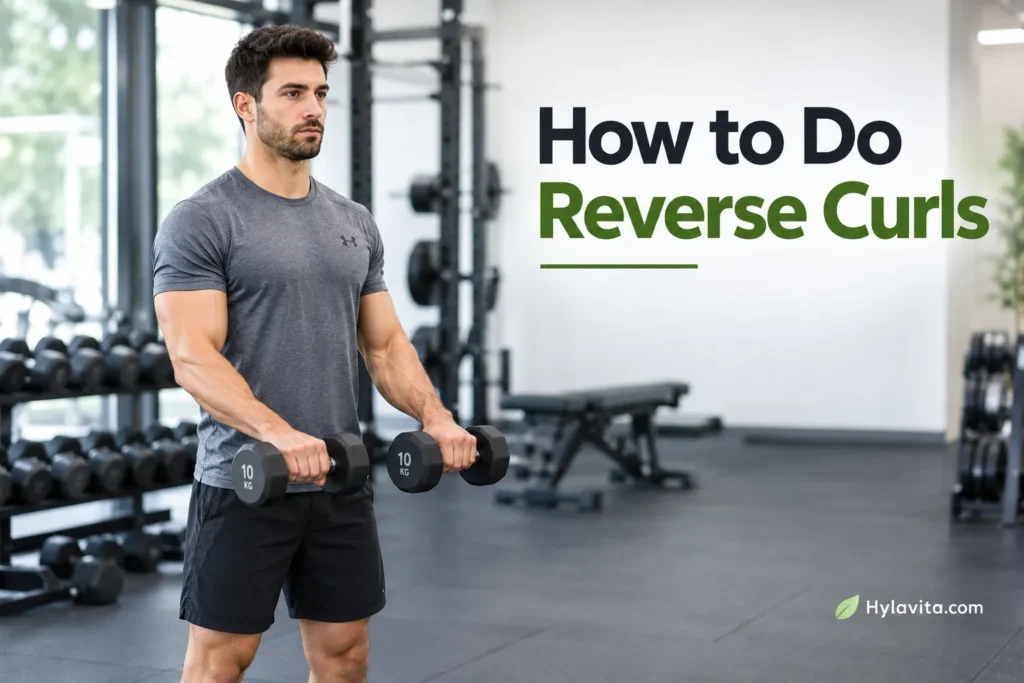
Stand upright with your feet about shoulder-width apart. Hold the weight with your palms facing down. Keep your hands around shoulder-width apart and your wrists straight. Let your arms hang naturally in front of your thighs.
Step 3: Curl the Weight Up
Keep your elbows close to your sides throughout the movement. Bend your elbows and slowly lift the weight toward your shoulders. Avoid swinging your body or moving your upper arms unnecessarily. Keep your wrists straight as you lift the weight.
Step 4: Lower the Weight Slowly
Pause briefly near the top without raising your shoulders. Slowly lower the weight until your arms return to their starting position. Keep control instead of letting gravity pull the weight down. Repeat the movement while maintaining steady breathing and proper form. Start with a comfortable number of repetitions and rest between sets. Stop if you experience sharp pain in your wrists or elbows.
Common Reverse Curl Mistakes to Avoid
Proper technique helps you train your forearms while reducing unnecessary strain. Avoid these common mistakes to get more from your reverse curls. Focus on control instead of lifting heavier weights.
Using Too Much Weight
Heavy weights can make reverse curls harder to control. Choose a weight that allows smooth, steady repetitions. Increase the load gradually as your strength improves.
Swinging Your Body
Swinging your body uses momentum instead of controlled muscle effort. Keep your torso upright and your elbows close to your sides. Lift the weight slowly without rocking your upper body.
Bending Your Wrists
Bending your wrists can cause discomfort during reverse curls. Keep your wrists straight and aligned with your forearms. Use a lighter weight if you struggle to maintain this position. Proper wrist alignment helps you perform each repetition with better control.
Reverse Curl Variations
Reverse curls come in different variations to suit your equipment and comfort. Each variation uses an overhand grip to target your forearms. Choose the option that feels comfortable and allows proper form.
Dumbbell Reverse Curls
Dumbbell reverse curls let you train each arm separately. Hold one dumbbell in each hand with your palms facing down. Curl both weights slowly while keeping your elbows close to your sides. This variation allows each arm to move naturally.
Barbell Reverse Curls
Barbell reverse curls let you lift both arms together. Hold the bar with an overhand grip and keep your wrists straight. Curl the bar toward your shoulders without swinging your body. Start with a manageable weight to maintain control.
EZ-Bar Reverse Curls
An EZ-bar has angled grips that may feel more comfortable for some people. Hold the bar using its angled sections with your palms facing down. Keep your wrists aligned and lift the weight smoothly. Choose this variation if a straight bar feels uncomfortable.
Safety Tips for Reverse Curls
Follow simple safety steps to perform reverse curls with better control. Start with light weights and increase them gradually as you improve. Keep your wrists straight and your elbows close to your sides. Avoid swinging your body or rushing through repetitions. Warm up your arms before starting your workout. Allow your muscles enough rest between training sessions. Stop exercising if you feel sharp pain in your wrists or elbows. If discomfort continues, seek advice from a qualified healthcare professional.
Frequently Asked Questions About Reverse Curls
How to Do Reverse Curls Correctly?
Hold a barbell or dumbbells with your palms facing down. Keep your elbows close to your sides and your wrists straight. Curl the weight toward your shoulders without swinging your body. Lower it slowly and maintain control throughout each repetition.
Do Reverse Curls Really Work?
Yes, reverse curls effectively train your forearms, especially the brachioradialis muscle. They also engage your brachialis and biceps. Regular training can improve forearm strength and support muscle growth. Use proper form and increase the weight gradually.
Why Do My Wrists Hurt When I Do Reverse Curls?
Wrist pain may result from heavy weights, poor form, or uncomfortable positioning. Keep your wrists straight and choose a manageable weight. Stop exercising if you feel pain during the movement. If the pain continues, consult a qualified healthcare professional before trying again.
Conclusion
Reverse curls are a simple exercise for building stronger forearms and supporting arm development. They also engage your biceps and brachialis muscles. Start with light weights and focus on proper form. Avoid swinging your body or bending your wrists during repetitions. Practice consistently and allow enough recovery between workouts. With time, reverse curls can become a useful part of your arm training routine.
Hylavita’s suggestion to read
- How to Do Cable Dumbbell Curls: A Complete Beginner’s Guide
- How to Do a Cable Pullover: A Beginner’s Step-by-Step Guide
- Best Gym Equipment for Abs: 10 Tools for Stronger Core Muscles
Disclaimer: This article is for informational and educational purposes only. Reverse curls may not be suitable for everyone, especially those with existing wrist or elbow problems. Always use proper form and choose weights that match your fitness level. Consult a qualified healthcare professional before starting a new exercise routine if you have health concerns.