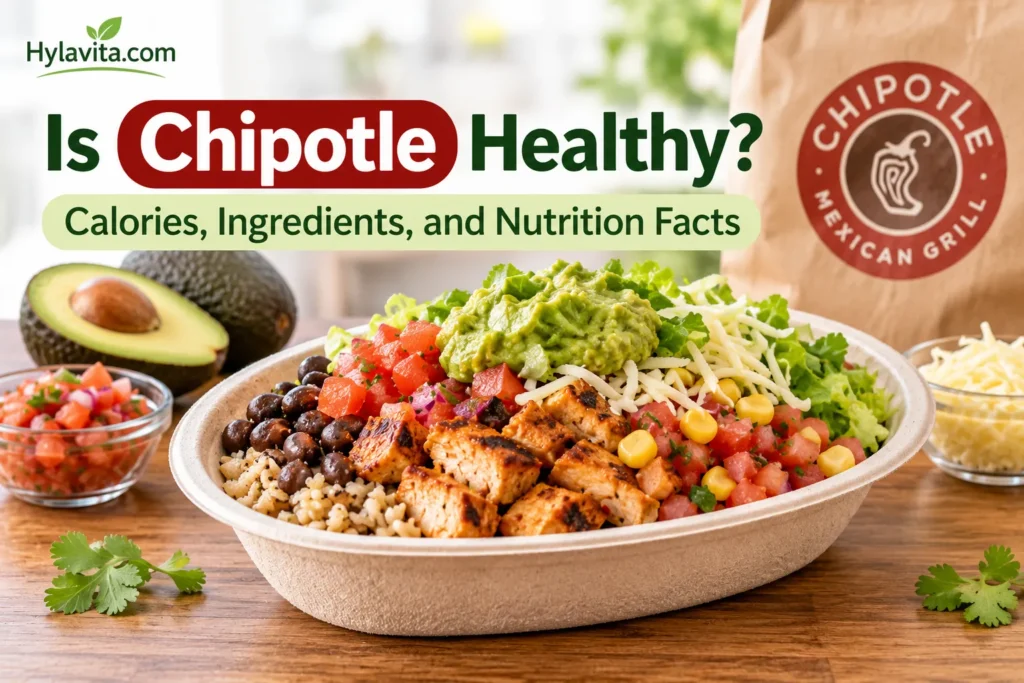
Chipotle can be healthy it completely depends on how you make your meal. Chipotle is a popular fast-casual restaurant known for its burritos, bowls, tacos and salads. Many people enjoy its customizable meals and fresh ingredients. But is Chipotle healthy? The answer depends on what you order. Some meals provide protein, fiber and important nutrients. Others can contain high calories, sodium and saturated fat. Your choice of meat, rice, beans, sauces and toppings matters. In this guide, we will explore Chipotle calories, ingredients and nutrition facts. You will also learn how to make healthier choices when ordering.
Chipotle Nutrition Facts: Calories and Nutritional Value
Chipotle meals provide different amounts of calories and nutrients. The total depends on your ingredients, toppings and portion sizes.
Calories in Popular Chipotle Meals
According to Chipotle’s published US nutrition guide, popular meals contain:
- Burritos: Around 740–1,210 calories, including the flour tortilla.
- Burrito Bowls: Around 420–910 calories without the tortilla.
- Tacos: Around 390–1,140 calories for three tacos.
- Salads: Around 420–910 calories, depending on ingredients and dressing.
These figures represent different ingredient combinations, not fixed meal values.
Key Nutrients in Chipotle Meals
Chipotle meals contain protein, carbohydrates, fats and dietary fiber. Chicken, steak and beans provide protein for muscle repair. Rice and tortillas supply carbohydrates that provide energy. Beans and vegetables also add dietary fiber. Fiber supports digestion and helps you feel full.
Total fat and saturated fat depend on your ingredient choices. Cheese, sour cream and certain meats can increase both. Sodium is another nutrient worth watching. Salsas, seasonings, cheese and other toppings contribute sodium. Large portions and multiple toppings can increase your meal’s overall nutritional content.
Note: Chipotle’s nutrition values may vary with serving sizes and preparation. Check its official nutrition calculator for your exact meal.
What Ingredients Does Chipotle Use?
Chipotle offers different ingredients for building your favorite meals. Customers can choose their preferred bases, proteins, vegetables,\ and toppings.
Rice and Beans: Chipotle offers white and brown cilantro-lime rice. You can also choose black or pinto beans. Both beans provide protein, fiber and carbohydrates.
Chicken, Steak and Other Proteins: Chipotle serves chicken, steak, barbacoa and carnitas. It also offers Sofritas, a plant-based tofu option. These ingredients provide different amounts of protein and fat.
Fresh Vegetables and Lettuce: You can add fajita vegetables and romaine lettuce. These ingredients add flavor, color and some dietary fiber.
Salsas and Toppings: Chipotle offers tomato, corn and tomatillo salsas. Other toppings include cheese, sour cream and queso blanco.
Guacamole and Other Additions: Guacamole contains avocado, red onion, jalapeños, cilantro and citrus juice. You can also add chips, extra protein, or other available toppings.
These choices make it easier to customize meals around your preferences.
Potential Health Benefits of Eating Chipotle
Chipotle offers several ingredients that can support a balanced diet. Your choices determine the nutritional value of your meal.
Good Source of Protein
Many Chipotle meals contain protein from chicken, steak and beans. Protein helps build and repair muscles after physical activity. It also supports healthy bones, skin and other body tissues. Choosing a protein-rich meal can help meet daily protein needs.
Provides Dietary Fiber
Beans, vegetables and other plant ingredients provide dietary fiber. Fiber supports digestion and helps maintain regular bowel movements. It can also help you feel full for longer. Adding beans and vegetables increases your meal’s fiber content.
Customizable Meal Options
Chipotle allows customers to choose their own ingredients. You can select proteins, rice, beans, vegetables and toppings. This flexibility helps you manage calories, sodium and fat. You can also adjust portions according to your dietary needs.
Contains Nutrient-Rich Ingredients
Chipotle offers several ingredients that provide important nutrients. Beans contain fiber, protein, iron and other minerals. Vegetables provide vitamins, minerals and beneficial plant compounds. Avocados in guacamole provide unsaturated fats and fiber. These ingredients can support a balanced and varied diet.
Potential Downsides of Eating Chipotle
Chipotle offers many nutritious ingredients, but some meals have nutritional drawbacks. Large portions and certain toppings can increase calories, fat and sodium. Understanding these factors helps you make better food choices.
High Sodium Content
Some Chipotle meals contain high amounts of sodium. Salsas, seasoned meats, cheese and other toppings add sodium. Eating too much sodium regularly can increase blood pressure. People watching their sodium intake should choose toppings carefully.
High Calories in Large Portions
Chipotle meals can become high in calories with larger portions. Adding rice, beans, cheese and multiple toppings increases calories. Large burritos and bowls may contain more calories than expected. Paying attention to portion sizes can help manage calorie intake.
Saturated Fat Content
Some Chipotle ingredients contain significant amounts of saturated fat. Cheese, sour cream and certain meat choices can increase intake. Eating too much saturated fat may raise LDL cholesterol levels. Choosing leaner proteins and smaller portions can help.
Extra Calories From Toppings
Toppings can add extra calories to an otherwise balanced meal. Queso blanco, cheese and guacamole contribute additional calories. These ingredients can still fit into a balanced diet. However, choosing smaller portions helps control your meal’s total calories.
How to Order a Healthy Meal at Chipotle
You can make healthier choices at Chipotle with a few simple changes. Your ingredient choices and portion sizes can make a big difference.
Choose a Bowl or Salad: Start with a burrito bowl or salad base. Both options let you skip the flour tortilla. This can help reduce your meal’s total calories.
Select Lean Protein Options: Choose chicken or another protein that suits your needs. Protein helps support muscle growth and repair. Pay attention to serving sizes and preparation.
Include Beans and Vegetables: Add black beans or pinto beans for protein and fiber. Include fajita vegetables, lettuce and fresh salsa. These ingredients provide fiber, vitamins and minerals.
Choose Your Rice: Chipotle offers both white and brown cilantro-lime rice. Both provide carbohydrates for energy. Choose based on your taste and dietary preferences.
Control High-Calorie Toppings: Cheese, sour cream, queso and guacamole add extra calories. You don’t need to avoid them completely. Just choose portions that fit your needs.
Watch Portion Sizes and Sauces: Ask for smaller portions when needed. Be mindful of creamy sauces and salty toppings. These simple choices can help create a more balanced meal.
Frequently Asked Questions
What Is the Healthiest Meal at Chipotle?
A chicken burrito bowl can be a nutritious choice. Include black beans, fajita vegetables, lettuce and fresh tomato salsa. Choose moderate rice portions to manage calories. Limit extra cheese, sour cream and high-calorie toppings. Your healthiest option depends on your dietary needs.
Is Chipotle Okay for Losing Weight?
Yes, Chipotle can fit into a weight-loss plan. Choose balanced meals with protein, fiber and vegetables. Watch portion sizes and high-calorie toppings. Your overall calorie intake matters more than one restaurant meal.
Is Chipotle Healthier Than McDonald’s?
Chipotle and McDonald’s offer different types of meals. Chipotle provides customizable bowls, salads and protein options. McDonald’s also offers meals with different nutritional values. Neither restaurant is always healthier than the other. Your ingredients, portions and meal choices make the difference.
What Is the Unhealthiest Thing at Chipotle?
There is no single unhealthiest item for everyone. Large meals with several toppings can contain many calories. Adding chips, queso, cheese and creamy dressings increases calories. Some combinations also contain high sodium and saturated fat. Check the nutrition calculator before placing your order.
Conclusion
So, is Chipotle healthy? It can be a nutritious choice with balanced ingredients. Its meals offer protein, fiber, vegetables and other important nutrients. However, calories, sodium and saturated fat can increase with certain choices. Pay attention to portion sizes and choose toppings carefully. Include a good balance of protein, beans and vegetables. With mindful choices, Chipotle can fit into a balanced diet.
Hylavita’s suggestion to read
- Gluten-Free Fast Food: What Can You Safely Eat?
- 15 Filling Lunch Salads That Make Healthy Eating Easy
Disclaimer: This article is for informational and educational purposes only. Chipotle’s nutritional values may vary by ingredients, portion sizes and preparation methods. Individual dietary needs and health conditions can affect food choices. Consult a qualified healthcare professional for personalized nutrition advice.