Disclaimer
This article is for general informational and educational purposes only and is not a substitute for professional medical or nutritional advice.
Tired of soggy salads that leave you hungry an hour later? You’re not alone.
Most people skip salads at lunch because they think “healthy” means “boring” or “not enough food.” But that’s simply not true.
Easy lunch salads can be just as filling as a sandwich or a bowl of pasta. The trick is knowing what to add. With the right mix of protein, healthy fats, and fiber, a salad can keep you full until dinner.
Use up and down arrow keys to resize the meta box pane.PostBlock
No block selected.Open save panel
- Post
In this article, you’ll find 15 simple lunch salad ideas, an honest look at the pros and cons of making salad your go-to lunch, and tips for building a bowl that actually keeps you satisfied. Whether you’re a student, an office worker, or just someone who wants to eat better, these salads will fit right into your routine. For more everyday nutrition guidance, browse the rest of the Hylavita Nutrition & Diet section.
Why Lunch Salads Are a Smart Midday Choice
Salads get a bad reputation. People think of a plate of plain lettuce with nothing else on it. That’s not what we’re talking about here.
A well-made salad gives your body what it needs at midday: fiber, protein, and good fats. This combination helps you avoid the afternoon energy crash that comes from heavy, carb-only meals.
Moreover, salads are flexible. You can throw in almost any vegetable, grain, or protein you have on hand. This makes them one of the easiest meals to prep ahead of time.
The Problem With Boring Salads
Most bland salads fail for one simple reason: they skip protein and fat. A bowl of lettuce and tomato won’t keep anyone full.
The fix is easy. Add beans, eggs, chicken, cheese, or nuts. These ingredients turn a light side dish into a real, satisfying meal.
The Pros and Cons of Making Salads Your Go-To Lunch
Salads aren’t a magic bullet, and it’s worth going in with a realistic picture of what they do well — and where they fall short.
Advantages
- They’re highly customizable. You can adapt a salad to almost any dietary need, budget, or set of leftovers in your fridge.
- They pack in vegetables easily. A single large salad can cover a big share of your daily vegetable intake in one sitting.
- They support steady energy. Fiber-rich, protein-rich meals slow digestion and help avoid the blood sugar spikes and crashes that come with refined-carb lunches.
- They travel and store well. Grain- and bean-based salads in particular hold up for several days in the fridge, which makes batch prep realistic.
- They can rival other meals for protein. Research from the Harvard T.H. Chan School of Public Health’s Nutrition Source notes that legumes such as chickpeas, lentils, and peas can meaningfully increase fullness — making bean-based salads a genuinely filling option, not just a “light” one.
Disadvantages
- Dressings can quietly undo the healthy parts. A couple of tablespoons of a creamy dressing can add well over 100 calories and a significant amount of saturated fat and sodium — the Cleveland Clinic’s guide to building healthier salads specifically flags high-fat, high-sodium options like ranch, blue cheese, and French dressing as the ones to use sparingly.
- They take some prep work. Unlike grabbing a sandwich, a good filling salad usually means chopping, cooking a protein, or portioning ingredients ahead of time.
- Without protein and fat, they don’t stay filling. A salad of just lettuce and tomato digests quickly and won’t keep hunger away — the “filling” part depends entirely on what you add.
- Some add-ins are less nutritious than they look. Croutons, tortilla strips, and candied nuts add crunch but also add refined carbs, sodium, and sugar with little nutritional payoff.
- They’re not always practical on the go. Salads with dressing already mixed in can get soggy, and they’re harder to eat one-handed than a wrap or sandwich.
The takeaway: salads are one of the most flexible, nutrient-dense lunch options available, but the ingredients you choose — not the fact that it’s “a salad” — determine whether it’s actually a healthy, filling meal.
What Makes a Salad Truly “Filling”
Before jumping into recipes, it helps to understand the formula behind a filling salad. It’s not complicated. Think of it as building blocks.
Protein Is the Base
Protein keeps you full longer than any other food group. Good options include grilled chicken, canned tuna, boiled eggs, tofu, chickpeas, or beans. According to Harvard’s Nutrition Source, it’s not just the amount of protein that matters for health, but the “package” it comes in — lean, plant-forward proteins like beans and lentils bring fiber along with them, while some animal proteins bring more saturated fat or sodium than you might expect.
Healthy Fats Add Staying Power
Fat slows down digestion, which means your meal sticks with you longer. Avocado, olive oil, nuts, seeds, and cheese all work well here.
Fiber-Rich Carbs Round It Out
Whole grains like quinoa, brown rice, or farro add texture and keep blood sugar steady. For example, a scoop of quinoa can turn a light salad into a full meal. Most adults fall well short of the recommended 25–35 grams of fiber per day, and the Harvard Nutrition Source’s fiber guide points to fiber’s role in regulating hunger and blood sugar as one reason it deserves a spot in every meal, not just breakfast cereal.
15 Easy Lunch Salad Recipes to Try
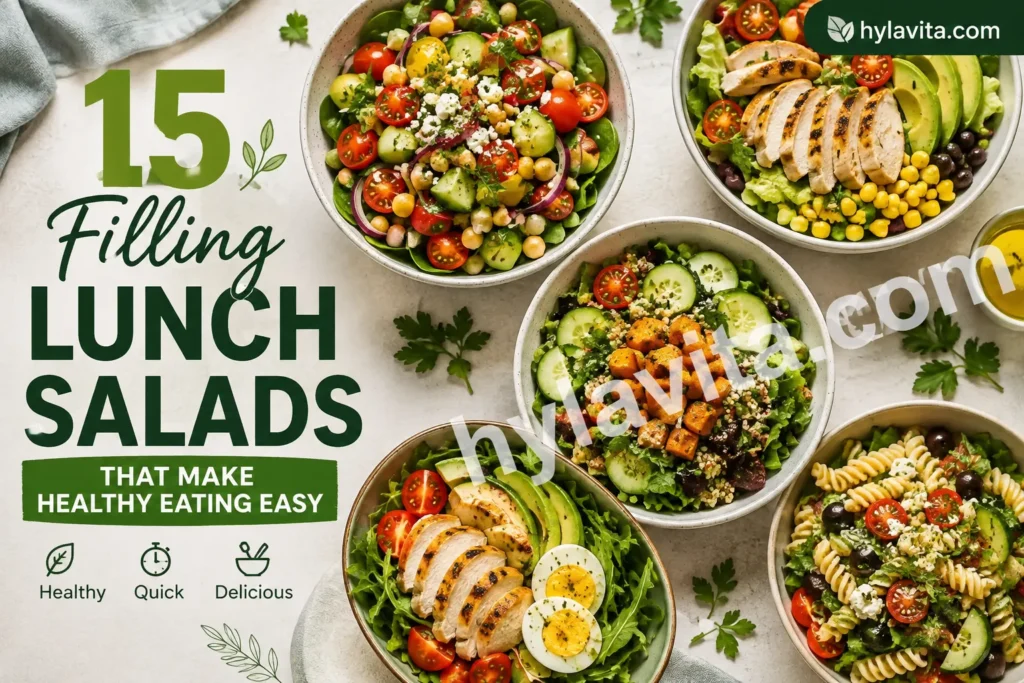
Here are 15 simple lunch salads. Each one uses common ingredients and takes about 15 minutes or less to put together.
- Classic Chicken Caesar Salad — Grilled chicken, romaine lettuce, parmesan cheese, and a light Caesar dressing. Add whole-grain croutons for extra crunch and fiber.
- Mediterranean Chickpea Salad — Mix chickpeas, cucumber, tomato, red onion, and feta cheese. Toss with olive oil and lemon juice for a bright, simple lunch salad.
- Southwest Black Bean Salad — Combine black beans, corn, bell pepper, and avocado. A squeeze of lime and a pinch of cumin bring it all together.
- Egg Salad Over Greens — Skip the bread. Serve classic egg salad over a bed of spinach or mixed greens for a lower-carb, protein-rich option.
- Tuna and White Bean Salad — Canned tuna and cannellini beans make a protein-packed pair. Add celery, parsley, and a drizzle of olive oil.
- Quinoa and Roasted Vegetable Salad — Roast whatever vegetables you have — zucchini, carrots, or peppers — and mix with cooked quinoa. This is one of the most nutritious lunch salads for meal prep since it holds up well in the fridge.
- Greek Salad With Grilled Chicken — Cucumber, tomato, olives, and feta cheese with grilled chicken on top. It’s a simple lunch salad that feels like a trip to the Mediterranean.
- Asian-Style Sesame Slaw Salad — Shredded cabbage, carrots, and edamame tossed in a sesame-ginger dressing. Top with grilled chicken or tofu for protein.
- Cobb Salad, Simplified — Layer lettuce, hard-boiled egg, bacon (or turkey bacon), avocado, and blue cheese. This one feels indulgent but stays balanced.
- Lentil and Spinach Salad — Cooked lentils are an underrated lunch ingredient. Mix with spinach, cherry tomatoes, and a mustard vinaigrette.
- Caprese Pasta Salad — Whole-wheat pasta, cherry tomatoes, mozzarella balls, and basil. Drizzle with balsamic glaze for a fresh, filling twist on caprese.
- Thai Peanut Salad With Shrimp or Tofu — Shredded cabbage and carrots with a peanut-lime dressing. Add shrimp or tofu to make it a complete meal.
- Southwest Steak Salad — Sliced steak over romaine with black beans, corn, and a chipotle-lime dressing. This one is great for those needing extra protein after a workout.
- Broccoli and Bacon Salad — Chopped broccoli, sunflower seeds, dried cranberries, and turkey bacon bits with a light yogurt-based dressing.
- Chopped Italian Salad — Salami, chickpeas, mozzarella, pepperoncini, and romaine, tossed in Italian dressing. It’s hearty enough to skip the bread altogether.
Looking for the full recipe cards with exact measurements? Check the Healthy Recipes section on Hylavita — link to your specific Healthy Recipes category page once published.
Simple Tips for Meal Prepping Lunch Salads
Meal prep is what turns these easy lunch salad recipes into a weekly habit rather than a one-time effort.
Keep Dressing Separate
Store dressing in a small container and add it right before eating. This keeps your greens from getting soggy — and it also gives you control over how much you’re actually using, since the Cleveland Clinic recommends leaning on vinegar and citrus and going light on oil-heavy or creamy dressings.
Layer Ingredients Smartly
Put wet ingredients like tomatoes at the bottom of your container. Keep leafy greens on top so they stay crisp until lunchtime.
Prep in Batches
Cook a big batch of protein — like grilled chicken or boiled eggs — at the start of the week. Then you can mix and match with different vegetables each day. For a broader weekly game plan, see Hylavita’s Meal Planning guidance — link to your specific Meal Planning category page once published.
How to Customize Salads for Your Needs
Not everyone needs the same thing from a lunch salad. Here’s how to adjust these ideas based on your goals.
For Students on a Budget
Stick with cheap, filling options like canned beans, eggs, and frozen vegetables. These healthy lunch salads cost less and still deliver solid nutrition.
For Busy Professionals
Choose recipes that store well, like grain-based or bean-based salads. They hold up better than delicate greens if lunch gets pushed back.
For Beginners
Start simple. Pick one protein, one vegetable, and one dressing. You can always add more variety once you’re comfortable in the kitchen.
FAQ: Easy Lunch Salads
What can I add to a salad to make it more filling? Add a protein source like chicken, beans, or eggs. Then include a healthy fat like avocado or olive oil. This combination keeps you full for hours.
How long do lunch salads last in the fridge? Most prepped salads stay fresh for three to four days when stored properly. Keep dressing separate and store in an airtight container for best results.
Are lunch salads actually healthy? Yes, when made with a mix of vegetables, protein, and healthy fats. A salad with only lettuce and dressing, however, won’t offer much nutrition on its own — and as noted above, some store-bought dressings can add more sodium and sugar than you’d expect.
Can I make lunch salads ahead of time for the whole week? Yes. Many nutritious lunch salads, especially grain and bean-based ones, can be made in bulk and portioned into containers for up to four days.
What is the easiest lunch salad for beginners to start with? A simple chickpea and vegetable salad is a great starting point. It needs no cooking beyond opening a can, and it’s hard to get wrong.
Final Thoughts
Easy lunch salads don’t have to be boring or bland. With the right mix of protein, fat, and fiber, they can keep you full and energized through the whole afternoon. They also come with real trade-offs — namely, prep time and dressing choices — so building good habits around both sides of that equation is what makes salads a sustainable lunch, not just an occasional one.
Start with two or three recipes from this list. Once you find your favorites, building a weekly rotation becomes simple.
Try one of these simple lunch salads this week. Your lunch break — and your energy levels — will thank you.
For more evidence-based, plain-language guidance on nutrition, meal planning, and weight management, explore more articles at Hylavita.anning, and weight management, explore more articles at Hylavita.