What Is a Treadmill Stress Test?
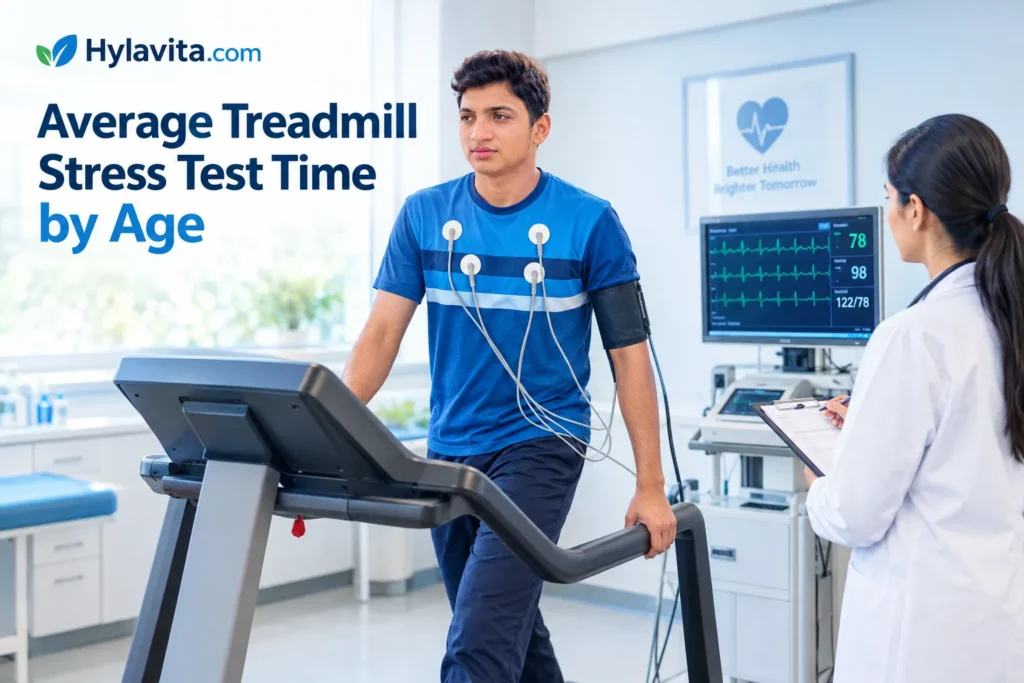
A treadmill stress test checks how your heart works during physical activity. Doctors may recommend it to investigate chest pain, shortness of breath, or possible heart problems. During the test, you walk on a treadmill while its speed and incline gradually increase. Medical staff monitor your heart rate, blood pressure, and electrical heart activity. The test helps doctors assess your exercise capacity and identify signs of possible heart problems.
Average Time on Treadmill for Stress Test by Age
The average treadmill stress test time varies from person to person. The exercise portion often lasts around 10 to 15 minutes. However, some people exercise for shorter or longer periods. Age can affect performance, but it does not determine your exact test duration.
Ages 20–39
Younger adults may exercise longer if they have good fitness levels. However, age alone cannot predict how long someone will last. Heart health, physical activity, and symptoms also affect performance.
Ages 40–59
Adults in this age group may have different exercise abilities. Some people maintain high fitness levels, while others have health conditions. Doctors consider exercise duration alongside heart rate, blood pressure, and ECG results.
Ages 60 and Older
Older adults may have lower exercise capacity, but this is not always true. Many remain active and perform well during stress tests. Doctors adjust the test to each person’s health and physical ability.
Why Does Test Duration Vary?
Fitness, heart conditions, medications, and the treadmill protocol can affect test duration. Doctors may stop the test when symptoms develop or concerning changes appear. They assess the full results rather than judging heart health by time alone.
What Is a Good Treadmill Stress Test Time?
A good treadmill stress test time depends on your health and fitness level. Many standard treadmill tests involve around 8 to 12 minutes of exercise. However, shorter or longer times may also be appropriate. Doctors consider your symptoms and heart response, not just the duration.
Exercise capacity is also measured in METs (metabolic equivalents). METs estimate how much energy your body uses during physical activity. Higher MET levels generally indicate a greater ability to exercise. Doctors use this information alongside other test results to assess your heart health.
What Factors Affect Stress Test Duration?
Several factors can affect how long you exercise during a treadmill stress test. Doctors consider your overall health, fitness, and response to exercise.
- Age and fitness level: Younger or fitter people may exercise longer. However, age alone cannot predict your performance.
- Heart conditions and medications: Heart problems may limit exercise. Some medicines also affect heart rate and test results.
- Symptoms: Chest pain, dizziness, severe tiredness, or breathing problems may cause doctors to stop the test.
- Test protocol: Different treadmill settings increase speed and incline at different rates. This can change your total exercise time.
Doctors interpret your exercise time alongside heart rate, blood pressure, ECG readings, and symptoms.
How Long Does the Entire Stress Test Take?
A standard treadmill stress test usually takes about one hour from start to finish.
+1 Preparation includes attaching heart monitors and checking your blood pressure. The exercise portion usually lasts around 10 to 15 minutes. Afterward, medical staff monitor your heart rate, blood pressure, and recovery. This monitoring often continues for 10 to 15 minutes or until your heart rate recovers. Tests involving heart imaging may take longer.
How to Prepare for a Treadmill Stress Test
Wear comfortable, loose-fitting clothes and supportive walking or running shoes. Ask your healthcare provider whether you should avoid eating, drinking, or caffeine before the test. Follow their specific instructions carefully. Tell your provider about all medicines and supplements you take. Never stop taking prescribed medication unless your healthcare provider tells you to. These steps help you prepare safely and support accurate test results.
Frequently Asked Questions
Is 6 minutes on a treadmill stress test good?
Six minutes may provide useful information, but it does not automatically mean poor heart health. Doctors consider your fitness, symptoms, and test results.
Is 10 minutes a good stress test time?
Ten minutes can be a good result for some people. However, doctors also assess exercise capacity, heart activity, and blood pressure.
Does a longer stress test mean a healthier heart?
Not always. Longer exercise may suggest better fitness, but doctors must consider all test findings.
Can older adults have shorter stress tests?
Yes. Age, fitness, medications, and health conditions can affect exercise duration. Doctors assess each person individually.
When is a treadmill stress test stopped?
Doctors may stop the test for concerning heart changes, chest pain, dizziness, or severe symptoms. Patients can also ask to stop at any time.
Conclusion
The average treadmill stress test time varies by age, fitness, and health. There is no single ideal duration for everyone. Doctors assess exercise capacity, heart activity, symptoms, and other results together. Follow your healthcare provider’s instructions before and during testing. Always discuss your results with your doctor for accurate guidance about your heart health.
Hylavita’s suggestion to read
- Natural Ways to Lower Blood Pressure(BP) Through Diet and Lifestyle
- How Digital Detox Reduces Cortisol and Stress Levels
- The Brain Benefits of 10-Minute Daily Meditation
Disclaimer: This article is for informational and educational purposes only. It does not replace professional medical advice, diagnosis, or treatment. Treadmill stress test results vary based on age, fitness, and individual health conditions. Always consult a qualified healthcare professional for personal medical guidance.