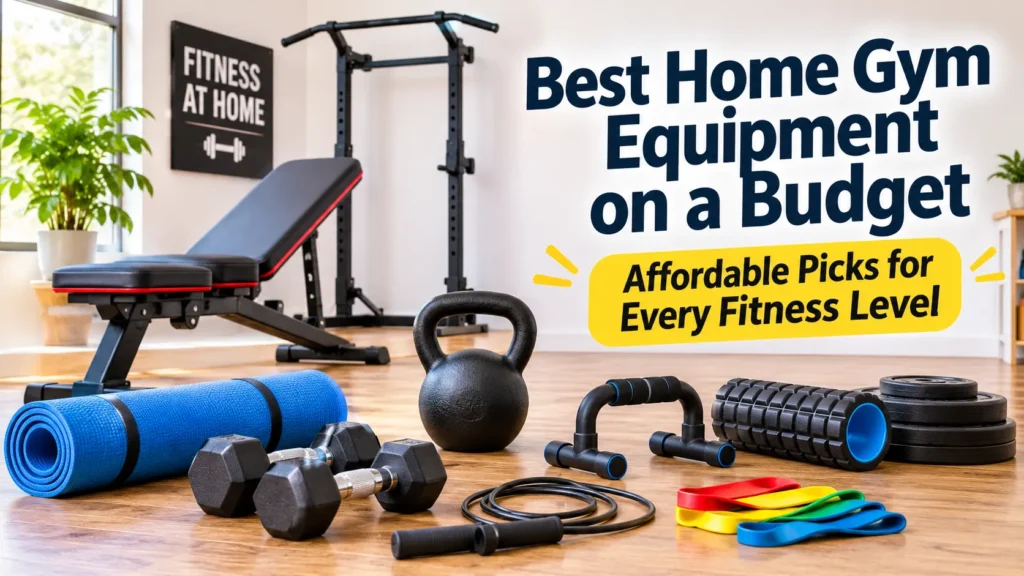
Building a home gym does not have to cost a lot. You can stay active without buying expensive machines or equipment. Many affordable options support strength training, cardio, and flexibility. The best home gym equipment on a budget helps you exercise comfortably at home. You can start with simple items like resistance bands, dumbbells, and jump ropes. These tools work for beginners and experienced fitness enthusiasts. Choose equipment that matches your goals and available space. You can build a useful home gym one piece at a time.
15 Best Home Gym Equipment on a Budget
You do not need expensive machines to enjoy effective home workouts. Many affordable tools help you build strength and improve fitness. The best home gym equipment on a budget also saves space. Here are 15 useful options for different fitness levels.
1. Resistance Bands
Resistance bands are affordable, lightweight, and easy to store. They come in loop, tube, and flat band styles. Each band offers different resistance levels for various exercises. You can use them for strength training and muscle activation.
They work your arms, shoulders, legs, back, and chest. You can also use them for warm-ups and mobility exercises. Beginners can start with lighter bands and progress gradually. Always check bands for cracks before using them.
2. Adjustable Dumbbells
Adjustable dumbbells offer several weight options in one compact design. They save space compared to buying multiple dumbbell pairs. You can change their weight based on your exercise needs.
Use them for bicep curls, shoulder presses, and chest presses. They also support lunges, squats, and dumbbell rows. These exercises target several major muscle groups. Choose a set with secure weight locks and comfortable handles.
3. Jump Rope
A jump rope is one of the cheapest cardio tools available. It takes little storage space and works almost anywhere. Regular jumping can improve cardiovascular fitness and coordination.
It also helps develop balance, rhythm, and footwork. You can include short jumping sessions in your workouts. Beginners should start slowly and increase their time gradually. Choose a rope that matches your height and experience.
4. Yoga Mat
A yoga mat provides a comfortable surface for floor exercises. It also creates some cushioning between your body and floor. You can use it for yoga, stretching, and bodyweight workouts.
Exercises like planks, crunches, and push-ups work well on mats. A non-slip surface helps provide better stability during movement. Choose a mat with suitable thickness and enough length. Clean it regularly to maintain good hygiene.
5. Kettlebell
A kettlebell is useful for strength and conditioning workouts. Its handle makes it suitable for different movement patterns. You can perform swings, goblet squats, and kettlebell rows.
These exercises work your legs, core, shoulders, and back. Kettlebells also support exercises that combine strength and movement. Choose a weight you can control with proper form. Beginners should learn basic techniques before trying heavy swings.
6. Push-Up Bars
Push-up bars provide raised handles for different push-up exercises. They can make wrist positioning more comfortable for some people. Their raised design also allows a deeper movement range.
You can use them for standard and wide-grip push-ups. These exercises mainly target your chest, shoulders, and triceps. Push-up bars are lightweight and easy to store. Choose sturdy handles with non-slip bases for better stability.
7. Exercise Bench
An exercise bench adds more options to your home workouts. You can use it for dumbbell presses and supported rows. It also supports step-ups, seated presses, and other exercises.
Adjustable benches offer flat, incline, and sometimes decline positions. This design allows different exercise angles and training options. A sturdy bench provides better support during workouts. Check its weight capacity and locking system before buying.
8. Pull-Up Bar
A pull-up bar helps you train your upper body at home. It supports pull-ups, chin-ups, and hanging knee raises. These exercises work your back, arms, shoulders, and core.
Doorway bars are convenient for smaller workout spaces. Wall-mounted bars usually need more permanent installation. Check the mounting instructions and weight limits carefully. Make sure the bar stays secure before exercising.
9. Ab Wheel Roller
An ab wheel roller is a simple tool for core training. It challenges your abdominal muscles through controlled rolling movements. You can use it for kneeling rollouts and other variations.
It also requires your shoulders and upper body to stabilize. Beginners should start with short movements and controlled repetitions. Keep your back in a comfortable, neutral position. Avoid rolling farther than your strength allows.
10. Ankle Weights
Ankle weights add resistance to selected leg exercises. They are usually secured around your ankles with straps. You can use them for controlled leg raises and extensions.
They can also add resistance to certain rehabilitation exercises. Start with light weights and focus on proper movement. Avoid using heavy ankle weights during everyday walking or running. Excessive resistance can place extra stress on your joints.
11. Foam Roller
A foam roller is useful for post-workout muscle care. It allows you to apply pressure to different muscle areas. Many people use it after exercise or long periods of sitting.
You can roll your thighs, calves, back, and upper legs. Gentle rolling may help reduce feelings of muscle tightness. Avoid rolling directly over joints or injured areas. Choose a comfortable firmness that suits your needs.
12. Mini Exercise Bike
A mini exercise bike offers convenient indoor cycling sessions. Its compact design makes it suitable for smaller spaces. You can place it under a desk or chair.
It provides low-impact movement for your legs. Some models also offer adjustable resistance settings. You can use it for gentle activity or light cardio. Choose a stable model with comfortable pedals and secure straps.
13. Exercise Step Platform
An exercise step platform supports different cardio and strength exercises. You can use it for step-ups and basic aerobic routines. It also works for certain lower-body exercises.
Some platforms include adjustable risers for different heights. This feature lets you change workout intensity gradually. Choose a platform with a non-slip surface. Make sure it stays stable during every movement.
14. Gymnastic Rings
Gymnastic rings offer several options for bodyweight strength training. You can use them for rows, dips, and assisted pull-ups. They also challenge your balance and body control.
Ring exercises require stability from different muscle groups. You can adjust their height to change exercise difficulty. Beginners should start with easier movements and proper support. Always attach rings to a strong, secure anchor.
15. Weight Plates
Weight plates are useful for progressive strength training. You can use them with compatible barbells and equipment. They also support plate squats, carries, and other exercises.
Different plates offer different weight options for training. Beginners can start with lighter plates and progress slowly. Check the plate size and bar compatibility before purchasing. Store them safely to prevent accidental injuries.
How to Choose the Best Budget Home Gym Equipment
Choosing the right equipment starts with your fitness goals. Think about whether you want strength, cardio, or flexibility training. Check product quality, materials, and weight limits before purchasing. Compare prices from different sellers to find better deals. Consider your available workout space and storage options. Small items like resistance bands need very little room. Choose versatile equipment that supports several exercises. Read customer reviews and check product warranties when available. Avoid buying equipment simply because it looks attractive. Focus on tools you will use regularly.
How to Build a Home Gym on a Budget
You can build a useful home gym without spending too much. Start with basic items that support different exercises. Resistance bands, a yoga mat, and jump rope make good choices. Add dumbbells when you need more strength training options. Choose multipurpose equipment instead of buying several similar products. Look for discounts, sales, and reliable secondhand equipment. Check used products carefully for damage before purchasing. You can add more tools as your fitness needs change. This approach helps control costs and reduce unnecessary spending.
Best Home Gym Equipment for Different Fitness Levels
Different fitness levels require different equipment and training options. Beginners can start with resistance bands, yoga mats, and jump ropes. These tools support basic strength, flexibility, and cardio exercises. Intermediate users can add dumbbells, kettlebells, and pull-up bars. These options provide more resistance and exercise variety. Advanced users may benefit from weight plates, gymnastic rings, and adjustable benches. Choose equipment based on your experience and training goals. Always increase exercise difficulty gradually and maintain proper form.
Common Mistakes to Avoid When Buying Budget Gym Equipment
Buying cheap equipment without checking its quality can cause problems. Some products may have weak materials or poor construction. Always check weight limits and safety features before purchasing. Avoid buying equipment you probably will not use. Too many single-purpose tools can waste money and storage space. Compare different products before making your final decision. Also, consider your current fitness level and available space. Choose useful equipment instead of following every fitness trend. Good planning helps you build a safer home gym.
Conclusion
Building a home gym does not require expensive equipment. Affordable tools can support strength, cardio, and flexibility training. Start with basic items that match your fitness goals. Choose durable products that offer several workout options. Add more equipment when your needs and budget allow. With consistent exercise, you can create a useful workout space at home.
Hylavita’s suggestion to read
- Best Gym Equipment for Abs: 10 Tools for Stronger Core Muscles
- Best Gym Equipment to Use for Abs: A Beginner’s Guide
- 15 Best Indoor Exercises for a Rainy Day (No Equipment)
Disclaimer: This article is for informational and educational purposes only. Always check equipment quality, weight limits, and safety instructions before use. Choose exercises that match your fitness level and physical abilities. Consult a qualified fitness professional if you need personalized guidance.