Potatoes get a bad reputation. Many people think they’re only good for fries and chips. But that’s not the full story.
If you love potatoes but want to eat healthier, you’re in the right place. This list of healthy potato recipes shows you that this humble vegetable can be part of a balanced diet. From breakfast to dinner, these dishes are simple to make and packed with flavor.
Potatoes are rich in potassium, vitamin C, and fiber (especially with the skin on) — a nutrient profile confirmed by Healthline’s review of potato health benefits. The real problem isn’t the potato itself — it’s how we cook it. Deep-frying and drowning it in butter is where the trouble starts.
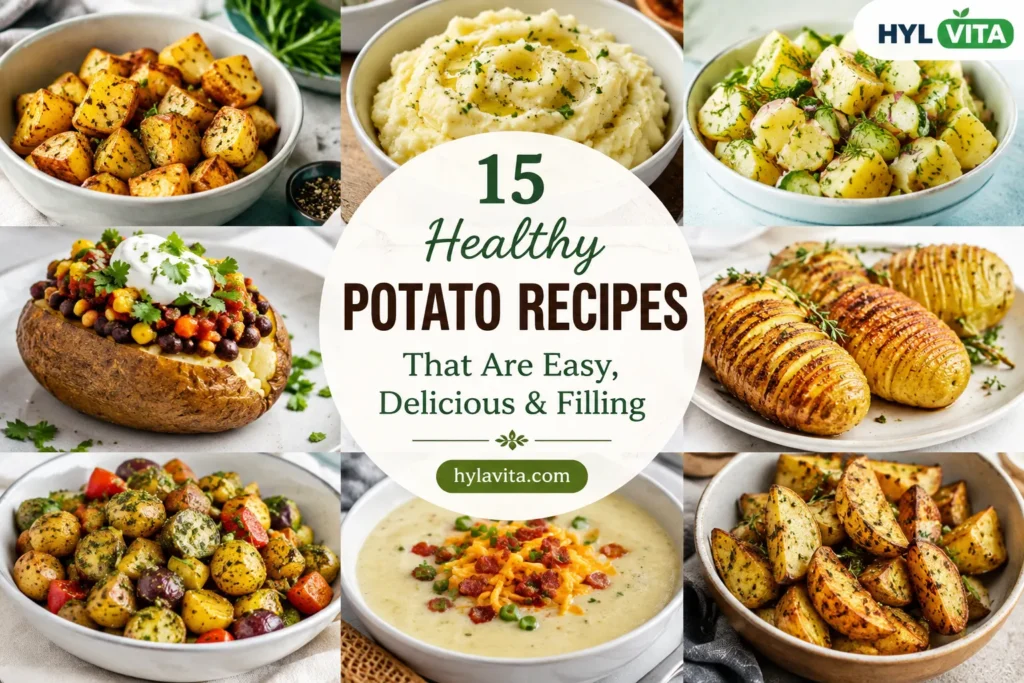
So, let’s fix that. Below are 15 easy, healthy potato recipes that are filling, tasty, and simple enough for beginners, along with an honest look at where potatoes genuinely help your diet and where they can work against you.
For more science-informed nutrition tips and helpful food guides, explore Hylavita’s Nutrition & Diet section.
Why Potatoes Deserve a Spot in Your Healthy Diet
Potatoes often get lumped in with “junk food.” However, that’s mostly because of how we prepare them, not the vegetable itself.
One medium potato with the skin on has fiber, vitamin C, and more potassium than a banana. It’s also naturally fat-free and gluten-free. The trick is to bake, boil, or air-fry them instead of deep-frying.
For example, swapping fried potato wedges for baked ones can cut the fat content by a large margin. That’s a simple change with a real impact. According to Mayo Clinic Health System, potatoes are naturally low in calories, contain no fat or cholesterol, and are sodium-free — but pairing them with protein, fiber, and unsaturated fats helps slow digestion and keeps blood sugar steadier.
Advantages and Disadvantages of Eating Potatoes
Before diving into the recipes, it’s worth being upfront about the full picture. Potatoes aren’t automatically “good” or “bad” — like most whole foods, the benefits and drawbacks depend heavily on variety, portion, and preparation.
Advantages
- Nutrient-dense and filling. Potatoes deliver meaningful amounts of potassium, vitamin C, vitamin B6, and fiber, particularly when the skin is left on.
- Naturally fat-free and gluten-free. They fit easily into most dietary patterns, including gluten-free and plant-based diets.
- Budget-friendly and versatile. Few whole foods are as cheap, widely available, or adaptable across breakfast, lunch, dinner, and snacks.
- Support satiety. Their fiber and resistant starch content (especially when cooked and then cooled) can help you feel full longer, which may support weight management.
- Potassium powerhouse. A medium potato with the skin can provide more potassium than a medium banana, which matters since most people fall short of recommended potassium intake.
Disadvantages
- High glycemic index when eaten hot. Freshly cooked potatoes, especially baked or mashed, can spike blood sugar quickly. According to Examine.com’s review of potato drawbacks, potatoes also have a high insulin index, and observational studies link higher-glycemic diets to a greater risk of type 2 diabetes.
- Acrylamide formation. Baking, roasting, or frying potatoes at high heat can produce acrylamide, a compound linked to potential long-term health risks. Boiling and steaming largely avoid this issue.
- Calorie creep from toppings. Butter, sour cream, cheese, and frying oil can quickly turn a nutrient-dense food into a calorie-dense one.
- Frying changes the risk profile. Research summarized by Examine.com notes that fried potato intake is more consistently associated with cardiovascular and type 2 diabetes risk than boiled, baked, or mashed preparations.
- Not ideal for very low-carb diets. Potatoes are starchy vegetables, so people managing blood sugar closely or following ketogenic-style eating may need to limit portions.
The takeaway: cooking method and portion size matter more than the potato itself. Boiling, steaming, and moderate baking with light toppings capture most of the benefits while minimizing the downsides.
Easy Healthy Potato Recipes for Breakfast
Starting your day with potatoes can keep you full until lunch. Here are three easy options.
1. Baked Sweet Potato with Greek Yogurt
Bake a sweet potato until soft, then top it with plain Greek yogurt, a drizzle of honey, and a sprinkle of cinnamon. It tastes like dessert but works as a filling breakfast.
2. Veggie and Potato Egg Muffins
Mix diced potatoes, eggs, spinach, and a little cheese. Pour into a muffin tin and bake. These are easy to make ahead and grab on busy mornings.
3. Potato and Oat Breakfast Hash
Cook diced potatoes with onions and bell peppers in a non-stick pan using just a little olive oil. Add a scoop of cooked oats for extra fiber. Top with a fried or poached egg.
Healthy Potato Meals for Lunch and Dinner
This is where potatoes really shine. They pair well with proteins and vegetables, making them a great base for a full meal.
4. Loaded Baked Potato with Black Beans
Bake a russet potato, then top it with black beans, salsa, a spoon of Greek yogurt (instead of sour cream), and chopped cilantro. It’s filling, high in fiber, and takes minutes to assemble.
5. One-Pan Roasted Potatoes and Chicken
Toss cubed potatoes with chicken breast pieces, garlic, and rosemary. Roast on one tray at a high temperature until golden. Less cleanup, more flavor.
6. Potato and Lentil Curry
Simmer diced potatoes with lentils, tomatoes, and curry spices. This dish is a favorite in many South Asian kitchens, and for good reason — it’s cheap, healthy, and deeply comforting.
7. Mashed Potato with Cauliflower Mix
Blend boiled potatoes with boiled cauliflower instead of using all potato. This cuts down on carbs while keeping that creamy texture people love.
8. Potato and Salmon Sheet-Pan Dinner
Place potato wedges and a salmon fillet on the same baking sheet. Season with lemon and dill. Roast together for an easy, balanced dinner with healthy fats and protein.
Healthy Potato Dishes as Sides
Sometimes potatoes are the supporting act, not the main event. Here are healthier ways to make them.
9. Air-Fryer Potato Wedges
Skip the deep fryer. Toss potato wedges with a small amount of olive oil, paprika, and garlic powder, then air-fry until crispy. You get the crunch without the extra oil.
10. Garlic Roasted Baby Potatoes
Toss whole baby potatoes with garlic, thyme, and olive oil, then roast until tender. Simple, and it goes with almost any main dish.
11. Smashed Potatoes with Herbs
Boil small potatoes, then gently smash them flat and bake until crispy on the edges. Sprinkle with fresh herbs before serving.
12. Steamed Potatoes with Lemon and Parsley
This is one of the simplest easy healthy potato recipes you can make. Just steam, then toss with lemon juice, parsley, and a pinch of salt. Steaming also happens to be one of the cooking methods least likely to produce acrylamide.
Healthy Potato Salads and Snacks
Potato salad doesn’t have to mean mayonnaise-heavy bowls sitting out at a picnic. Try these lighter versions instead.
13. Greek Yogurt Potato Salad
Replace mayo with plain Greek yogurt, mustard, and a splash of vinegar. Add boiled eggs, celery, and dill for a classic taste with fewer calories.
14. Warm Potato and Green Bean Salad
Toss warm boiled potatoes with steamed green beans, a light vinaigrette, and chopped red onion. Serve warm or cold.
15. Baked Potato Skins with Cheese and Chives
Scoop out baked potatoes, leaving a thin layer of flesh in the skin. Bake the skins until crispy, then top with a small amount of cheese and chives. A lighter take on a classic snack.
Tips for Making Potato Recipes Healthier
A few small habits can make a big difference in how healthy your potato dishes turn out.
Keep the skin on. The skin holds a lot of the fiber and nutrients. Just wash it well before cooking.
Choose boiling or steaming most often. These methods use little to no added fat and produce far less acrylamide than baking, roasting, or frying at high heat.
Cook, then cool. Letting cooked potatoes cool before eating (or reheating them) increases resistant starch and lowers their glycemic impact — useful if you’re watching blood sugar.
Watch your toppings. Butter, sour cream, and cheese can quickly turn a healthy potato dish into a heavy one. Swap in Greek yogurt, herbs, or a light drizzle of olive oil instead.
Pair potatoes with protein and vegetables. A potato alone is mostly carbs. However, when paired with lean protein and vegetables, it becomes part of a balanced, filling meal, and the fat, fiber, and protein help blunt the blood sugar spike.
FAQ
Are potatoes healthy or unhealthy? Potatoes themselves are nutrient-dense — they have fiber, potassium, and vitamin C. The cooking method and toppings are usually what make a dish unhealthy, not the potato itself.
What is the healthiest way to cook potatoes? Boiling, steaming, and moderate baking are generally the healthiest methods since they use little added fat and limit acrylamide formation. Air-frying is also a reasonable option for a crispy texture with less oil than deep-frying.
Can I eat potatoes every day and still be healthy? Potatoes can fit into a daily diet in moderation and when prepared in a healthy way. Balance your plate with vegetables and protein alongside the potato, and go easy on fried, heavily buttered, or cream-loaded preparations.
Which type of potato is the healthiest? Sweet potatoes and red potatoes are often considered slightly more nutrient-dense due to their vitamin content, but regular russet or Yukon gold potatoes are healthy too when cooked well. Preparation matters more than variety.
Do healthy potato recipes work for weight loss? Potatoes can fit into a weight-loss plan. Their fiber content supports satiety, which can help with overall calorie intake. Watch portion sizes and keep an eye on high-calorie toppings.
Conclusion
Potatoes don’t deserve their bad reputation, but they aren’t a free pass either. With the right cooking method, portion, and toppings, they can be part of a healthy, filling diet — and being upfront about the trade-offs (blood sugar response, acrylamide, calorie-heavy toppings) helps you make better choices rather than worse ones.
These 15 healthy potato recipes cover breakfast, lunch, dinner, sides, and snacks, so there’s something here for every meal of the day. Try one this week — maybe start with the loaded baked potato or the garlic roasted baby potatoes — and see how easy healthy eating with potatoes can really be.
Disclaimer: This article is for general educational and informational purposes only and is not intended as medical, dietary, or nutritional advice.