About this guide: This article was written by the Hylavita editorial team and reviewed against publicly available guidance from the American Heart Association, Mayo Clinic, and the National Heart, Lung, and Blood Institute (NHLBI). It is intended as general nutrition education, not personalized medical advice. See the disclaimer at the end.
Introduction
Your heart works nonstop, every single day, without a break. So why not feed it food that actually helps it?
This recipe guide — heartumental style — is built for people who want real flavor without the guesswork. “Heartumental” simply means heart-focused, feel-good cooking: meals that are gentle on your arteries but big on taste.
Maybe you’ve tried heart-healthy recipes before and found them bland or boring. That stops today. Below, you’ll find 15 dishes that are simple to make, use everyday ingredients, and still feel like a treat. Whether you’re a busy student, a working professional, or someone just starting to cook, this guide has something for you.
If you’re also working on the rest of your routine, Hylavita’s Nutrition & Diet section has more evidence-based guides on eating for a healthier body — worth a look once you’ve got these recipes down.
Let’s get into it.
Why Heart-Healthy Eating Actually Matters
Heart disease remains one of the leading health concerns worldwide, and food choices are one of the most consistent levers people have over their own risk.
Eating more vegetables, whole grains, healthy fats, and lean proteins supports better blood pressure and cholesterol levels. According to Mayo Clinic, increasing soluble fiber intake — found in oats, beans, apples, and similar foods — can measurably reduce LDL (“bad”) cholesterol, and the American Heart Association recommends eating fish rich in unsaturated fats at least twice a week for cardiovascular benefit (Mayo Clinic; American Heart Association).
In short, small changes in your kitchen can lead to big changes in how your heart performs over time — but no single recipe or diet guarantees an outcome, and food is one factor among several (genetics, activity level, smoking, existing conditions) that shape heart disease risk.
What Makes a Recipe “Heart Healthy”?
A heart-healthy recipe usually follows a few simple rules:
- Low in added salt and sugar
- Uses heart-friendly fat sources, such as olive oil, as an alternative to butter.
- Includes fiber-rich foods like beans, oats, and vegetables
- Limits processed and fried foods
Keep these points in mind as you go through the recipes below.
The advantages of eating this way
- Supports healthy cholesterol and blood pressure. Soluble fiber and unsaturated fats are both linked to better lipid numbers and blood pressure control.
- Budget-friendly. Beans, oats, lentils, and seasonal vegetables are some of the cheapest calories in the grocery store.
- Flexible. Most recipes here adapt easily to vegetarian, pescatarian, or lower-sodium needs.
- Doesn’t require special equipment or advanced skills — a stove, oven, and a few pots cover everything on this list.
The trade-offs worth knowing
- Fish-based recipes carry a cost and access barrier. Fresh salmon or cod isn’t cheap or available everywhere; frozen or canned options are reasonable substitutes but aren’t covered in depth here.
- Fiber increases need to be gradual. Adding a lot of fiber quickly (beans, oats, whole grains) can cause bloating or digestive discomfort for some people; ramping up over a few weeks helps.
- “Heart-healthy” isn’t automatically “calorie-appropriate.” Olive oil, nuts, and avocado are healthy fats, but they’re calorie-dense, so portion size still matters for weight management.
- These recipes are general guidance, not a clinical diet plan. People with kidney disease, on blood thinners, or managing potassium or sodium restrictions should check specifics (like the potassium in sweet potatoes and beans) with their own clinician before making major changes.
15 Heartumental Recipes You’ll Actually Want to Cook
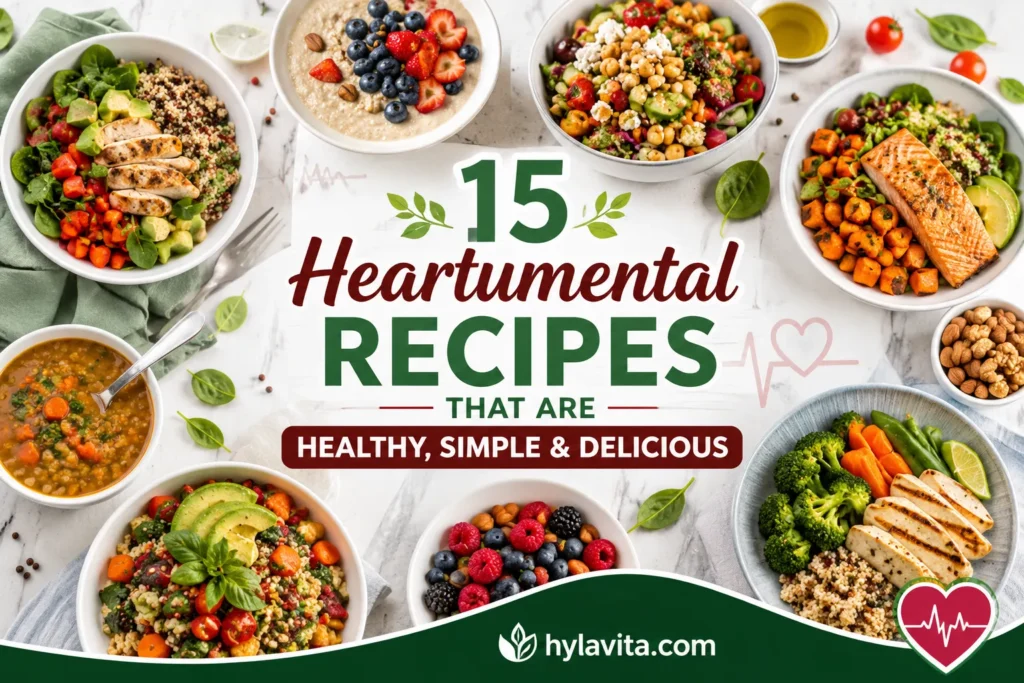
This is the heart of our heartumental recipe guide. Each recipe below is simple, budget-friendly, and doesn’t need fancy equipment.
- Oatmeal with Berries and Walnuts — Oats are packed with soluble fiber, which Mayo Clinic notes can help lower cholesterol. Add a handful of berries and a few walnuts on top, and breakfast is done in five minutes.
- Grilled Salmon with Lemon — Salmon is rich in omega-3 fatty acids; the American Heart Association recommends fatty fish like salmon roughly twice a week as part of a heart-healthy pattern. Season with lemon, pepper, and a touch of olive oil, then grill for 10 minutes.
- Quinoa and Vegetable Salad — Quinoa is a complete protein and naturally gluten-free. Toss it with cucumbers, tomatoes, and a light vinaigrette for a cool, filling lunch.
- Lentil Soup — Lentils are cheap, filling, and full of fiber. This soup works well for preparing ahead, and its flavors can become even more enjoyable after a day in the fridge.
- Baked Sweet Potato with Black Beans — Sweet potatoes offer potassium, which can help balance sodium’s effect on blood pressure. Top with black beans and a sprinkle of cumin for a hearty meal. (If you’re on a potassium-restricted diet, check portion sizes with your care team.)
- Avocado Toast with Whole Grain Bread — Avocados contain healthy monounsaturated fats. Choose whole grain bread instead of white for extra fiber.
- Grilled Chicken with Steamed Broccoli — Simple, lean, and satisfying. Season the chicken with garlic and herbs instead of heavy sauces.
- Chickpea Curry — Chickpeas are high in fiber and protein. Cook them in a light tomato and spice base for a warm, comforting dinner.
- Greek Yogurt Parfait — Plain Greek yogurt with fruit and a few nuts makes a great snack or dessert, with less added sugar than most desserts.
- Vegetable Stir-Fry with Brown Rice — Stir-fry a mix of colorful vegetables in a small amount of olive oil. Serve over brown rice for more fiber than white rice.
- Baked Cod with Herbs — Cod is a light, lean fish for people who find salmon too rich. Bake with lemon, garlic, and fresh herbs.
- Hummus with Raw Veggies — Hummus made from chickpeas is a heart-friendly dip. Pair it with carrots, cucumbers, and bell peppers instead of chips.
- Whole Wheat Pasta with Olive Oil and Tomatoes — Swap regular pasta for whole wheat. Toss with olive oil, garlic, cherry tomatoes, and basil.
- Black Bean Tacos — Use corn tortillas, black beans, avocado, and salsa. This meatless option is still filling and full of flavor.
- Overnight Oats with Chia Seeds — Chia seeds add extra omega-3s and fiber. Prep this the night before for a grab-and-go breakfast.
For dozens more tested ideas along the same lines, the NHLBI’s own heart-healthy recipe collection is a solid, free, government-run resource worth bookmarking.
How to Make These Recipes Even Healthier
A few small swaps can boost the heart-health value of any recipe.
Swap ingredients wisely. Use olive oil instead of butter. Choose low-sodium broth instead of regular. Pick whole grains over refined ones whenever possible.
Watch your portions. Even healthy food can add up in large amounts. Portion control helps keep calorie intake in check without needing to cut out foods you enjoy.
Meal prep for consistency. Preparing meals in advance makes it easier to stick with heart-healthy recipes during busy weeks. For example, cooking a big batch of lentil soup on Sunday can cover lunches for several days.
Common Mistakes to Avoid
Even well-meaning cooks fall into a few traps:
- Relying on “low-fat” labels. These products sometimes have added sugar to make up for taste.
- Skipping healthy fats entirely. Your body still needs fats from sources like nuts, olive oil, and fish.
- Over-salting food. Try herbs and spices instead of reaching for the salt shaker.
Being aware of these mistakes helps this guide actually work in real life, not just on paper.
FAQ: Heartumental Recipe Guide
What does “heartumental” mean in cooking? It refers to recipes that are heart-focused and comforting at the same time — food that’s good for your heart without feeling like a punishment.
Are heartumental recipes suitable for beginners? Yes. Most of the recipes in this guide use simple steps and common ingredients. You don’t need advanced cooking skills to make any of them.
How often should I eat heart-healthy meals? Ideally, most of your meals should follow heart-healthy patterns. Occasional treats are fine as part of a balanced approach.
Can heart-healthy recipes help lower cholesterol? Many of these recipes include fiber-rich and omega-3-rich foods, which Mayo Clinic and the American Heart Association link to healthier cholesterol and blood pressure numbers. That said, individual results vary, and anyone with an existing heart condition should check with a doctor before making significant dietary changes.
Do I need special equipment to cook these recipes? No. A stove, oven, and a few basic pots and pans are enough for every recipe listed here.
Conclusion
Eating well for your heart doesn’t have to be complicated or boring. This heartumental-style guide proves that healthy food can still be simple, quick, and genuinely tasty.
Start with one or two recipes this week. Once they feel easy, add a few more from the list. Small, steady changes add up to real results over time.
Your heart works hard for you every day — it’s about time your kitchen returned the favor.
For more practical, plain-language nutrition guides, visit Hylavita.
Medical disclaimer: This article is for general educational and informational purposes only and does not constitute medical advice.