
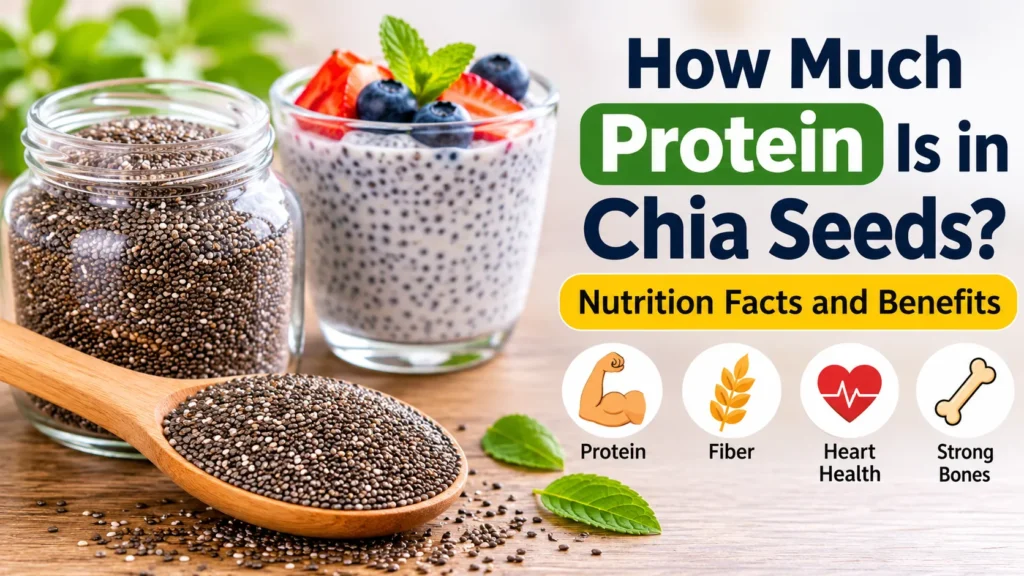
Chia seeds are small but contain several important nutrients. They provide plant-based protein, fiber, healthy fats, and minerals. Many people add them to smoothies, yogurt, oatmeal, and other meals. But how much protein do chia seeds actually contain? Their protein content may surprise you. These tiny seeds can support your daily protein intake. However, they should not be your only protein source. In this guide, we will explore chia seeds protein content, nutrition facts, and health benefits. You will also learn simple ways to include them in your daily diet.
How Much Protein Is in Chia Seeds?
Chia seeds contain about 16.5 grams of protein per 100 grams. This makes them a useful plant-based protein source. One tablespoon (12 grams) provides approximately 2 grams of protein. A one-ounce serving (28 grams) contains around 4.7 grams. These amounts can vary slightly between products and serving sizes. Eating more chia seeds increases your total protein intake. However, a small serving provides only a modest amount. You can combine chia seeds with other protein-rich foods. This helps you get more protein throughout the day.
Chia Seeds Nutrition Facts
Chia seeds provide several nutrients in a small serving. One ounce (28 grams) contains approximately 138 calories. It also provides 4.7 grams of protein and 12 grams of carbohydrates. This serving contains around 8.7 grams of fat. Nearly 9.8 grams of its carbohydrates come from fiber. Chia seeds also provide calcium, magnesium, iron, and phosphorus. They contain small amounts of several B vitamins. Their healthy fats include plant based omega-3 fatty acids. These nutrients make chia seeds a useful addition to balanced meals.
Are Chia Seeds a Good Source of Protein?
Chia seeds provide more protein than some commonly eaten seeds. However, pumpkin seeds and sunflower seeds generally contain more protein. Chia seeds offer around 4.7 grams per ounce. This amount can support your daily protein intake. However, it is not enough to meet most people’s needs alone. You should include other protein sources in your meals. Beans, lentils, eggs, dairy, and nuts provide more options. Chia seeds work best as part of a varied diet.
Health Benefits of Chia Seeds
Chia seeds offer several nutrients that support overall health. Their high fiber content helps support regular bowel movements. Fiber also helps you feel full for longer. They provide plant-based protein for normal body functions. Chia seeds also contain omega-3 fatty acids called ALA. These healthy fats support normal heart health. Their calcium, magnesium, and phosphorus support healthy bones. Chia seeds also contain antioxidants that help protect cells. These compounds help protect the body from oxidative stress. Adding chia seeds to balanced meals can improve your nutrient intake. However, they cannot replace a varied and healthy diet.
Is Chia Seeds Protein Complete?
Yes, chia seeds contain all nine essential amino acids. These amino acids help build and repair body tissues. Your body cannot produce these amino acids by itself. You must get them through the foods you eat. This makes chia seeds an interesting plant-based protein option. However, their total protein content remains modest per serving. Protein quality also depends on digestibility and amino acid amounts. You can combine chia seeds with beans, lentils, and other foods. This helps create a varied and balanced plant based diet.
How to Add Chia Seeds to Your Diet
Chia seeds are easy to add to many everyday meals. You can mix them into smoothies for extra nutrients. Add them to yogurt for a simple breakfast. Sprinkle them over oatmeal, cereal, or fresh fruit. You can also prepare chia seed pudding with milk. Let the mixture rest until the seeds absorb liquid. Add them to salads for extra texture and fiber. You can also mix them into homemade bread and muffins. Start with a small amount if you rarely eat them. Their mild taste makes them easy to use.
Chia Seeds vs. Other Seeds: Protein Comparison
Different seeds provide different amounts of protein. Here is a simple comparison per 100 grams.
| Type of seed | Protein per 100g |
|---|---|
| Chia seeds | 16.5 g |
| Flaxseeds | 18.3 g |
| Pumpkin seeds | 30.2 g |
| Sunflower seeds | 20.8 g |
Pumpkin seeds provide the most protein among these options. Chia seeds contain less protein than the other three. However, they provide much more dietary fiber. Remember that these values depend on seed type and preparation. Always compare equal serving sizes for accurate results.
How Much Chia Seeds Should You Eat Daily?
One to two tablespoons of chia seeds is a common serving. This provides approximately 2–4 grams of protein. However, individual nutritional needs can vary. Start with one tablespoon if you rarely eat chia seeds. Increase your intake gradually to help your body adjust. Chia seeds contain plenty of fiber. Drink enough water throughout the day. You can also soak them before adding them to meals.
Conclusion
Chia seeds provide plant-based protein, fiber, healthy fats, and minerals. They contain approximately 4.7 grams of protein per ounce. They also provide all nine essential amino acids. However, their protein content is modest in normal servings. You can add them to smoothies, yogurt, and oatmeal. Combine them with other protein-rich foods for balanced nutrition. Chia seeds are a simple addition to a healthy diet.
Hylavita’s suggestion to read
- What Is Granola? Ingredients, Nutrition, and Health Benefits
- Low Residue Diet: Foods to Eat, Avoid, and Meal Ideas
- High-Fiber Foods for Gut Health: A Complete Beginner’s Guide
Disclaimer: This article is for informational and educational purposes only. Nutritional values may vary depending on the chia seed brand and serving size. This content does not replace professional medical or dietary advice. Consult a qualified healthcare professional for personalized nutrition guidance.