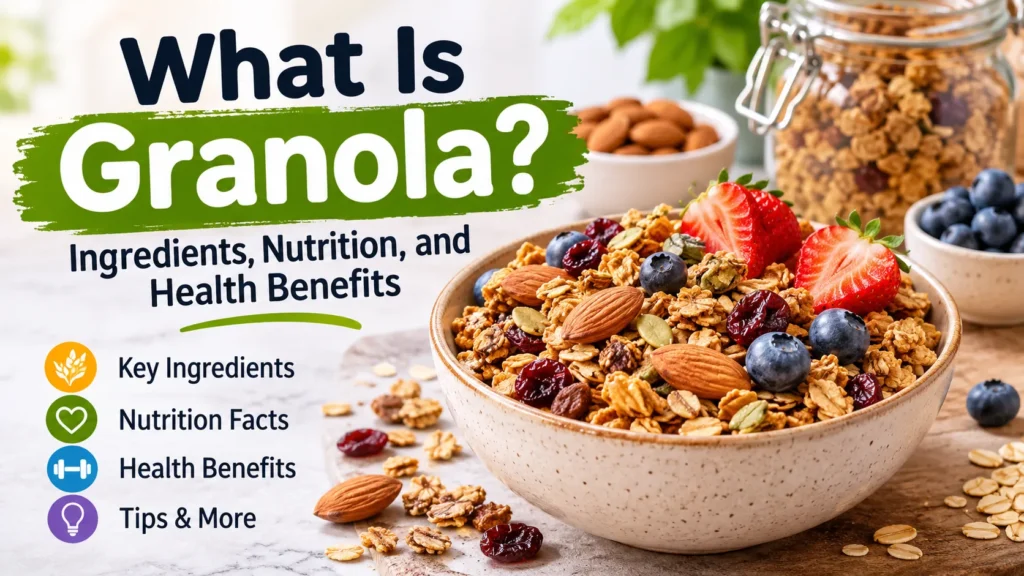
Granola is a popular breakfast food made from simple ingredients. It usually contains rolled oats, nuts, seeds, and sweeteners. People often bake these ingredients until they become crunchy and golden. Some varieties also include dried fruits, coconut, or chocolate. You can enjoy granola with milk, yogurt, or fresh fruit. It provides fiber, carbohydrates, and other nutrients. However, its nutritional value depends on the ingredients and serving size. In this guide, you will learn what granola is, how it is made, and its nutrition. You will also discover its potential health benefits and possible downsides.
What Is Granola?
Granola is a breakfast food made from oats, nuts, seeds, and sweeteners. Manufacturers usually mix these ingredients with a little oil. They then bake the mixture until it becomes golden and crunchy. Some recipes also include dried fruits, coconut, or chocolate.
Granola usually has a crunchy texture and a mildly sweet taste. However, its flavor depends on the ingredients and preparation method. You can enjoy it with milk, yogurt, or fresh fruit. Many people also use it as a topping for breakfast bowls. Some prefer eating it as a quick snack during the day. Its ingredients provide different nutrients, including fiber, carbohydrates, and healthy fats.
What Ingredients Are Used in Granola?
Granola contains several ingredients that give it flavor and texture. Most recipes start with rolled oats and add other ingredients.
Rolled Oats
Rolled oats are usually the main ingredient in granola. They provide carbohydrates, fiber, and some plant-based protein. They also create the crunchy texture after baking. Most homemade and packaged granola products use rolled oats.
Nuts and Seeds
Nuts and seeds add flavor, texture, and nutrients to granola. Common choices include almonds, walnuts, chia seeds, and pumpkin seeds. They provide protein, healthy fats, and important minerals.
Sweeteners and Oils
Sweeteners help give granola its slightly sweet taste. Common options include honey, maple syrup, and other sweeteners. Oils help coat the ingredients and improve their texture. Some recipes use vegetable oils during the baking process.
Dried Fruits and Other Additions
Dried fruits add natural sweetness and extra flavor. Common choices include raisins, dried cranberries, and chopped dates. Some recipes also include coconut flakes or chocolate pieces. These additions can change granola’s taste and nutritional value.
Granola Nutrition Facts
Granola provides several nutrients, but its nutritional value varies. Its ingredients and preparation methods affect its overall nutrition. Oats usually provide carbohydrates, fiber, and some plant-based protein. Nuts and seeds add protein, unsaturated fats, and minerals.
Granola also contains calories from carbohydrates, fats, and protein. Some varieties contain added sugar from honey or syrups. Others contain dried fruits, which add natural sugars. The amount of fiber depends on the ingredients used.
A typical 30-gram serving may contain around 120–150 calories. However, some varieties contain more calories and added sugar. Always check the nutrition label before choosing a product. Pay attention to serving size, calories, and added sugar. Eating large portions can quickly increase your calorie intake.
What Are the Health Benefits of Granola?
Granola contains ingredients that can support a balanced diet. Its potential benefits depend on its ingredients and serving size.
Supports Digestive Health
Many granola varieties contain dietary fiber from oats, nuts, and seeds. Fiber helps support regular bowel movements and digestive health. It also helps keep stools soft and easier to pass. However, fiber intake should increase gradually with enough water.
Provides Energy
Granola contains carbohydrates, which provide energy for your body. Oats supply complex carbohydrates that support daily activities. Nuts and seeds also provide fats and some protein. These nutrients help make granola a filling breakfast choice.
Supports Heart Health
Oats contain beta-glucan, a type of soluble fiber. This fiber can help lower LDL cholesterol levels. Nuts and seeds also contain unsaturated fats. Replacing some saturated fats with unsaturated fats supports heart health. However, granola alone cannot prevent heart disease.
Provides Important Nutrients
Granola can provide several vitamins and minerals. Oats contain magnesium, iron, and phosphorus. Nuts and seeds provide vitamin E, magnesium, and zinc. Dried fruits may also contribute potassium and other nutrients. The exact amounts depend on the recipe and ingredients.
How to Eat Granola
Granola is easy to add to different meals and snacks. You can enjoy it in several simple ways.
- With milk: Add granola to a bowl of cold or warm milk.
- With yogurt: Mix it with plain yogurt for a filling breakfast.
- With fresh fruit: Add bananas, strawberries, or blueberries for extra flavor.
- In smoothie bowls: Sprinkle granola over your favorite smoothie bowl.
- As an oatmeal topping: Add a small amount for extra crunch.
You can also enjoy granola as a quick snack. Choose plain varieties with less added sugar when possible. Keep your serving size in mind when adding toppings.
Homemade Granola vs. Store-Bought Granola
| Feature | Homemade Granola | Store-Bought Granola |
|---|---|---|
| Ingredients | You choose the ingredients. | Ingredients depend on the brand. |
| Added Sugar | You can control the sugar amount. | Some varieties contain more added sugar. |
| Oil Content | You can adjust the amount of oil. | Oil content varies between products. |
| Preparation | Requires time and effort. | Ready to eat and convenient. |
| Flavors | You can customize the flavors. | Available in many different flavors. |
| Nutrition | Depends on your chosen ingredients. | Depends on the recipe and brand. |
| Cost | Depends on the ingredients you buy. | Prices vary by brand and package size. |
| Storage | Store in an airtight container. | Follow the package storage instructions. |
Bottom line: Homemade granola offers more control over ingredients. Store-bought granola saves time and offers convenience. Always compare nutrition labels before choosing a product.
Potential Downsides of Eating Granola
Granola can provide useful nutrients, but it has some downsides. Some varieties contain large amounts of added sugar. Eating too much can also increase your daily calorie intake. Nuts and seeds may cause allergic reactions in sensitive people.
Granola made with oats may also contain gluten cross-contact. This can happen during growing, processing, or packaging. People with celiac disease should choose certified gluten-free products. Always check ingredient labels for allergens and added sugars. Eating reasonable portions helps you enjoy granola as part of balanced meals.
Frequently Asked Questions About Granola
Is Granola Good or Bad for Health?
Granola can be a healthy choice when it contains nutritious ingredients. Choose varieties with whole grains, nuts, seeds, and less added sugar. Large portions may add too many calories to your diet.
Is It Okay to Eat Granola Every Morning?
Yes, you can eat granola every morning as part of balanced meals. Choose products with fiber and limited added sugar. Add yogurt or fresh fruit for extra nutrients.
What Is the Best Time to Eat Granola?
You can enjoy granola at breakfast or as a daytime snack. It provides carbohydrates that help fuel your daily activities. You can also eat it after exercise.
Which Is Healthier, Granola or Oats?
Plain oats are often lower in added sugar and calories. Granola may contain extra oils, sweeteners, nuts, and dried fruits. Both can support a balanced diet. Your best choice depends on ingredients and portion size.
Conclusion
Granola is a tasty food made from oats, nuts, seeds, and other ingredients. It provides carbohydrates, fiber, healthy fats, and several important nutrients. You can enjoy it with milk, yogurt, or fresh fruits. However, always check ingredient lists and serving sizes before buying. Choose varieties with less added sugar and simple ingredients. Enjoy granola in moderate portions as part of a balanced diet.
Hylavita’s suggestion to read
- How Many Calories Are in Steak? A Complete Nutrition Guide
- Is Vodka Gluten-Free? Ingredients and Safety Guide
- Are Corn Flakes Wheat-Free? Ingredients, Nutrition, and Safety Guide
Disclaimer: This article is for informational and educational purposes only. Granola’s nutritional value may vary depending on its ingredients and serving size. Always check product labels for added sugar and possible allergens. Consult a qualified healthcare professional for personalized dietary advice.