
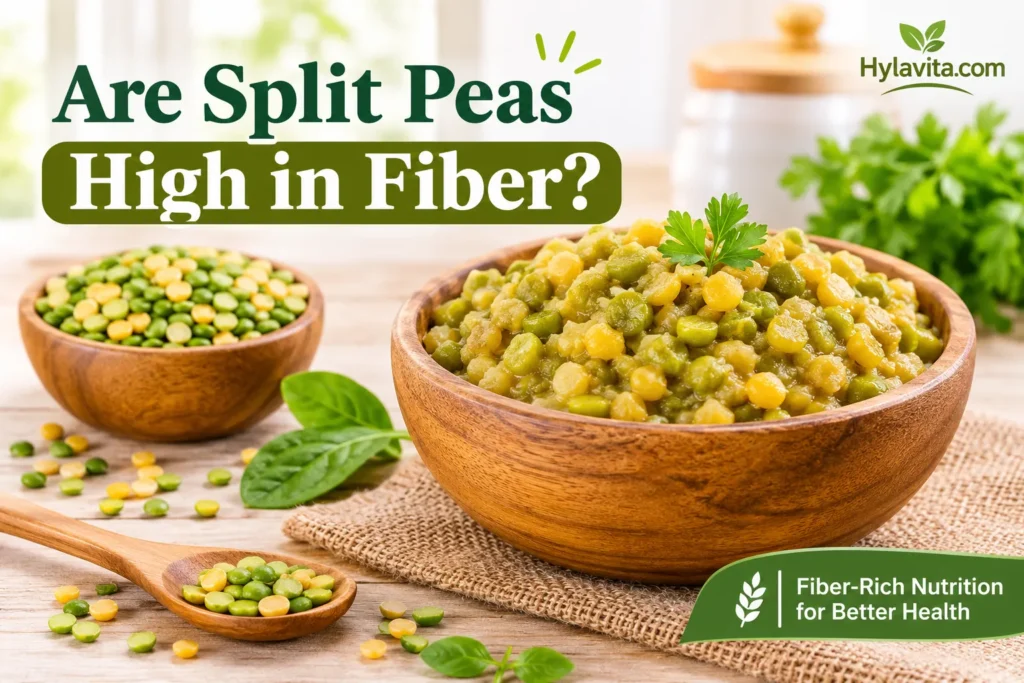
Split peas are a popular legume found in many healthy meals. They come in green and yellow varieties and offer useful nutrients. One of their biggest benefits is their high fiber content. They also provide plant-based protein, vitamins, and minerals. Adding split peas to your meals can support better nutrition. Their fiber may help digestion and keep you feeling full longer. But how much fiber do split peas actually contain? In this article, we explore their fiber content, nutritional value, health benefits, and possible side effects.
Are Split Peas High in Fiber?
Yes, split peas are high in fiber and support a healthy diet. They contain both soluble and insoluble dietary fiber. Soluble fiber dissolves in water and forms a gel-like substance. It may help manage cholesterol and slow carbohydrate absorption. Insoluble fiber adds bulk to stool and supports regular bowel movements.
These two types of fiber help support normal digestive function. They also make split peas a filling food choice. A half-cup serving of cooked split peas provides approximately 8 grams of fiber. This amount contributes significantly to your daily fiber needs. Adults generally need 25 to 38 grams of fiber daily. However, individual needs vary based on age and sex. Adding split peas to meals can help increase your daily fiber intake.
How Much Fiber Is in Split Peas?
Split peas provide different amounts of fiber before and after cooking. Dry split peas contain approximately 22.2 grams of fiber per 100 grams. Cooked split peas provide around 8.3 grams per 100 grams. This difference mainly comes from water absorption during cooking. Water increases their weight and reduces fiber concentration per 100 grams.
A half-cup serving of cooked split peas provides approximately 8.1 grams of fiber. A full cup contains around 16.3 grams. Your fiber intake depends on how much you eat. Larger portions provide more fiber than smaller servings. Even a small serving can contribute meaningfully to your daily fiber needs.
Nutritional Value of Split Peas
Split peas provide several nutrients that support overall health. They contain carbohydrates, plant-based protein, and dietary fiber. They also contain very little fat. Cooked split peas provide useful vitamins and minerals. These include folate, iron, magnesium, potassium, and phosphorus. They also provide smaller amounts of several B vitamins.
Here is the nutritional breakdown for 100 grams of cooked split peas.
| Nutrient | Amount |
|---|---|
| Calories | 118 kcal |
| Carbohydrates | 21.1 g |
| Protein | 8.3 g |
| Dietary Fiber | 8.3 g |
| Total Fat | 0.4 g |
| Iron | 1.29 mg |
| Magnesium | 36 mg |
| Potassium | 362 mg |
| Folate | 65 mcg |
| Phosphorus | 99 mg |
Split peas can add fiber and protein to everyday meals. Their nutrient content makes them a useful choice for balanced eating.
Health Benefits of Split Peas
Split peas offer several health benefits because of their fiber and protein. They also provide vitamins and minerals that support normal body functions. Adding them to balanced meals can improve your overall nutrient intake.
Support Digestive Health
Split peas contain dietary fiber that supports healthy digestion. Fiber adds bulk to stool and helps maintain regular bowel movements. It may also help prevent constipation when you drink enough water. Eating fiber-rich foods supports normal digestive function.
Help Support Heart Health
Split peas contain soluble fiber that may support heart health. This fiber can help lower LDL cholesterol levels. It helps the body remove some cholesterol through digestion. Eating split peas regularly may support healthy cholesterol levels.
Support Blood Sugar Management
Fiber can slow carbohydrate digestion and glucose absorption. This may help reduce sharp rises in blood sugar levels. Split peas also provide protein and complex carbohydrates. These nutrients make them a useful choice for balanced meals. However, portion sizes still matter.
Help You Feel Full Longer
Split peas provide both protein and dietary fiber. These nutrients can help you feel satisfied after eating. Fiber adds bulk and slows digestion. Protein also helps control hunger between meals. This may support better portion control and healthy eating habits.
Are Green and Yellow Split Peas Equally High in Fiber?
Yes, both green and yellow split peas provide plenty of dietary fiber. They also contain plant-based protein, carbohydrates, and important minerals. Their nutritional values are quite similar. However, their taste and texture differ slightly. Green split peas have a mild, slightly sweet flavor. Yellow split peas taste milder and have a more earthy flavor.
| Nutrient | Green Split Peas | Yellow Split Peas |
|---|---|---|
| Dietary Fiber | High | High |
| Protein | High | High |
| Carbohydrates | High | High |
| Fat | Very low | Very low |
| Taste | Slightly sweet | Mild and earthy |
Both varieties offer similar fiber benefits. Their exact nutritional values may vary with variety and preparation.
How to Add Split Peas to Your Diet
Adding split peas to your meals is simple and easy. You can use them in several tasty and healthy dishes. Here are some easy ways to enjoy them.
- Soups and stews: Add cooked split peas to vegetable soups and stews. They create a thicker texture and add extra fiber.
- Curries and dals: Cook split peas with spices, tomatoes, and onions. Serve them with rice or whole-grain bread.
- Salads and homemade meals: Mix cooked, cooled split peas into fresh salads. You can also add them to vegetable bowls.
Try different recipes to enjoy their taste and nutritional benefits.
Can Eating Too Many Split Peas Cause Side Effects?
Eating too many split peas may cause digestive discomfort in some people. Their high fiber content can lead to gas and bloating. Some people may also experience stomach discomfort or increased bowel movements. These effects are more common when fiber intake increases suddenly.
You can reduce these problems by making a few simple changes. Start with small portions and increase your intake gradually. Drink enough water throughout the day to support digestion. This helps fiber move through your digestive system more comfortably. If discomfort continues, consider reducing your portion size.
Frequently Asked Questions
Can I eat split peas every day?
Yes, you can eat split peas daily as part of balanced meals. They provide fiber, protein, and several important nutrients. However, start with small portions to avoid digestive discomfort.
What are the top 3 vegetables for fiber?
Artichokes, green peas, and Brussels sprouts are excellent fiber sources. They can help increase your daily fiber intake.
Which is healthier, split peas or lentils?
Both are healthy choices with plenty of fiber and plant protein. Their nutritional values are similar, but amounts vary. Your choice depends on taste and meal preferences.
Are split peas healthier than green peas?
Both provide fiber, protein, vitamins, and minerals. Split peas generally contain more fiber and protein per cooked cup. However, green peas also offer useful nutrients and antioxidants.
Conclusion
Split peas are high in fiber and provide valuable plant-based protein. They also contain vitamins and minerals that support overall health. Their fiber supports digestion, heart health, and blood sugar management. Both green and yellow varieties offer similar nutritional benefits. Adding split peas to soups, curries, and salads is easy. Enjoy them regularly as part of a balanced and varied diet.
Hylavita’s suggestion to read
- High-Fiber Foods for Gut Health: A Complete Beginner’s Guide
- What Is Granola? Ingredients, Nutrition, and Health Benefits
- How Many Calories Are in Steak? A Complete Nutrition Guide
Other
Split Peas Nutrition Facts and Health Benefits
Disclaimer: This article provides general information about split peas, their fiber content, and health benefits. It is not a substitute for professional medical advice. Nutritional values may vary depending on serving size and preparation methods. Consult a healthcare professional for personal dietary concerns.