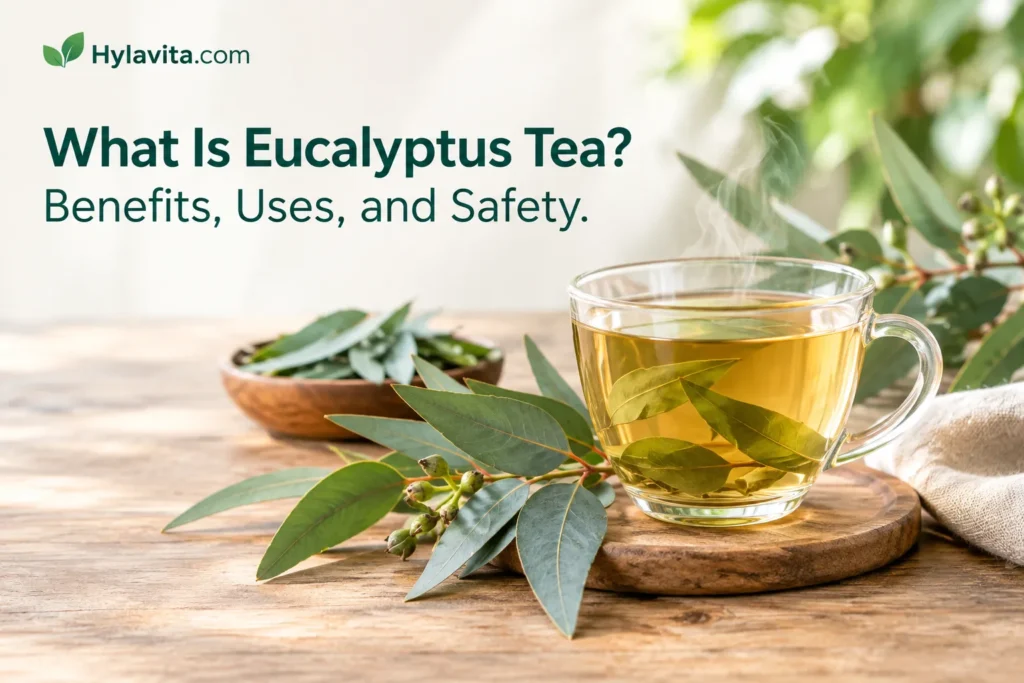
Eucalyptus tea is an herbal drink made from certain eucalyptus leaves. People often explore it for its possible health benefits, especially for coughs and congestion. It contains natural plant compounds that researchers study for their potential effects. However, drinking eucalyptus tea may not be safe for everyone. Research on its benefits is also limited. Understanding its uses, possible side effects, and safety precautions is important before trying it. In this guide, we’ll explain what eucalyptus tea is, its potential benefits, how it is used, and what you should know about drinking it safely.
Potential Benefits of Eucalyptus Tea
Eucalyptus leaves contain natural compounds that researchers study for their possible health effects. People have traditionally used eucalyptus preparations to ease certain cold symptoms. However, drinking eucalyptus tea may not provide the same effects as medicinal products. Its benefits remain uncertain, so it is important to understand the evidence.
May Help Soothe Coughs
Some eucalyptus leaf preparations have traditional uses for coughs caused by colds. They may help ease coughing, but the benefits are not fully proven. Drinking eucalyptus tea has not been studied enough to confirm similar effects. Talk with a healthcare professional if your cough persists or worsens.
Plant Compounds and Antioxidants
Eucalyptus leaves contain eucalyptol and other natural plant compounds. Some compounds show antioxidant activity in laboratory studies. Antioxidants help protect cells from damage caused by unstable molecules. However, scientists have not confirmed the effects of drinking eucalyptus tea on human health.
May Help With Nasal Congestion
Eucalyptus is commonly used in products designed to ease cold symptoms. Its strong aroma may create a feeling of clearer breathing. However, evidence does not establish that drinking eucalyptus tea relieves nasal congestion. Avoid treating it as a replacement for appropriate medical care.
What Does Research Say?
Research on eucalyptus products suggests possible benefits for cough relief. However, studies have examined different preparations, including products containing multiple ingredients. These findings do not prove that eucalyptus tea works equally well. The European Medicines Agency recognizes eucalyptus leaf’s traditional use for cold-related coughs. More clinical studies are needed to confirm its benefits.
Common Uses of Eucalyptus Tea
People traditionally use eucalyptus leaf preparations to help relieve cold-related coughs. Some also drink herbal teas for warmth and comfort during illness. However, evidence supporting eucalyptus tea for these purposes remains limited. People may also enjoy its strong, refreshing aroma. Always choose leaves confirmed safe for tea preparation. Never swallow eucalyptus essential oil, as it can cause serious poisoning.
How to Make Eucalyptus Tea Safely
Safety comes first when preparing eucalyptus tea. Not every eucalyptus species is suitable for drinking. Only use leaves from a trusted supplier who confirms they are food-safe. Follow the supplier’s preparation instructions carefully.
- Check that the leaves are specifically sold for making tea.
- Use clean drinking water and a suitable heat-safe cup.
- Follow the recommended amount and steeping time on the packaging.
- Allow the tea to cool before drinking.
Never add eucalyptus essential oil to tea. Swallowing this oil can cause serious poisoning. Ask a healthcare professional before using eucalyptus products for health concerns.
Eucalyptus Tea Side Effects and Safety
Eucalyptus products can cause health problems when people use them incorrectly. Safety depends on the product, its preparation, and the amount consumed. Research on drinking eucalyptus tea remains limited. Always check product instructions and seek medical advice when unsure.
Possible Side Effects
Eucalyptus preparations may cause unwanted effects in some people. Possible reactions include nausea, vomiting, or stomach discomfort. Allergic reactions can also occur. Swallowing eucalyptus essential oil can cause serious poisoning, including seizures. Stop using a product if you develop unusual symptoms. Seek urgent medical help if you suspect poisoning.
Who Should Avoid Eucalyptus Tea?
Children should not drink eucalyptus tea without advice from a qualified healthcare professional. Pregnant or breastfeeding people should seek medical guidance before using it. People with existing health conditions or those taking medicines should also ask a healthcare professional first. Safety information about eucalyptus tea remains limited. Never use unidentified leaves or products without clear preparation instructions.
Eucalyptus Tea vs. Eucalyptus Oil
| Feature | Eucalyptus Tea | Eucalyptus Essential Oil |
|---|---|---|
| What it is | A drink prepared from suitable eucalyptus leaves | A concentrated oil extracted from eucalyptus |
| Preparation | Leaves are steeped in hot water | Oil is produced through extraction |
| Common uses | Traditionally used for cold-related coughs | Used in some topical products and inhalation preparations |
| Safety | Safety depends on the leaves and preparation | Swallowing it can cause serious poisoning |
| Can you drink it? | Only use leaves confirmed safe for tea | No, never swallow eucalyptus essential oil |
Important: Eucalyptus essential oil is poisonous if swallowed. Always use tea leaves confirmed suitable for consumption, and follow their preparation instructions.
Important Things to Know Before Drinking Eucalyptus Tea
Eucalyptus tea may not be safe for everyone. Research on its health benefits remains limited, so avoid expecting guaranteed results. Only use leaves specifically confirmed safe for making tea. Follow the supplier’s preparation instructions carefully. Never swallow eucalyptus essential oil, as it can cause serious poisoning. Pregnant or breastfeeding people, children, and those taking medicines should seek professional advice first. Stop drinking it if you notice unusual symptoms.
Frequently Asked Questions
Can You Drink Eucalyptus Tea Every Day?
Daily use may not be safe because research on eucalyptus tea remains limited. Ask a healthcare professional before drinking it regularly. Always use leaves confirmed safe for tea.
Does Eucalyptus Tea Help With Coughs?
Eucalyptus leaf preparations have traditional uses for cold-related coughs. However, evidence supporting eucalyptus tea specifically remains limited. Seek medical advice if your cough persists or worsens.
Is Eucalyptus Tea Safe for Children?
Do not give eucalyptus tea to children without professional medical advice. Children face particular risks from eucalyptus products. Never let children swallow eucalyptus essential oil.
Can You Make Tea From Fresh Eucalyptus Leaves?
Fresh leaves are not automatically safe for drinking. Only use leaves from a trusted supplier who confirms they are suitable for tea. Follow their preparation instructions carefully.
Does Eucalyptus Tea Help You Sleep?
There is not enough reliable evidence that eucalyptus tea improves sleep. Its strong aroma does not prove it has sleep benefits. Choose well-supported sleep habits instead.
Conclusion
Eucalyptus tea has traditional uses, especially for cold-related coughs. However, research on its benefits remains limited. Always choose leaves confirmed safe for tea and follow preparation instructions. Never drink eucalyptus essential oil, as it can cause serious poisoning. Ask a healthcare professional before trying eucalyptus tea if you have safety concerns.
Hylavita’s suggestion to read
- Rose Petal Tea: 10 Benefits, Advantages & Disadvantages, Easy Recipe, Uses & Side Effects
- Honeybush Tea: Benefits, Caffeine, Side Effects & How to Brew It
- Decaf Green Tea: Benefits, Caffeine Content, Side Effects & More
other readings
Eucalyptus Tea Benefits: A Herbal Hug In A Cup
Disclaimer: This article is for informational purposes only and does not replace professional medical advice. Eucalyptus tea may not be safe for everyone, and research on its benefits remains limited. Consult a qualified healthcare professional before using eucalyptus products for health purposes. Never swallow eucalyptus essential oil, as it can cause serious poisoning.