
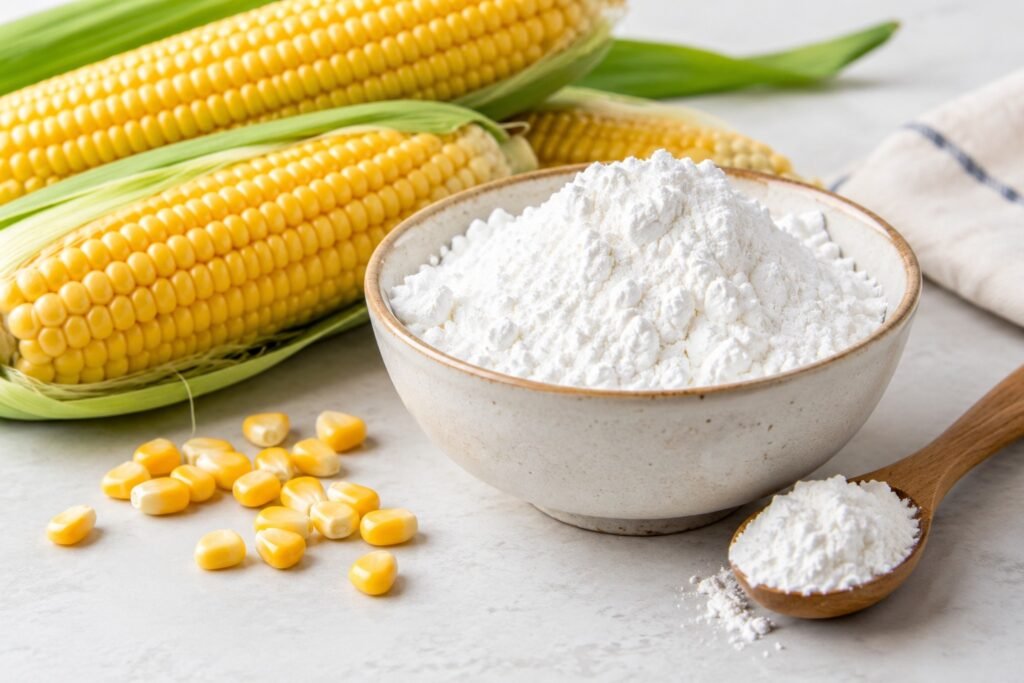
What Is Starch of Maize?
Starch of maize is a white powder made from maize kernels.
It mainly contains starch, a type of carbohydrate found in plants.
Starch makes up much of the maize kernel’s endosperm.
Where Does Maize Starch Come From?
Maize starch comes from the starchy part of maize kernels.
This part is called the endosperm of the kernel.
The endosperm contains most of the kernel’s starch.
How Is Starch Extracted From Corn?
Manufacturers usually extract maize starch through a wet-milling process.
First, they clean the maize kernels and soak them in water.
Soaking softens the kernels and makes separation easier.
The softened kernels are then milled to separate their parts.
Machines separate the germ, fiber, protein, and starch.
The starch is washed several times to remove remaining impurities.
It is then separated from water and dried into powder.
This process produces the fine maize starch used in foods.
How Is Starch of Maize Made?
Maize starch is usually made through wet milling.
The maize kernels are cleaned and soaked in water.
They are then ground to separate their parts.
Starch is separated from fiber, protein, and germ.
Finally, the starch is washed, dried, and powdered.
Starch of Maize vs. Whole Maize
Whole maize contains starch, protein, fiber, fats, vitamins, and minerals.
Maize starch mainly contains starch and has fewer nutrients.
So, whole maize is more nutritionally complete than maize starch.
Nutritional Value of Starch of Maize
Starch of maize mainly provides carbohydrates and calories.
Around 100 grams contains about 381 calories and 91 grams carbohydrates.
Protein, Fat, and Fiber
Maize starch contains very little protein and fat.
It provides about 0.3 grams of protein per 100 grams.
It contains less than 1 gram of dietary fiber per 100 grams.
Vitamins and Minerals
Maize starch provides very small amounts of vitamins and minerals.
It contains small amounts of calcium, iron, magnesium, and phosphorus.
It is not a major source of most vitamins.
Overall, maize starch mainly supplies carbohydrates rather than many micronutrients.
Common Uses of Starch of Maize
Starch of Maize in Cooking and Baking
Starch of maize is commonly used in cooking and baking.
It can improve texture and help create softer baked foods.
It also helps control moisture in some baked products.
Starch of Maize as a Thickening Agent
Maize starch thickens sauces, soups, puddings, and other foods.
Heating starch with water makes the mixture thicker.
This gives foods a smoother and more consistent texture.
Starch of Maize in Processed Foods
Food manufacturers use maize starch in many processed foods.
It can improve texture and help bind certain ingredients.
You can find it in snacks, soups, desserts, and meat products.
Industrial Uses of Maize Starch
Maize starch also has several uses outside everyday cooking.
Manufacturers use it to produce sweeteners and fermentation products.
It also serves as a raw material for various industrial products.
Potential Benefits of Starch of Maize
Provides a Source of Energy
Starch of maize mainly contains carbohydrates that provide energy.
Your body breaks digestible starch into glucose for energy.
Helps Thicken and Improve Food Texture
Maize starch helps thicken soups, sauces, puddings, and other foods.
It also helps give foods a smoother and more consistent texture.
Naturally Gluten-Free
Maize starch does not naturally contain gluten.
Maize is naturally gluten-free and can suit gluten-free diets.
Easy to Use in Different Recipes
You can use maize starch in many everyday recipes.
It works well in sauces, baked foods, desserts, and prepared foods
Side Effects and Potential Drawbacks of Starch of Maize
Maize starch is generally safe when eaten as part of a balanced diet.
However, eating large amounts may have some drawbacks.
High in Carbohydrates
Starch of maize mainly consists of carbohydrates.
Large portions can add many carbohydrates and calories to your diet.
It contains very little protein, fat, and dietary fiber.
Effect on Blood Sugar
Your body breaks digestible starch into glucose during digestion.
This can raise blood sugar after eating it.
The effect depends on the food and how quickly starch digests.
Possible Digestive Issues
Some people may experience digestive discomfort after eating certain corn products.
However, plain maize starch contains very little dietary fiber.
Digestive reactions can also depend on other ingredients in foods.
Allergies and Food Sensitivities
Some people can have allergies or sensitivities to corn products.
Food allergies may cause digestive, skin, or breathing symptoms.
Check food labels if you have a known food allergy.
Starch of Maize Healthy?
Starch of maize can fit into a balanced diet in moderate amounts.
It mainly provides carbohydrates and calories, but few other nutrients.
It works well in foods like sauces, soups, and baked dishes.
However, it should not replace nutrient-rich foods in your daily diet.
A healthy diet includes vegetables, fruits, whole grains, proteins, and healthy fats.
These foods provide nutrients that maize starch does not provide much.
Why Portion Size and Overall Diet Matter
Portion size matters because larger portions can increase energy intake.
Using small amounts of maize starch can help keep meals balanced.
Your overall diet matters more than one single ingredient.
Try to include a variety of nutritious foods throughout your day.
If you use maize starch, consider it an ingredient, not a main food.
This approach helps you get more nutrients from your overall diet.
Starch of Maize vs. Corn Flour
Starch of maize mainly comes from the kernel’s starchy endosperm.
Corn flour comes from finely ground maize kernels.
Key Differences
Maize starch is white, fine, and mostly tasteless.
Corn flour has more corn flavor and a thicker texture.
Nutritional Differences
Maize starch mainly provides carbohydrates and calories.
Corn flour usually provides more protein, fiber, vitamins, and minerals.
Which One Is Better?
Maize starch works best for thickening sauces, soups, and puddings.
Corn flour works well in breads, pancakes, tortillas, and baked foods.
Neither one is always better.
Choose based on the recipe and your nutritional needs.
How to Use Starch of Maize in Your Diet
Cooking Ideas
Use maize starch to thicken soups, sauces, gravies, and puddings.
Mix it with liquid before adding it to hot foods.
Baking
You can add maize starch to some baked foods.
It can help improve texture and control moisture.
Thickening Soups and Sauces
Maize starch thickens liquids when heated with water.
Mix it with cold liquid before adding it to hot foods.
This helps create a smoother, thicker mixture.
Frequently Asked Questions About Starch of Maize
What is starch of maize?
Starch of maize is a fine powder made from maize kernels.
It mainly contains starch, a type of carbohydrate.
Is starch of maize healthy?
It can fit into a balanced diet when used moderately.
However, it provides mainly carbohydrates and few other nutrients.
Is starch of maize gluten-free?
Pure maize starch does not naturally contain gluten.
However, processed products may have gluten from cross-contact.
Can you use maize starch for cooking?
Yes, maize starch can thicken soups, sauces, and other foods.
It also helps improve food texture.
Is maize starch the same as corn flour?
No, they are different products with different uses.
Maize starch mainly thickens foods, while corn flour adds texture.
What is starch of maize used for?
Starch of maize has many common uses in food preparation.
It mainly works as a thickener for soups, sauces, and gravies.
It can also improve texture in baked and processed foods.
Food manufacturers use it in snacks, desserts, cereals, and other products.
Is starch of maize the same as corn starch?
Yes, starch of maize and corn starch mean the same thing.
Both refer to starch made from maize or corn kernels.
The starch comes mainly from the kernel’s endosperm.
It is commonly used to thicken soups, sauces, and other foods.
The name can differ between countries and food labels.
However, maize starch and corn starch generally refer to the same ingredient.
Is starch of maize gluten-free?
Yes, pure starch of maize is naturally gluten-free.
Maize does not naturally contain the gluten found in wheat, barley, and rye.
However, processed products can sometimes have gluten from cross-contact.
Check the package label when you need strict gluten-free food.
In the United States, gluten-free foods must contain under 20 ppm gluten.
Is starch of maize good for health?
Starch of maize can fit into a balanced diet when eaten moderately.
It mainly provides carbohydrates and calories, with few other nutrients.
It can help thicken soups, sauces, and other foods.
However, it should not replace nutritious whole foods in your diet.
A balanced diet should include vegetables, fruits, whole grains, proteins, and healthy fats.
Your overall diet matters more than one single ingredient.
Does Starch of Maize Raise Blood Sugar?
Yes, starch of maize can raise blood sugar after eating.
Your body breaks starch into glucose during digestion.
This glucose then enters your bloodstream and raises blood sugar levels.
The rise depends on portion size and the meal around it.
Eating protein, fat, or fiber may slow carbohydrate digestion.
People with diabetes should watch their total carbohydrate intake.
Can Starch of Maize Be Used in Baking?
Yes, starch of maize can be used in baking and baked foods.
It can improve texture and make some baked foods more tender.
Bakers may use it in cakes, cookies, and other recipes.
It can also help control moisture and create a softer texture.
However, starch of maize does not work like a leavening agent.
It cannot replace baking powder or baking soda by itself.
Final Thoughts on Starch of Maize
Starch of maize is a common ingredient made from corn kernels.
It mainly provides carbohydrates and has few other nutrients.
People commonly use it to thicken sauces, soups, and other foods.
It can also improve texture in some baked and processed foods.
Starch of maize can fit into a balanced diet in moderate amounts.
However, it should not replace nutrient-rich whole foods in your diet.
Choose a varied diet with vegetables, fruits, whole grains, and protein.
Your overall eating pattern matters more than one single ingredient.
Hylavita’s sugestions to reaading
- What Happens to Your Body When You Cut Sugar for 30 Days?
- Clover Honey: Benefits, Nutrition, Uses & Side Effects
- Rose Petal Tea: 10 Benefits, Advantages & Disadvantages, Easy Recipe, Uses & Side Effects
Other readings
- Everything You Need to Know About Cornstarch
- Is Cornstarch Bad for You? Nutrition and Health Effects
Disclaimer:This article provides general health information about maize starch. It is not medical advice. Consult a healthcare professional for personal concerns.