
Introduction
Every meal you eat changes your blood sugar. That is why food is one of the most powerful tools you have for managing diabetes. You use it three or more times a day.
The good news is that you don’t need a strict or boring diet. You need a simple food plan for a diabetic that fits your life. Small choices add up. Eating more vegetables, choosing whole grains, and watching portions can help keep your sugar steady.
In this guide, you will learn which foods are best and which ones to limit. You will also see how carb counting works and get a sample one-day meal plan. Let’s start with the basics.
Why Diet Matters in Diabetes Management
Food has a direct effect on your blood sugar. When you eat carbs, your body breaks them down into glucose. Glucose then enters your blood.
In a healthy body, insulin moves that glucose into your cells for energy. With diabetes, this process does not work well. Either your body makes too little insulin, or it cannot use insulin properly. So sugar stays in your blood and rises too high.
What you eat, how much you eat, and when you eat all matter. Over time, high blood sugar can harm your heart, kidneys, eyes, and nerves.
One plan does not fit everyone, though. Each type of diabetes needs a slightly different approach.
- Type 1: Your body makes little or no insulin. You usually match your insulin dose to the carbs you eat.
- Type 2: Your body resists insulin. Weight, food choices, and activity play a big role.
- Gestational diabetes: This starts during pregnancy. It needs careful carb control to protect you and your baby.
Key Principles of a Food Plan for a Diabetic
A good food plan for a diabetic follows a few simple rules. You don’t need to be perfect. You just need to stay steady.
Keep your carbs consistent.
Carbs raise blood sugar the most. Try to eat about the same amount at each meal. This helps avoid big spikes and drops.
Balance your plate and watch portions.
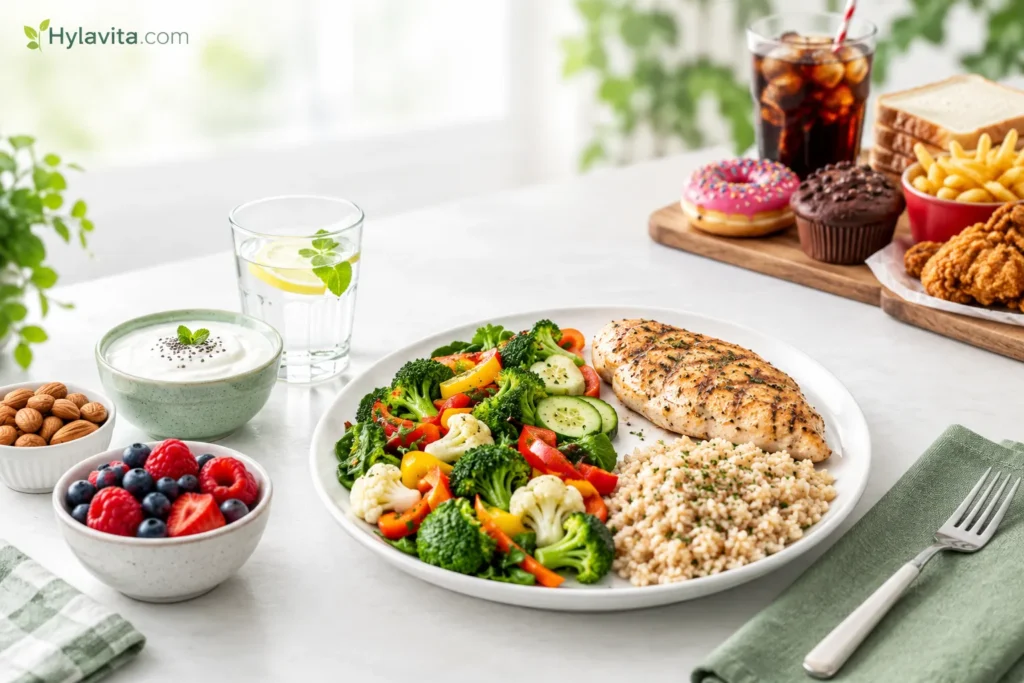
Fill half your plate with non-starchy vegetables. Add lean protein to one quarter. Put whole grains or other carbs in the last quarter. Even healthy foods raise sugar if you eat too much.
Eat at regular times.
Don’t skip meals. Long gaps can cause low or high blood sugar, especially if you take insulin or certain diabetes pills. Ask your doctor what timing works for you.
Choose fiber, protein, and healthy fats.
Fiber slows how fast sugar enters your blood. Protein keeps you full. Healthy fats, like those in nuts and olive oil, support your heart. Heart health matters because diabetes raises heart disease risk.
Small habits like these add up. Over time, they make blood sugar easier to control.
Best Foods for Diabetics to Eat
The right foods help keep your blood sugar steady. Here are the best groups to build your meals around.
Non-Starchy Vegetables
These are your best friends. They are low in carbs and high in fiber. Spinach, broccoli, cauliflower, and peppers are great choices. Cabbage, cucumber, and okra also work well. Fill half your plate with them. You can eat them raw, steamed, or lightly cooked in a little oil.
Whole Grains and High-Fiber Carbs
Your body still needs carbs for energy. Choose the ones with more fiber. Oats, brown rice, quinoa, and whole wheat roti are good options. Beans, chickpeas, and other legumes also help. Fiber slows down how fast sugar enters your blood. Keep your portions small, since these foods still contain carbs.
Lean Proteins
Protein does not raise blood sugar much. It also keeps you full for longer. Good choices include fish, chicken, eggs, tofu, and lentils. Fatty fish like salmon and sardines are especially good for your heart. Grill, bake, or boil your protein. Try not to deep-fry it.
Healthy Fats
Not all fats are bad. Some protect your heart. Nuts, seeds, olive oil, and avocado are good examples. They may also help you feel full. But fats are high in calories. A small handful of nuts or a spoon of oil is enough.
Low-Glycemic Fruits
Yes, you can eat fruit. Fruit has natural sugar, but it also has fiber and vitamins. Berries, apples, pears, and citrus fruits are good picks. Eat whole fruit instead of drinking juice. Juice has less fiber and raises sugar faster. Stick to one small serving at a time.
Dairy and Alternatives
Dairy can fit into your plan. Choose plain, unsweetened yogurt. Flavored yogurt often has added sugar. Low-fat or unsweetened milk works well too. If you avoid dairy, try unsweetened soy or almond milk. Always check the label for added sugar.
Foods a Diabetic Should Limit or Avoid
You don’t have to give up all your favorite foods. But some foods raise blood sugar fast or harm your heart. Eat these less often and in small amounts.
Sugary drinks and sweets.
Soda, packaged juice, sweet tea, and energy drinks spike your sugar quickly. Cakes, candy, and mithai do the same. Water, plain tea, and unsweetened drinks are better choices.
Refined carbs.
White bread, white rice, and pastries have little fiber. Your body turns them into sugar fast. Swap them for whole grain versions when you can.
Processed and fried foods.
Chips, fast food, samosas, and pakoras are often high in refined carbs and unhealthy fat. Eat them rarely. Try baking or air frying at home.
Trans and saturated fats.
These fats raise bad cholesterol. Diabetes already increases heart disease risk. Limit margarine, packaged snacks, fatty red meat, and ghee. Some foods list “partially hydrogenated oil” on the label. That means trans fat, so skip them.
Hidden sugars in packaged foods.
Sauces, ketchup, flavored yogurt, and breakfast cereals often contain added sugar. Read the label. Look for words like syrup, dextrose, and maltose.
Understanding the Glycemic Index and Carb Counting
Some foods raise blood sugar faster than others. The glycemic index (GI) ranks carb foods from 0 to 100. Low-GI foods score 55 or less. They raise sugar slowly. Oats, beans, and most fruits are low-GI. White bread and white rice score higher.
GI has limits, though. It doesn’t show portion size. A large bowl of a low-GI food can still spike your sugar. Use GI as a guide, not a strict rule.
Carb counting is another useful tool. You add up the grams of carbs in each meal. Then you try to keep that number steady. Food labels list total carbs per serving. Ask your dietitian for a daily carb goal that suits you.
If counting feels hard, try the Plate Method. Fill half your plate with non-starchy vegetables. One quarter with protein. Fill the last quarter with carbs. No math needed.
Sample 1-Day Food Plan for a Diabetic
This is a simple example, not a rule. Your portions and carb goals may differ. Ask your doctor or dietitian to adjust it for you.
Breakfast
Start with two boiled eggs and one whole wheat roti. Add a small bowl of sautéed spinach or mixed veggies. Have unsweetened tea or plain water. If you prefer oats, cook half a cup with water. Top it with a few berries and some chopped nuts.
Mid-Morning Snack
Keep it light. Eat one small apple or pear with a small handful of almonds. The fiber and protein help you stay full until lunch.
Lunch
Fill half your plate with salad or cooked vegetables like okra or cabbage. Add a small bowl of daal or grilled chicken. Then add a small portion of brown rice or one whole wheat roti. A few spoons of plain yogurt on the side works well too.
Evening Snack
Try a small bowl of roasted chana. You can also have plain unsweetened yogurt with cucumber slices. Skip biscuits and fried snacks.
Dinner
Keep dinner lighter and eat it early if you can. Grill or bake a piece of fish. Serve it with steamed broccoli, cauliflower, or sabzi cooked in a little oil. Add one small roti or a small scoop of quinoa. Have a glass of water with your meal.
Tips for Eating Out and Managing Cravings
Eating out is fine. You just need a few smart habits.
Read the menu carefully.
Look for words like grilled, baked, steamed, or roasted. Avoid fried, crispy, creamy, or glazed dishes. They usually have more refined carbs and unhealthy fat.
Make simple swaps.
Ask for a salad or steamed vegetables instead of fries. Choose water over soda. Pick grilled chicken or fish over battered options. Ask for sauces and dressings on the side.
Watch your portions.
Restaurant servings are often large. Share a dish or take half home. Skip the free bread basket or naan if you can.
Handle sweet cravings wisely.
Cravings are normal. Try a small bowl of berries or a sliced apple with peanut butter. Plain yogurt with cinnamon also works. A few nuts can help too. If you still want dessert, share a small portion and eat it after a full meal.
Lifestyle Habits That Support Your Diet
Food is only one part of the picture. Daily habits also affect your blood sugar.
Stay hydrated. Drink water through the day. When your sugar runs high, your body loses more fluid. Water helps replace it.
Move your body. Aim for about 150 minutes of activity each week. A brisk walk after meals works well. It helps your muscles use glucose.
Check your blood sugar. Testing shows how foods and activity affect you. Ask your doctor how often you should check.
Sleep well. Poor sleep can raise blood sugar. Most adults need seven to nine hours.
Manage stress. Stress hormones can push sugar higher. Try deep breathing, prayer, or a short walk.
Frequently Asked Questions
Can a diabetic eat fruit?
Yes. Fruit has fiber and vitamins. Choose whole fruits like berries, apples, and pears. Keep portions small. Avoid fruit juice, since it raises sugar faster.
Can a diabetic eat rice or roti?
Yes, in small portions. Brown rice and whole wheat roti are better than white rice and white flour roti. They have more fiber. Pair them with vegetables and protein to slow sugar spikes.
How many meals a day should a diabetic have?
It depends on you. Many people do well with three meals and one or two small snacks. Eat at regular times. If you take insulin or diabetes pills, ask your doctor about timing.
Can diabetes be controlled with diet alone?
Sometimes. Some people with type 2 diabetes manage well with diet, activity, and weight loss. Others also need medicine. People with type 1 diabetes always need insulin. Never stop your medicine without talking to your doctor.
Conclusion
A good food plan for a diabetic does not have to be hard. Fill half your plate with vegetables. Choose whole grains, lean protein, and healthy fats. Limit sugary drinks, refined carbs, and fried foods. Keep your portions steady and eat at regular times.
Every body is different, though. Talk to your doctor or a registered dietitian. They can build a plan that fits your health, your medicine, and your daily life.
Start small today. Swap one sugary drink for water, or add one vegetable to your next meal.
Hylavita’s sugestion to read
- What Is Citric Pomelo? Benefits, Nutrition, Taste & Uses
- What Is Farro? Nutrition, Benefits, Types & How to Eat It
- What Is Red Cheese? Nutrition, Benefits, Taste & Uses
Medical Disclaimer: This article is for general information only. It is not medical advice and does not replace guidance from your doctor or a registered dietitian. Always talk to a healthcare professional before changing your diet, medicines, or treatment plan.